Banerjee Indranil, Mukherjee Gargi, Kalburgi Sujatha, Chanda Abhyuday
Obstetrics and Gynaecology, Oxford University Hospitals NHS Foundation Trust, Oxford, GBR.
Obstetrics and Gynaecology, Medway Maritime Hospital, Medway NHS Foundation Trust, Gillingham, GBR.
Cureus. 2024 Sep 7;16(9):e68889. doi: 10.7759/cureus.68889. eCollection 2024 Sep.
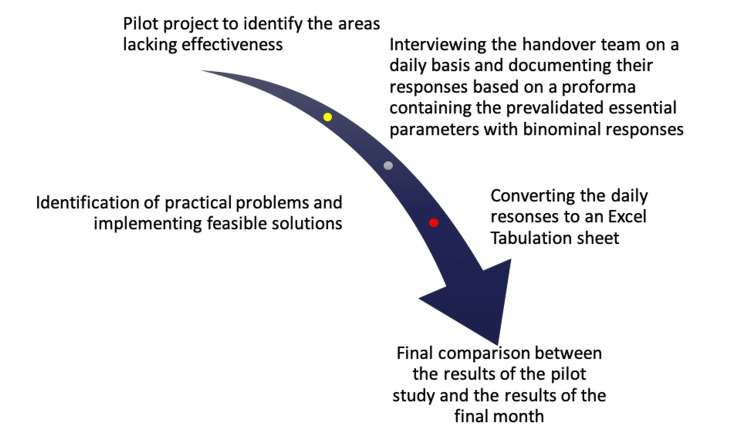
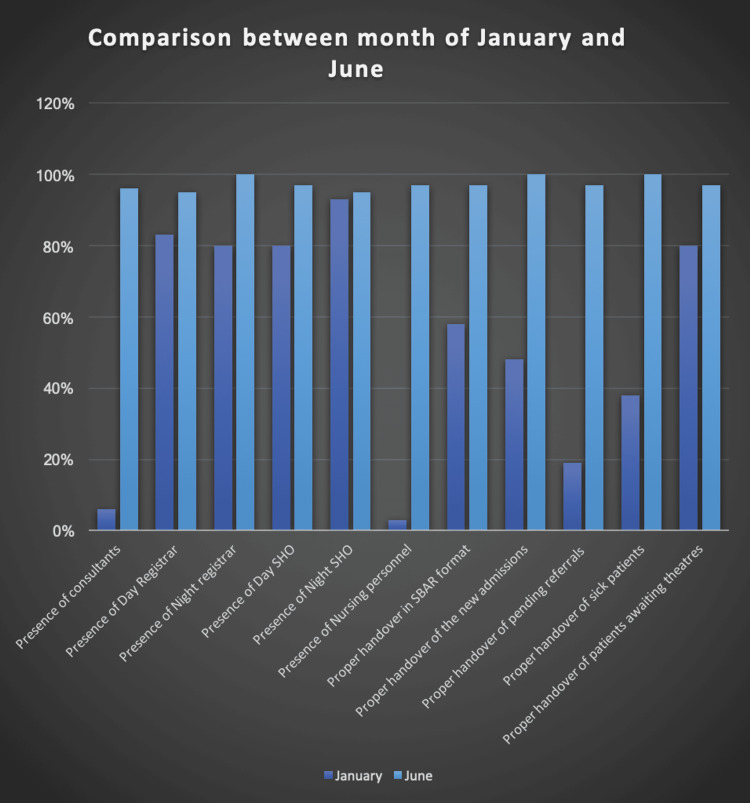
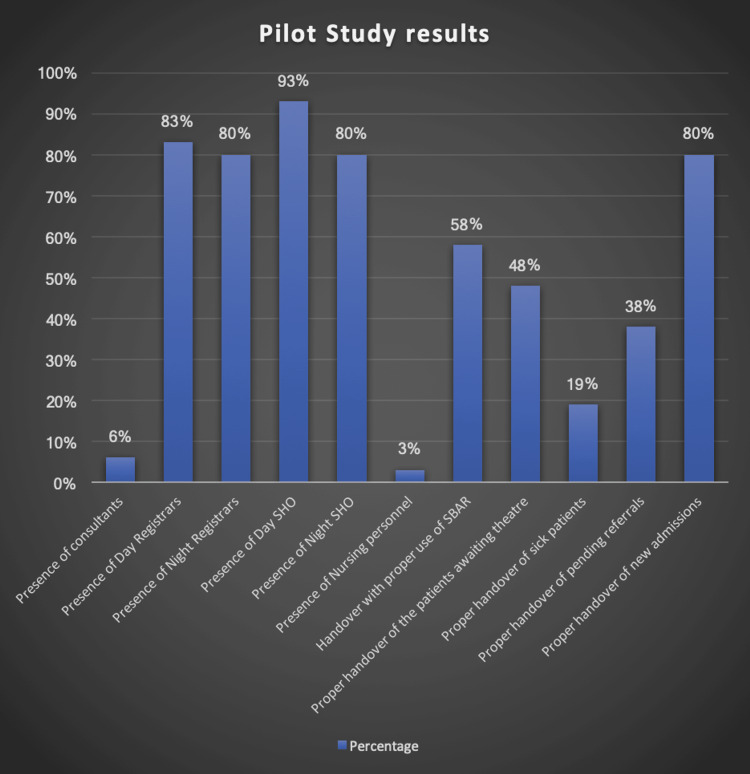
Objectives The objective of this study was to introduce a new system of handover in the gynaecology department and ensure its effectiveness with dynamic improvement measures. This was launched as a quality improvement project in a district general hospital in the United Kingdom. The primary aim was to start and consolidate a new system of a separate gynaecology handover in the presence of consultants, registrars (incoming and outgoing), senior house officers (incoming and outgoing) and gynaecology nurses. Design The strategy for consolidation included a daily quality review on the basis of a fixed proforma, identifying the obstacles faced, and improvising dynamic solutions. A new quality check proforma was introduced which took into account: (i) Presence of team members, (ii) Following of proper SBAR (Situation, Background, Assessment, Recommendation) format in the handover, (iii) Updating of patients awaiting surgeries with every detail on the list, (iv) Proper handing over of pending referrals, (v) Mention of sick patients with proper importance, and (vi) Proper handing over of new admissions. A pilot study was done to evaluate the baseline performance of the unit regarding the gynaecology team handover on the basis of the same proforma. The result of the baseline study was noted as the reference. Each day the team receiving the handover was interviewed for the next five months about the quality of each of the parameters on the predesigned proforma and the responses were noted. The answers were designed in binary form (Yes/No). These results were compiled at the end of each month. The result from each individual month was reviewed and the problems were identified and practical solutions were applied. These changes were noted and plotted graphically as a bar diagram. The monthly audit results were tabulated in an Excel sheet (Microsoft Corporation, Redmond, Washington, United States). Results Pilot study results and final month results were compared with the help of the Mcnemar test and statistically significant improvement was noticed in seven out of eleven parameters. There was a steady and gradual improvement in the responses. The possible limitations of the study were also noted at the same time. Conclusion The quality improvement project was highly effective in improving the quality of handover and increased patient safety to a large extent.
目标 本研究的目的是在妇科引入一种新的交接班系统,并通过动态改进措施确保其有效性。这是作为英国一家地区综合医院的质量改进项目启动的。主要目标是在会诊医生、住院医生( incoming和outgoing)、高级住院医生(incoming和outgoing)以及妇科护士在场的情况下启动并巩固一种单独的妇科交接班新系统。
设计 巩固策略包括基于固定格式进行每日质量审查,识别面临的障碍,并提出动态解决方案。引入了一种新的质量检查表,该表考虑了:(i)团队成员的出席情况;(ii)交接班时遵循正确的SBAR(情况、背景、评估、建议)格式;(iii)在列表中更新等待手术患者的每一个细节;(iv)正确交接待处理的转诊;(v)恰当地提及病情严重的患者;(vi)正确交接新入院患者。基于相同格式进行了一项试点研究,以评估该科室妇科团队交接班的基线表现。将基线研究结果作为参考。在接下来的五个月里,每天对接班团队就预先设计格式上每个参数的质量进行询问,并记录回答。答案设计为二元形式(是/否)。这些结果在每个月底汇总。审查每个月的结果,识别问题并应用实际解决方案。记录这些变化并以柱状图形式绘制。每月的审核结果记录在Excel工作表(美国华盛顿州雷德蒙德市微软公司)中。
结果 在McNemar检验的帮助下比较了试点研究结果和最后一个月的结果,发现11个参数中有7个有统计学上显著的改善。回答有稳步且逐渐的改善。同时也指出了该研究可能存在的局限性。
结论 该质量改进项目在提高交接班质量方面非常有效,并在很大程度上提高了患者安全。