Embaby Mohamed A, Ayesh Ahmed M, Salem Salah H, Abdel-Rahman Gomaa N
Food Toxicology and Contaminants Department, National Research Centre, Dokki, Giza 12622, Egypt.
Toxicol Rep. 2024 Aug 11;13:101710. doi: 10.1016/j.toxrep.2024.101710. eCollection 2024 Dec.
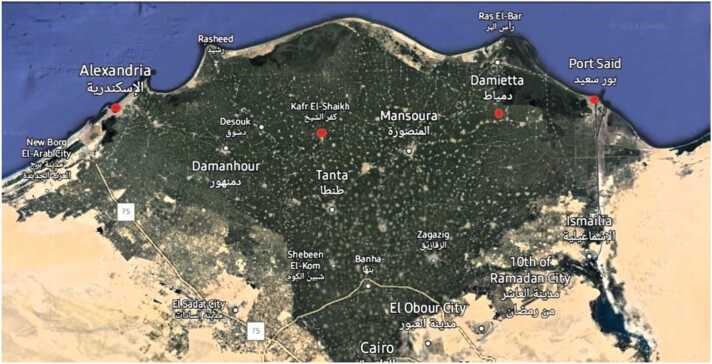
Heavy metal contamination in seafood is a developing concern due to the potential negative consequences on human health. Egypt's coastal regions are important for seafood production and consumption, making it critical to assess the safety of these aquatic resources. The current study examined toxic metal levels (Hg, Pb, Cd, and AS) in 96 samples of sardine and shrimp from four Egyptian coastal governorates (Alexandria, Kafr El-Sheikh, Damietta, and Port Said) from 2019 to 2021. Inductively coupled plasma-optical emission spectroscopy (ICP-OES) was used to investigate the four hazardous metals. The recovery percentages of the determined metals ranged between 97 % and 99 %. Limits of detection (LOD) and limit of quantification (LOQ) for the determined metals ranged from 0.001 to 0.0077 mg/l and from 0.0035 to 0.026 mg/l, respectively. Mercury (Hg) was not found in any of the samples tested. The concentrations of Pb and Cd in the sardines and shrimp samples were higher in the winter seasons than in the summer seasons. Meanwhile, the difference in seasons had no effect on the concentration of As in the sardines and shrimp samples. The highest concentrations of the other three metals in the sardine and shrimp samples were used to calculate the Estimated Daily Intake (EDI), Target Hazard Quotient (THQ), and Hazard Index (HI). The obtained THQ as well as the HI of Pb, Cd, and As were all less than 1.0 (with the exception of sardine samples from Kafr El-Sheikh Governorate, which recorded 1.262), indicating that there is no significant health risk to the consumer from consuming such sardines and shrimp from these governorates. The effect of different seasons on the concentrations of the metals under study does not have a specific behavior, but varies according to the governorate, the type of sample, and the type of contaminated metal. Due to the high level of contamination with heavy metals in sardine samples collected from Kafr El-Sheikh governorate (TTHQ = 1.26), an environmental study is required to determine the causes of contamination and control them.
由于对人类健康可能产生负面影响,海产品中的重金属污染日益受到关注。埃及沿海地区对海产品的生产和消费至关重要,因此评估这些水产资源的安全性至关重要。本研究检测了2019年至2021年从埃及四个沿海省份(亚历山大、卡夫尔谢赫、达米埃塔和塞得港)采集的96份沙丁鱼和虾样本中的有毒金属含量(汞、铅、镉和砷)。采用电感耦合等离子体发射光谱法(ICP-OES)测定这四种有害金属。所测金属的回收率在97%至99%之间。所测金属的检测限(LOD)和定量限(LOQ)分别为0.001至0.0077mg/l和0.0035至0.026mg/l。在所测试的任何样本中均未发现汞(Hg)。沙丁鱼和虾样本中铅和镉的浓度在冬季高于夏季。同时,季节差异对沙丁鱼和虾样本中砷的浓度没有影响。利用沙丁鱼和虾样本中其他三种金属的最高浓度计算估计每日摄入量(EDI)、目标危害商(THQ)和危害指数(HI)。所获得的THQ以及铅、镉和砷的HI均小于1.0(卡夫尔谢赫省的沙丁鱼样本除外,其记录值为1.262),这表明食用这些省份的此类沙丁鱼和虾对消费者没有显著健康风险。不同季节对所研究金属浓度的影响没有特定规律,而是因省份、样本类型和受污染金属类型而异。由于从卡夫尔谢赫省采集的沙丁鱼样本中重金属污染水平较高(总THQ = 1.