Costa Alessia, Micheli Laura, Sordi Virginia, Ciampi Clara, Lucci Jacopo, Passani Maria Beatrice, Provensi Gustavo
Section of Pharmacology and Toxicology, Department of Neuroscience, Psychology, Drug Research and Child Health (NEUROFARBA), University of Florence, Florence, Italy.
Pharmacology Unit, School of Pharmacy, University of Camerino, Camerino, Italy.
Front Pharmacol. 2024 Aug 26;15:1439811. doi: 10.3389/fphar.2024.1439811. eCollection 2024.
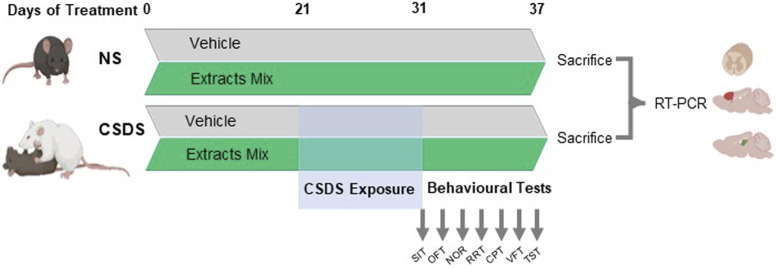
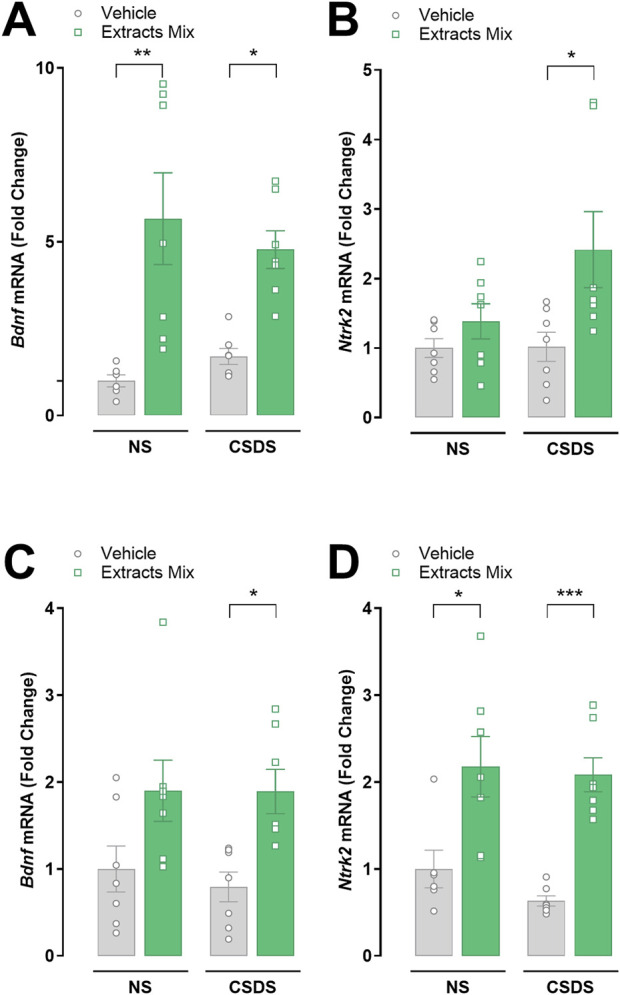
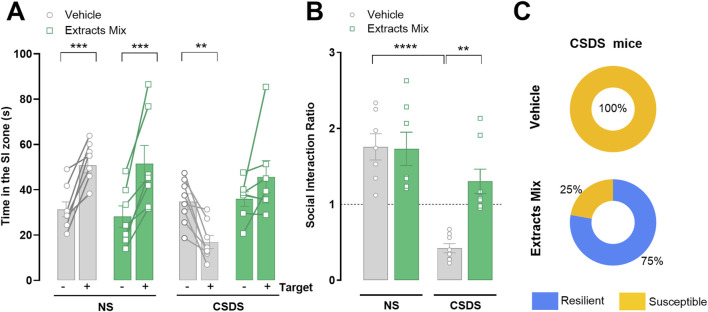
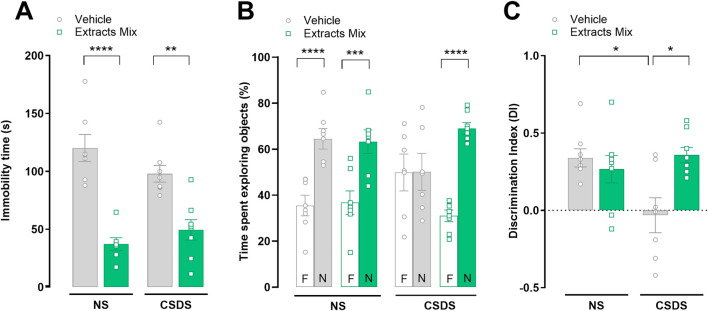
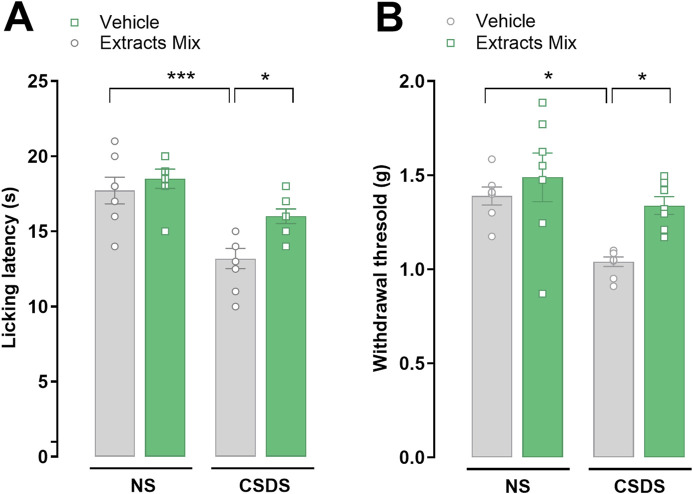
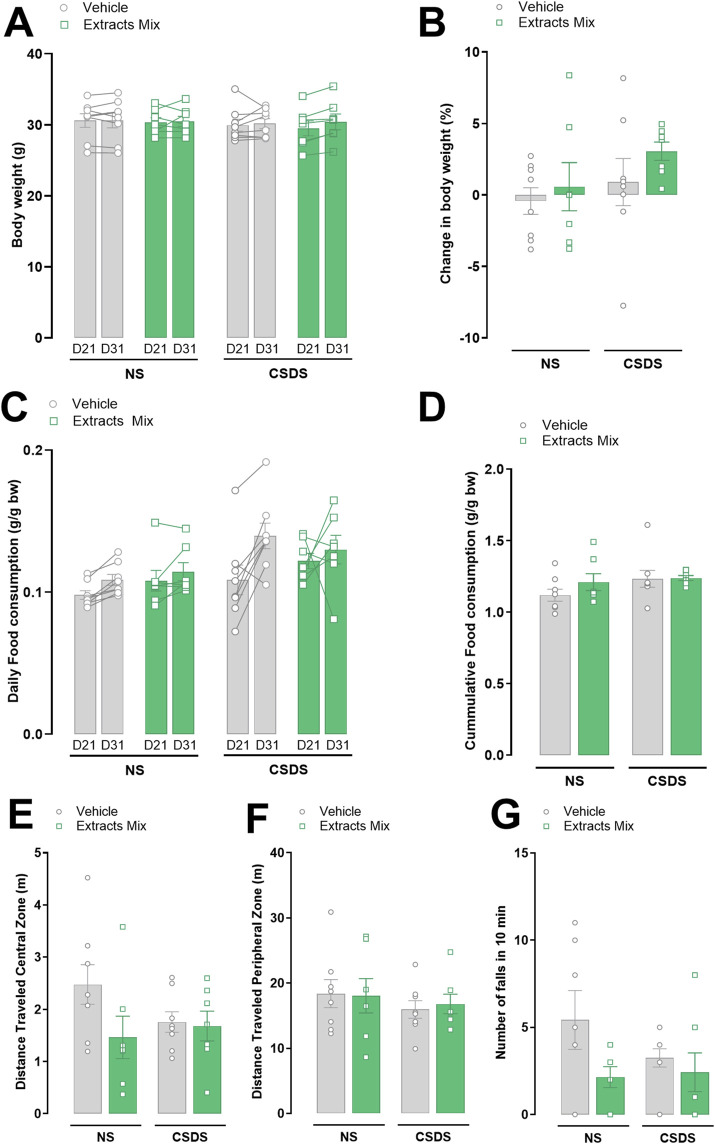
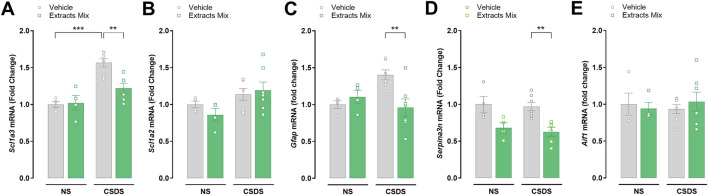
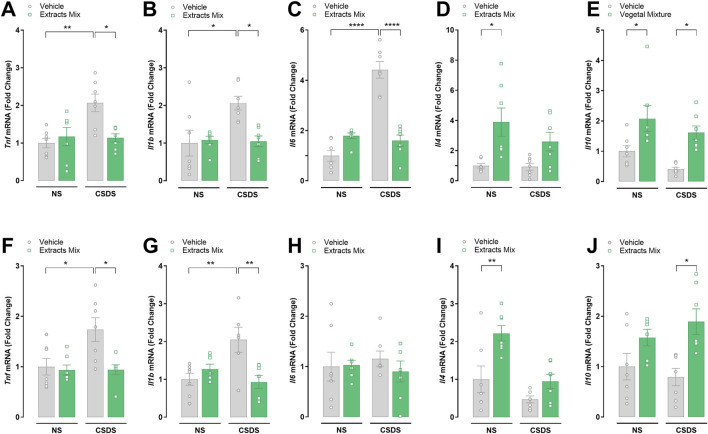
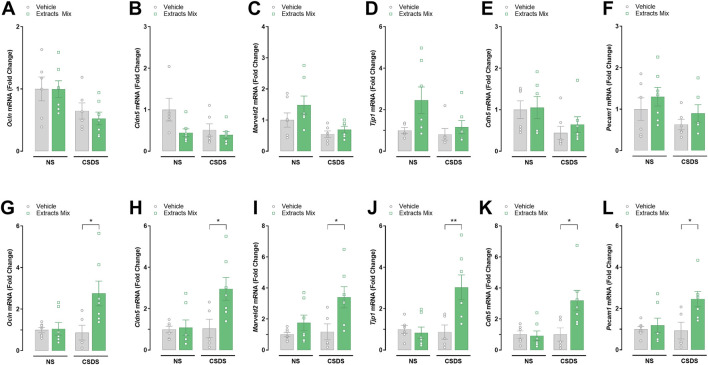
Prolonged exposure to stress is a risk factor for the onset of several disorders. Modern life is burdened by a pervasive prevalence of stress, which represents a major societal challenge requiring new therapeutic strategies. In this context, botanical drug-based therapies can have a paramount importance. Here we studied the preventive effects of a repeated treatment (p.o. daily, 3 weeks) with a combination of Centella asiatica (200 mg/kg), Echinacea purpurea (20 mg/kg) and Zingiber officinale (150 mg/kg) standardized extracts, on the chronic social defeat stress (CSDS) deleterious outcomes. After 10 days of CSDS exposure, male mice' performances were evaluated in paradigms relevant for social (social interaction test), emotional (tail suspension test), cognitive (novel object recognition) domains as well as for pain perception (cold plate and von Frey tests) and motor skills (rotarod). Mice were then sacrificed, the spinal cords, hippocampi and frontal cortices dissected and processed for RT-PCR analysis. Extracts mix treatment prevented stress-induced social aversion, memory impairment, mechanical and thermal allodynia and reduced behavioural despair independently of stress exposure. The treatment stimulated hippocampal and cortical BDNF and TrkB mRNA levels and counteracted stress-induced alterations in pro- (TNF-α, IL-1β and IL-6) and anti-inflammatory (IL4, IL10) cytokines expression in the same areas. It also modulated expression of pain related genes (GFAP and Slc1a3) in the spinal cord. The treatment with the extracts mix obtained from , and may represent a promising strategy to promote resilience and prevent the deleterious effects induced by extended exposure to psychosocial stress.
长期暴露于压力是多种疾病发病的危险因素。现代生活因压力的普遍存在而负担沉重,这是一项需要新治疗策略的重大社会挑战。在这种背景下,基于植物药的疗法可能具有至关重要的意义。在此,我们研究了积雪草(200毫克/千克)、紫锥菊(20毫克/千克)和生姜(150毫克/千克)标准化提取物联合重复治疗(每日口服,3周)对慢性社会挫败应激(CSDS)有害后果的预防作用。在CSDS暴露10天后,在与社交(社交互动测试)、情绪(悬尾测试)、认知(新物体识别)领域相关的范式以及疼痛感知(冷板和von Frey测试)和运动技能(转棒测试)方面评估雄性小鼠的表现。然后处死小鼠,解剖脊髓、海马体和额叶皮质并进行RT-PCR分析。提取物混合治疗可预防应激诱导的社交厌恶、记忆障碍、机械性和热性痛觉过敏,并独立于应激暴露减轻行为绝望。该治疗刺激了海马体和皮质中脑源性神经营养因子(BDNF)和酪氨酸激酶受体B(TrkB)mRNA水平,并抵消了应激诱导的同一区域促炎(肿瘤坏死因子-α、白细胞介素-1β和白细胞介素-6)和抗炎(白细胞介素-4、白细胞介素-10)细胞因子表达的改变。它还调节了脊髓中疼痛相关基因(胶质纤维酸性蛋白和溶质载体家族1成员3)的表达。用从积雪草、紫锥菊和生姜中获得的提取物混合物进行治疗可能是一种有前景的策略,以促进恢复力并预防长期暴露于心理社会压力所诱导的有害影响。