Jiangsu Key Laboratory of Immunity and Metabolism, Xuzhou Medical University, Xuzhou, China.
Laboratory of Infection and Immunity, Department of Pathogenic Biology and Immunology, School of Basic Medical Sciences, Xuzhou Medical University, Xuzhou, China.
Nat Commun. 2024 Sep 10;15(1):7914. doi: 10.1038/s41467-024-52336-z.
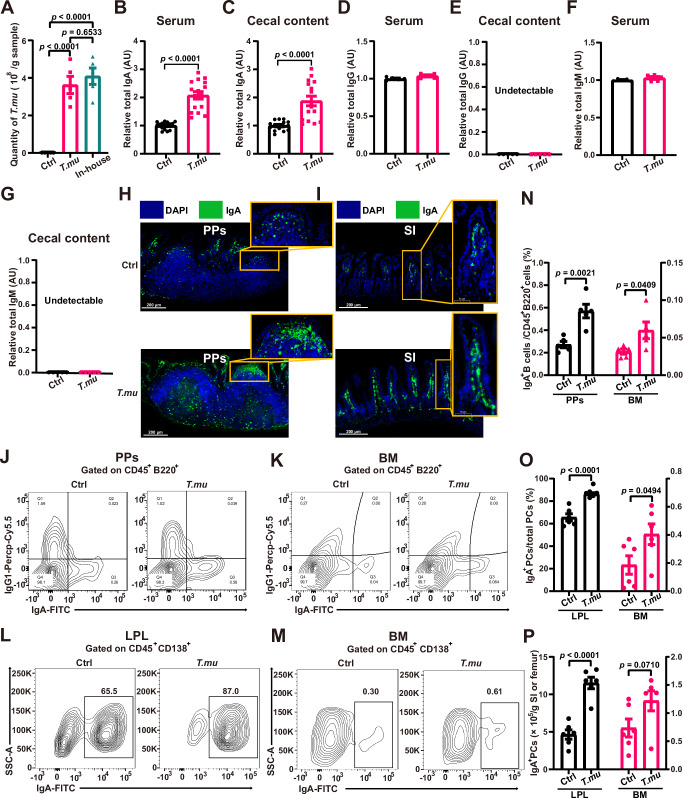
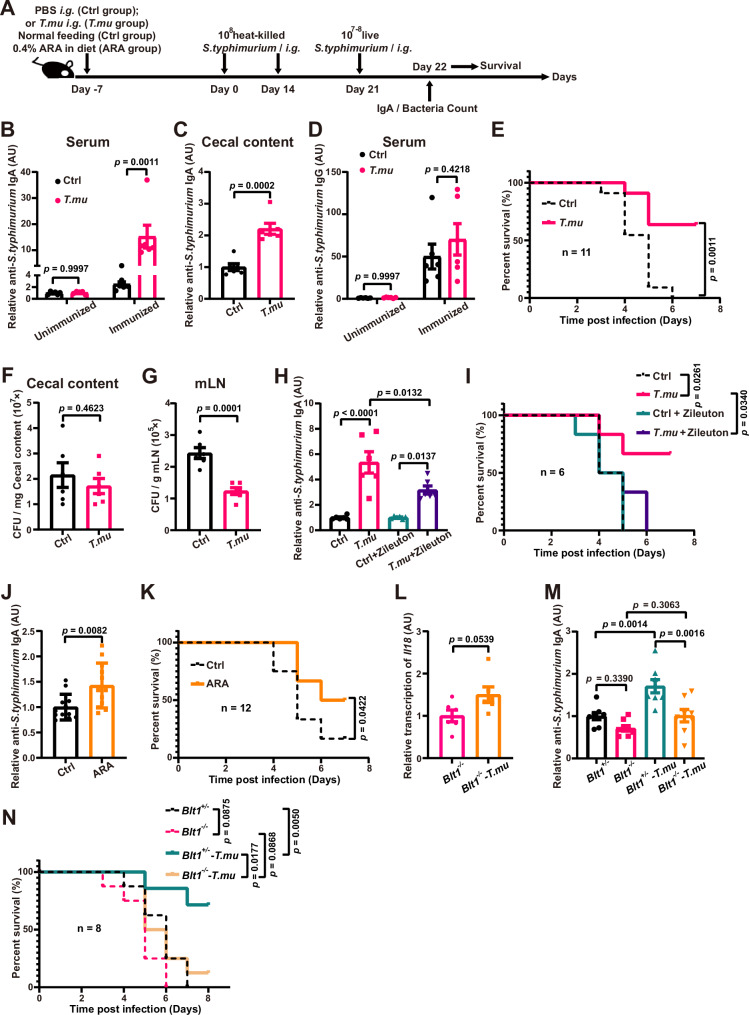
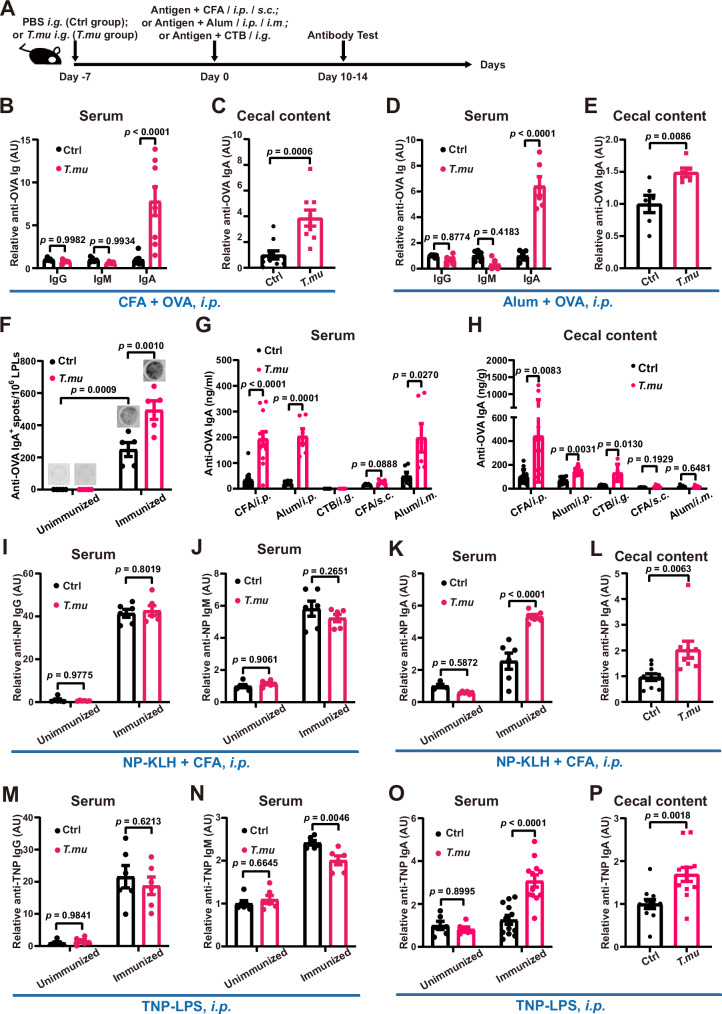
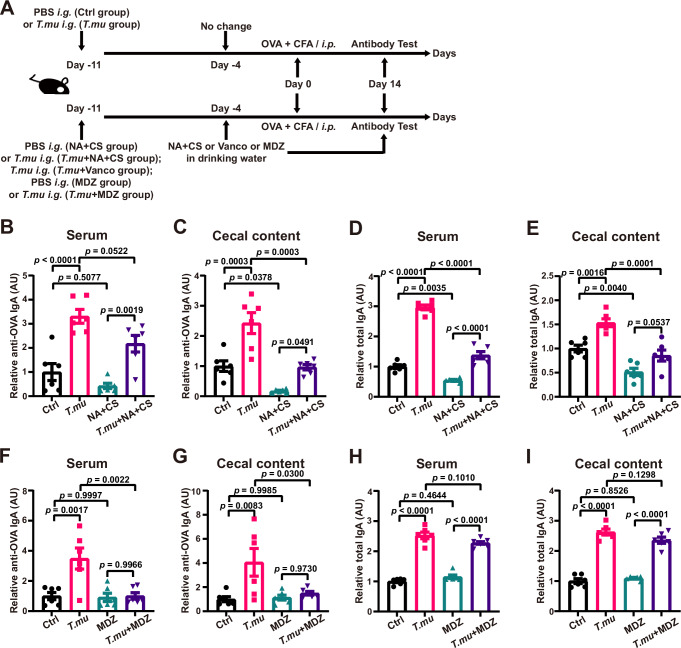
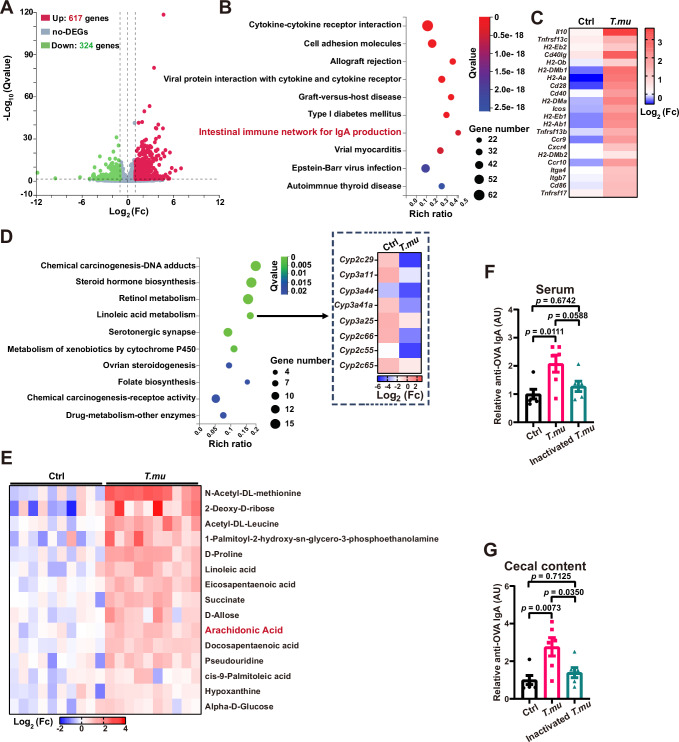
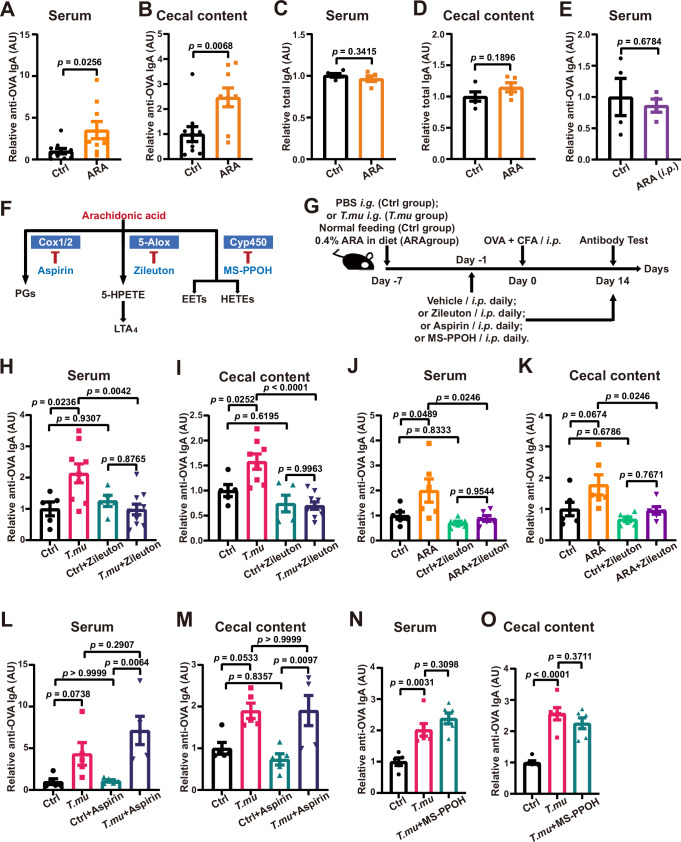
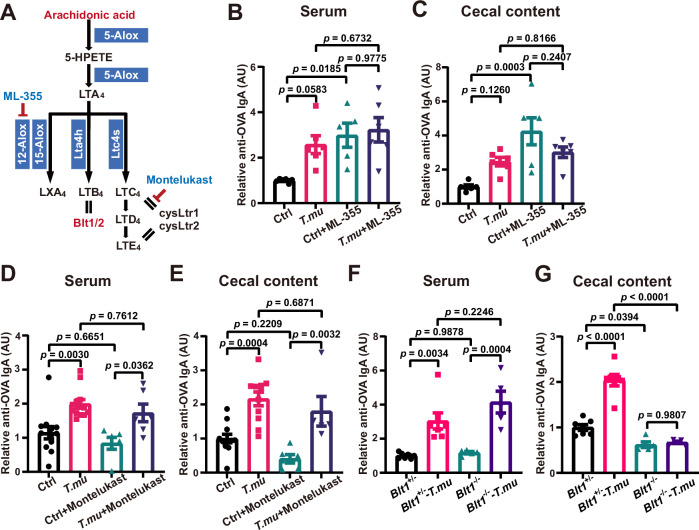
IgA antibodies play an important role in mucosal immunity. However, there is still no effective way to consistently boost mucosal IgA responses, and the factors influencing these responses are not fully understood. We observed that colonization with the murine intestinal symbiotic protozoan Tritrichomonas musculis (T.mu) boosted antigen-specific mucosal IgA responses in wild-type C57BL/6 mice. This enhancement was attributed to the accumulation of free arachidonic acid (ARA) in the intestinal lumen, which served as a signal to stimulate the production of antigen-specific mucosal IgA. When ARA was prevented from undergoing its downstream metabolic transformation using the 5-lipoxygenase inhibitor zileuton or by blocking its downstream biological signaling through genetic deletion of the Leukotriene B receptor 1 (Blt1), the T.mu-mediated enhancement of antigen-specific mucosal IgA production was suppressed. Moreover, both T.mu transfer and dietary supplementation of ARA augmented the efficacy of an oral vaccine against Salmonella infection, with this effect being dependent on Blt1. Our findings elucidate a tripartite circuit linking nutrients from the diet or intestinal microbiota, host lipid metabolism, and the mucosal humoral immune response.
IgA 抗体在黏膜免疫中发挥重要作用。然而,目前仍然没有一种有效的方法可以持续增强黏膜 IgA 反应,并且影响这些反应的因素尚未完全阐明。我们观察到,感染肠道共生原生动物旋毛虫(Tritrichomonas musculis)会增强野生型 C57BL/6 小鼠的抗原特异性黏膜 IgA 反应。这种增强归因于肠腔中游离花生四烯酸(ARA)的积累,它作为刺激抗原特异性黏膜 IgA 产生的信号。当使用 5-脂氧合酶抑制剂齐留通阻止 ARA 进行下游代谢转化,或通过遗传敲除白三烯 B 受体 1(Blt1)阻断其下游生物学信号时,T.mu 介导的抗原特异性黏膜 IgA 产生增强作用被抑制。此外,T.mu 的转移和 ARA 的饮食补充均增强了口服沙门氏菌疫苗的功效,这种作用依赖于 Blt1。我们的研究结果阐明了一个三方回路,将饮食或肠道微生物群中的营养素、宿主脂质代谢和黏膜体液免疫反应联系起来。