Sénémaud Jean, Skarbek Charles, Hernandez Belen, Song Ran, Lefevre Isabelle, Bianchi Elisabetta, Castier Yves, Nicoletti Antonino, Bureau Christophe, Caligiuri Giuseppina
Department of Vascular Surgery, Bichat University Hospital, Paris, France.
Université Paris Cité, Paris, France.
JVS Vasc Sci. 2024 Jul 23;5:100213. doi: 10.1016/j.jvssci.2024.100213. eCollection 2024.
Implantation of an endovascular device disrupts the homeostatic CD31:CD31 interactions among quiescent endothelial cells (ECs), platelets, and circulating leukocytes. The aim of this study was to design an endothelial-mimetic coating of nitinol and cobalt-chromium (CoCr) surfaces and stents using synthetic CD31 peptides, to promote device endothelialization and pacific integration within the arterial wall.
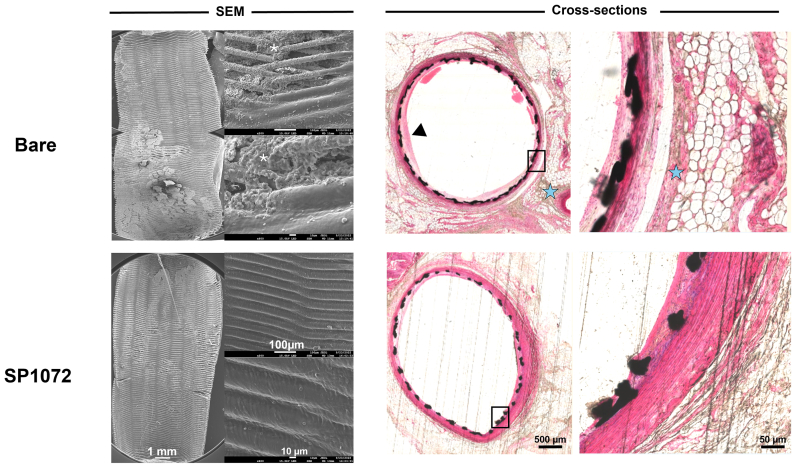
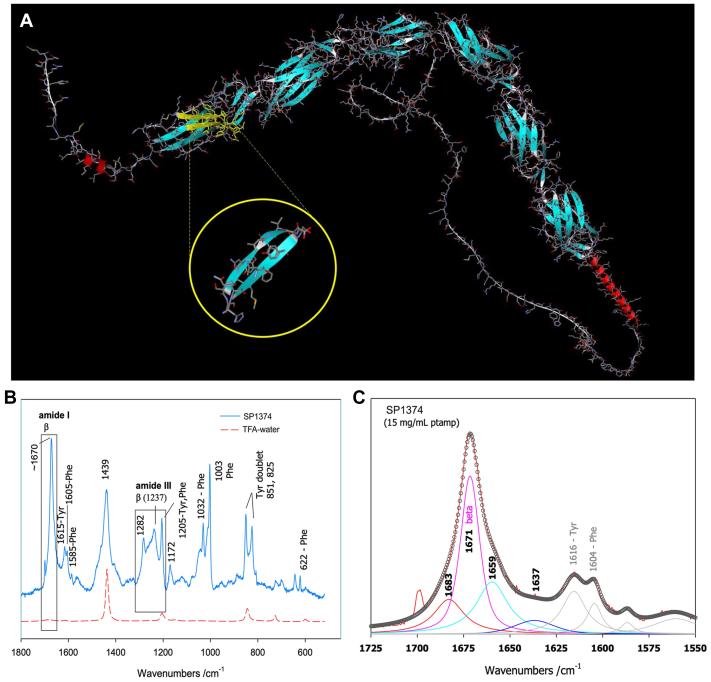
Peptides mimicking the domains 1 (D1) and 2 (D2) of CD31 were synthetized and immobilized onto experimental nitinol and CoCr surfaces using a three-step, dip-coating, mussel-inspired protocol using copper-free click chemistry. Human aortic EC phenotype and endothelialization assessment using parallel scratch tests were carried out using five synthetic CD31 peptides coated on 4.8-mm nitinol and CoCr flat disks and were compared with control disks. The CD31 peptide exhibiting the best results in vitro was then immobilized on clinical-grade 3 × 40-mm self-expanding nitinol and 2.5 × 20.0-mm balloon-expandable CoCr stents. Such devices were implanted in native arteries of White New Zealand rabbits, and compared with control uncoated bare metal stents (BMS) and drug-eluting stents 7 and 30 days after implantation using resin cross-sections and scanning electron microscopy (n = 2-3 per group at each time point).
Membrane-distal CD31 D1 and D2 peptides exhibited a distinct capability to foster a healthy endothelial phenotype and to promote endothelialization in vitro. By day 7 after implantation, CD31 nitinol and CoCr stents were evenly covered by wholesome ECs, devoid of thromboinflammatory signs, in contrast with both BMS and drug-eluting stents. Such results were consistent until day 30.
Membrane-distal CD31 biomimetic peptides seem to camouflage the device surface effectively, preventing local reactions and promoting rapid and seamless endovascular integration.
血管内装置的植入会破坏静态内皮细胞(ECs)、血小板和循环白细胞之间稳态的CD31:CD31相互作用。本研究的目的是使用合成的CD31肽设计一种镍钛诺和钴铬(CoCr)表面及支架的内皮模拟涂层,以促进装置内皮化及在动脉壁内的和平整合。
合成模拟CD31第1结构域(D1)和第2结构域(D2)的肽,并使用三步浸涂法、受贻贝启发的方案以及无铜点击化学将其固定在实验性镍钛诺和CoCr表面上。使用涂覆在4.8毫米镍钛诺和CoCr平盘上的五种合成CD31肽进行人主动脉EC表型分析及平行划痕试验进行内皮化评估,并与对照盘进行比较。然后将体外表现最佳的CD31肽固定在临床级3×40毫米自膨胀镍钛诺和2.5×20.0毫米球囊扩张CoCr支架上。将此类装置植入新西兰白兔的天然动脉中,并在植入后7天和30天使用树脂横截面和扫描电子显微镜与对照未涂层裸金属支架(BMS)和药物洗脱支架进行比较(每个时间点每组n = 2 - 3)。
膜远端CD31 D1和D2肽在体外表现出促进健康内皮表型和促进内皮化的独特能力。植入后第7天,与BMS和药物洗脱支架相比,CD31镍钛诺和CoCr支架被健康的ECs均匀覆盖,无血栓炎症迹象。直到第30天,这些结果都是一致的。
膜远端CD31仿生肽似乎能有效伪装装置表面,防止局部反应并促进快速无缝的血管内整合。