Immunopathology and Viral Reservoir Unit, National Center of Microbiology, Instituto de Salud Carlos III, Madrid, Spain.
PhD Program in Biomedical Sciences and Public Health, Universidad Nacional de Educación a Distancia (UNED), Madrid, Spain.
Front Immunol. 2024 Aug 27;15:1431411. doi: 10.3389/fimmu.2024.1431411. eCollection 2024.
After mild COVID-19 that does not require hospitalization, some individuals develop persistent symptoms that may worsen over time, producing a multisystemic condition termed Post-COVID condition (PCC). Among other disorders, PCC is characterized by persistent changes in the immune system that may not be solved several months after COVID-19 diagnosis.
People with PCC were recruited to determine the distribution and functionality of CD4+ T helper (Th) subsets in comparison with individuals with mild, severe, and critical presentations of acute COVID-19 to evaluate their contribution as risk or protective factors for PCC.
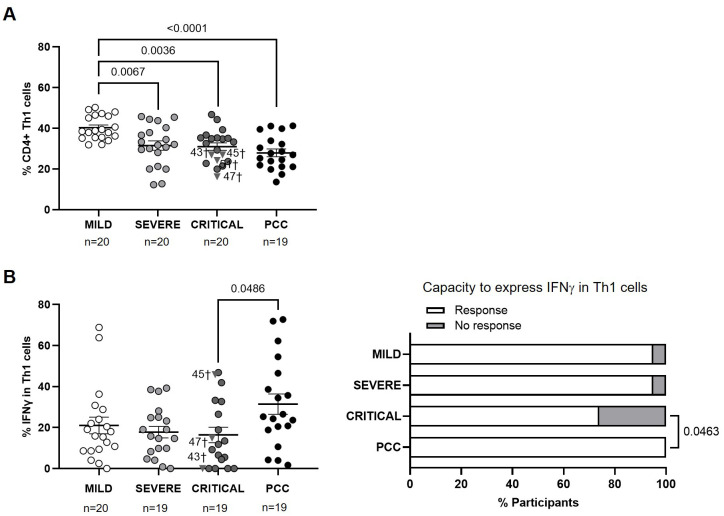
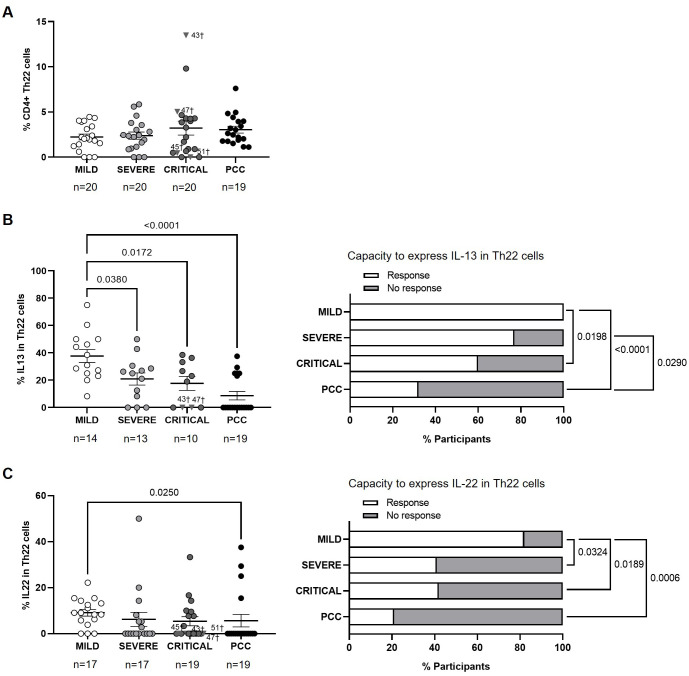
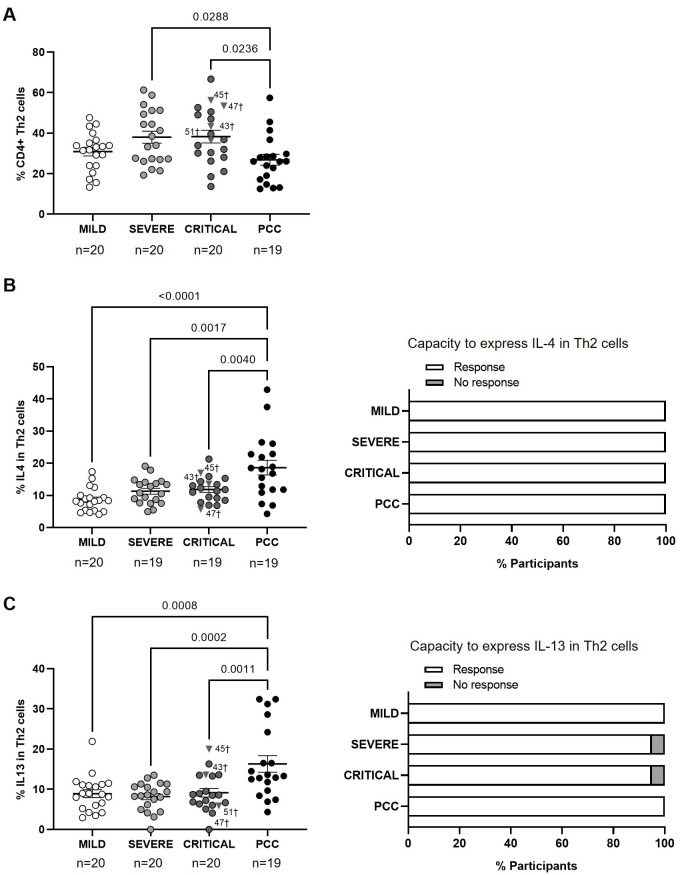
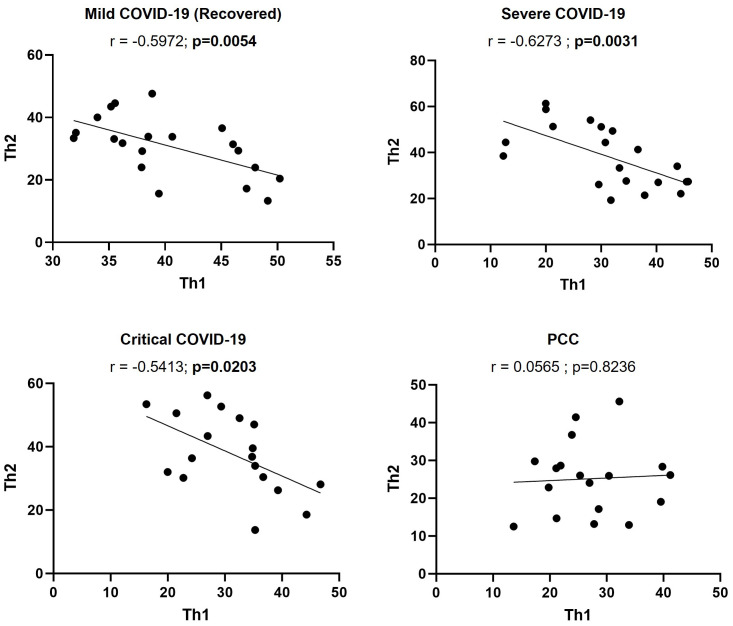
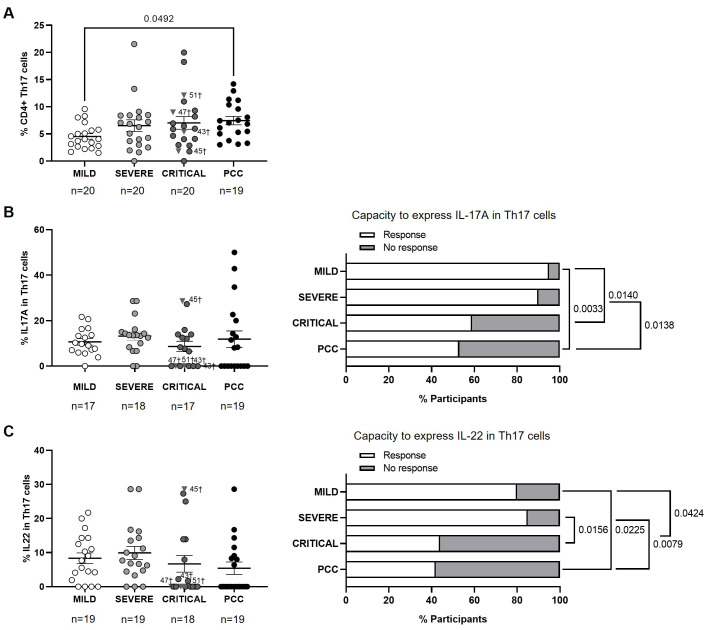
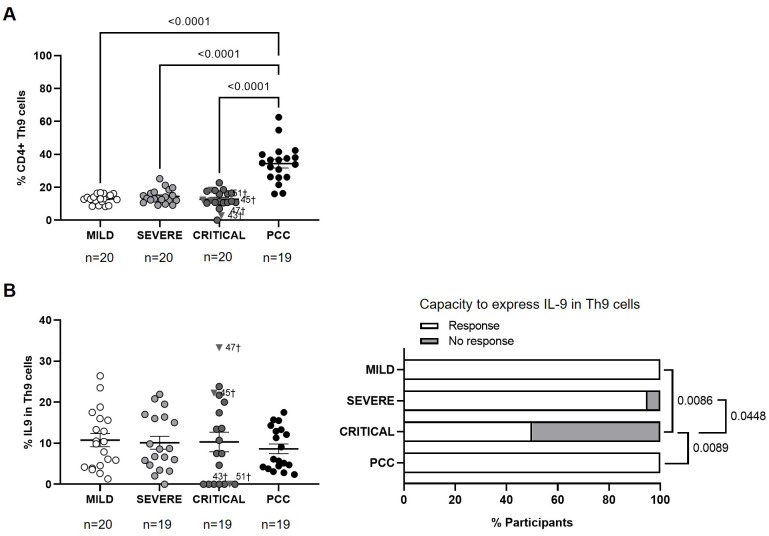
People with PCC showed low levels of Th1 cells, similar to individuals with severe and critical COVID-19, although these cells presented a higher capacity to express IFNγ in response to stimulation. Th2/Th1 correlation was negative in individuals with acute forms of COVID-19, but there was no significant Th2/Th1 correlation in people with PCC. Th2 cells from people with PCC presented high capacity to express IL-4 and IL-13, which are related to low ventilation and death associated with COVID-19. Levels of proinflammatory Th9 and Th17 subsets were significantly higher in people with PCC in comparison with acute COVID-19, being Th1/Th9 correlation negative in these individuals, which probably contributed to a more pro-inflammatory than antiviral scenario. Th17 cells from approximately 50% of individuals with PCC had no capacity to express IL-17A and IL-22, similar to individuals with critical COVID-19, which would prevent clearing extracellular pathogens. Th2/Th17 correlation was positive in people with PCC, which in the absence of negative Th1/Th2 correlation could also contribute to the proinflammatory state. Finally, Th22 cells from most individuals with PCC had no capacity to express IL-13 or IL-22, which could increase tendency to reinfections due to impaired epithelial regeneration.
People with PCC showed skewed polarization of CD4+ Th subsets with altered functionality that was more similar to individuals with severe and critical presentations of acute COVID-19 than to people who fully recovered from mild disease. New strategies aimed at reprogramming the immune response and redirecting CD4+ Th cell polarization may be necessary to reduce the proinflammatory environment characteristic of PCC.
在无需住院治疗的轻症 COVID-19 后,一些患者会出现持续症状,这些症状可能随时间推移而恶化,从而产生一种称为新冠后状况(Post-COVID condition,PCC)的多系统疾病。除其他疾病外,PCC 的特征是免疫系统持续变化,在 COVID-19 诊断后数月仍未得到解决。
招募 PCC 患者以确定 CD4+辅助性 T 细胞(Th)亚群的分布和功能,与轻症、重症和危重症急性 COVID-19 患者进行比较,以评估其作为 PCC 的风险或保护因素的作用。
PCC 患者的 Th1 细胞水平较低,与重症和危重症 COVID-19 患者相似,尽管这些细胞在受到刺激时表达 IFNγ 的能力较高。急性 COVID-19 患者的 Th2/Th1 相关性为负,但 PCC 患者无显著的 Th2/Th1 相关性。PCC 患者的 Th2 细胞表达 IL-4 和 IL-13 的能力较高,与 COVID-19 相关的低通气和死亡有关。与急性 COVID-19 相比,PCC 患者的促炎 Th9 和 Th17 亚群水平显著升高,这些患者的 Th1/Th9 相关性为负,这可能导致更促炎而非抗病毒的情况。大约 50%的 PCC 患者的 Th17 细胞无法表达 IL-17A 和 IL-22,与危重症 COVID-19 患者相似,这将阻止清除细胞外病原体。PCC 患者的 Th2/Th17 相关性为正,在缺乏负 Th1/Th2 相关性的情况下,也可能导致促炎状态。最后,大多数 PCC 患者的 Th22 细胞无法表达 IL-13 或 IL-22,这可能会因上皮再生受损而增加再次感染的倾向。
PCC 患者的 CD4+ Th 亚群极化和功能发生改变,与急性 COVID-19 重症和危重症患者更相似,而与轻症完全康复的患者不同。可能需要新的策略来重新编程免疫反应并重新定向 CD4+ Th 细胞极化,以减少 PCC 特征性的促炎环境。