Dhawan Manish, Rabaan Ali A, Alwarthan Sara, Alhajri Mashael, Halwani Muhammad A, Alshengeti Amer, Najim Mustafa A, Alwashmi Ameen S S, Alshehri Ahmad A, Alshamrani Saleh A, AlShehail Bashayer M, Garout Mohammed, Al-Abdulhadi Saleh, Al-Ahmed Shamsah H, Thakur Nanamika, Verma Geetika
Department of Microbiology, Punjab Agricultural University, Ludhiana 141004, India.
Trafford College, Altrincham, Manchester WA14 5PQ, UK.
Vaccines (Basel). 2023 Mar 19;11(3):699. doi: 10.3390/vaccines11030699.
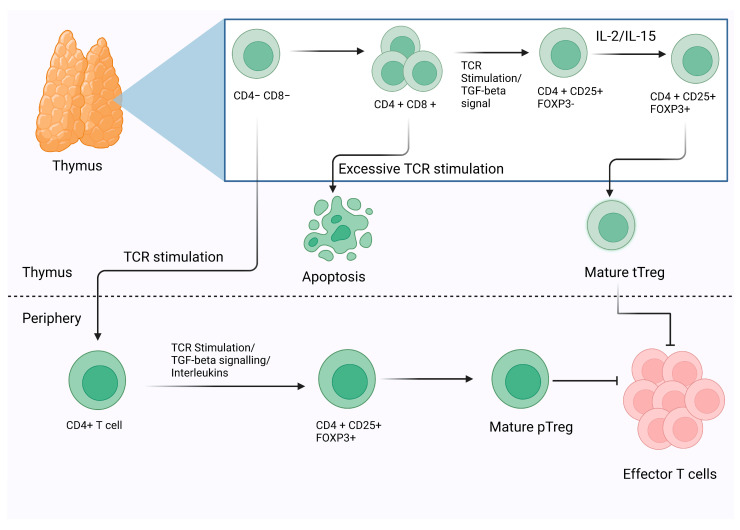
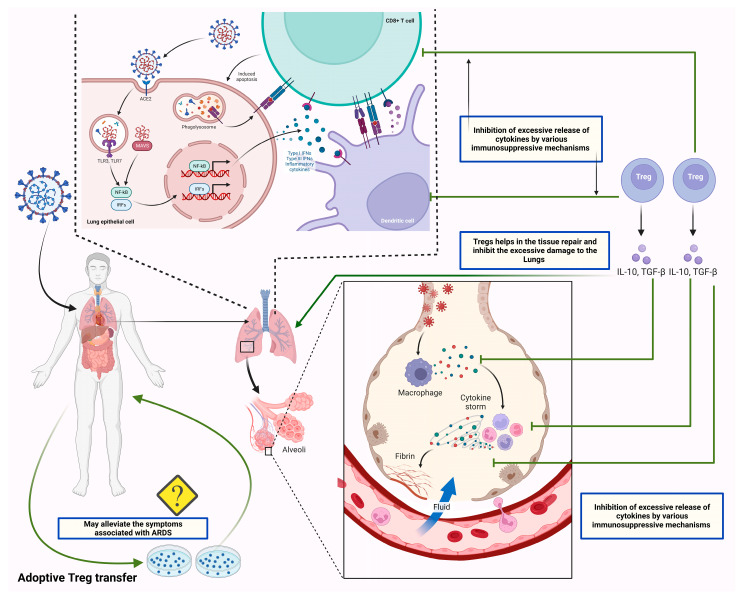
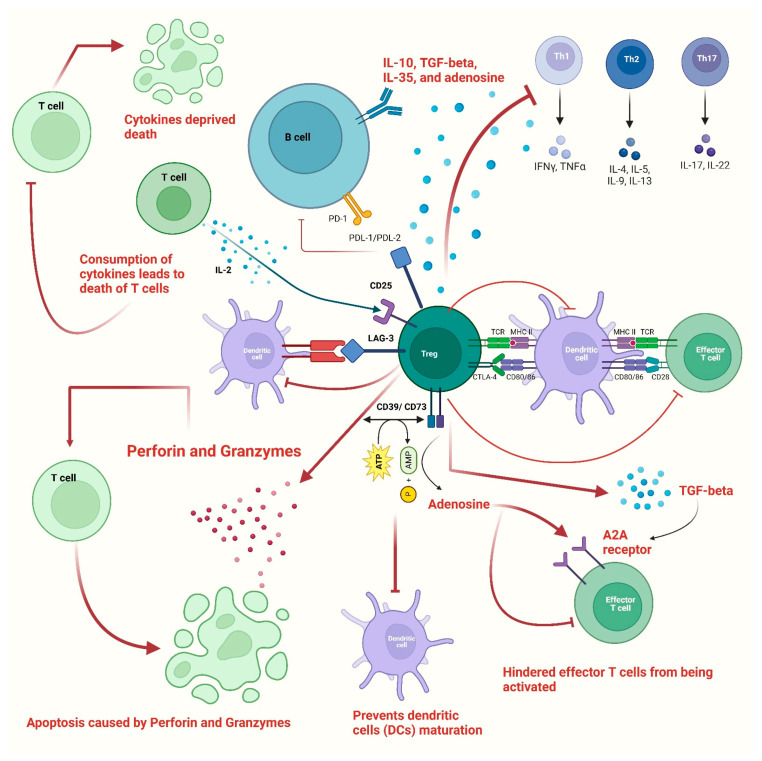
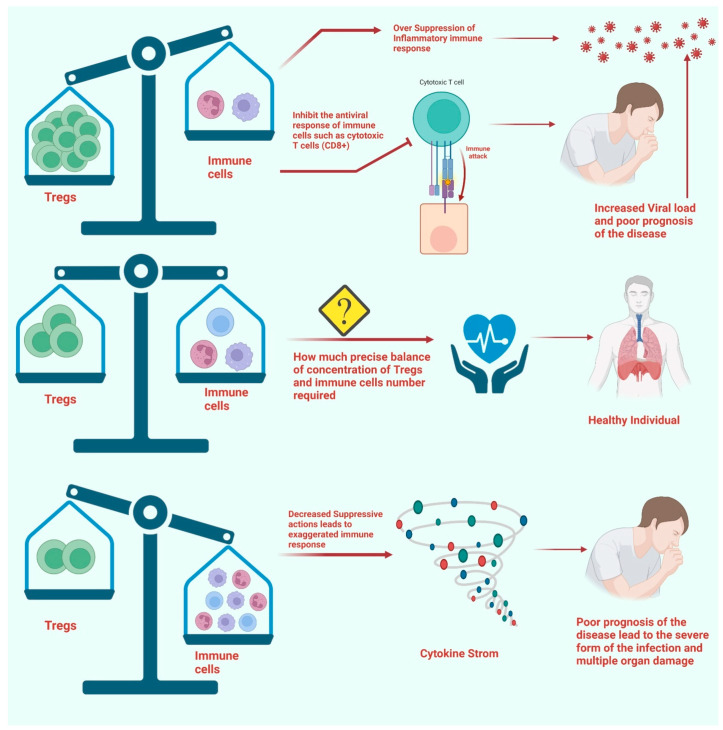
The COVID-19 pandemic has caused havoc all around the world. The causative agent of COVID-19 is the novel form of the coronavirus (CoV) named SARS-CoV-2, which results in immune system disruption, increased inflammation, and acute respiratory distress syndrome (ARDS). T cells have been important components of the immune system, which decide the fate of the COVID-19 disease. Recent studies have reported an important subset of T cells known as regulatory T cells (Tregs), which possess immunosuppressive and immunoregulatory properties and play a crucial role in the prognosis of COVID-19 disease. Recent studies have shown that COVID-19 patients have considerably fewer Tregs than the general population. Such a decrement may have an impact on COVID-19 patients in a number of ways, including diminishing the effect of inflammatory inhibition, creating an inequality in the Treg/Th17 percentage, and raising the chance of respiratory failure. Having fewer Tregs may enhance the likelihood of long COVID development in addition to contributing to the disease's poor prognosis. Additionally, tissue-resident Tregs provide tissue repair in addition to immunosuppressive and immunoregulatory activities, which may aid in the recovery of COVID-19 patients. The severity of the illness is also linked to abnormalities in the Tregs' phenotype, such as reduced expression of FoxP3 and other immunosuppressive cytokines, including IL-10 and TGF-beta. Hence, in this review, we summarize the immunosuppressive mechanisms and their possible roles in the prognosis of COVID-19 disease. Furthermore, the perturbations in Tregs have been associated with disease severity. The roles of Tregs are also explained in the long COVID. This review also discusses the potential therapeutic roles of Tregs in the management of patients with COVID-19.
新冠疫情在全球范围内造成了严重破坏。新冠病毒病(COVID-19)的病原体是一种名为严重急性呼吸综合征冠状病毒2(SARS-CoV-2)的新型冠状病毒,它会导致免疫系统紊乱、炎症增加以及急性呼吸窘迫综合征(ARDS)。T细胞一直是免疫系统的重要组成部分,它决定了COVID-19疾病的转归。最近的研究报道了一种重要的T细胞亚群,称为调节性T细胞(Tregs),它具有免疫抑制和免疫调节特性,在COVID-19疾病的预后中起着关键作用。最近的研究表明,COVID-19患者的Tregs比普通人群少得多。这种减少可能会在多个方面对COVID-19患者产生影响,包括削弱炎症抑制作用、导致Treg/Th17百分比失衡以及增加呼吸衰竭的几率。Tregs减少除了导致疾病预后不良外,还可能增加长期新冠发生的可能性。此外,组织驻留Tregs除了具有免疫抑制和免疫调节活性外,还能提供组织修复,这可能有助于COVID-19患者的康复。疾病的严重程度还与Tregs表型异常有关,如叉头框蛋白3(FoxP3)以及其他免疫抑制细胞因子(包括白细胞介素-10和转化生长因子-β)的表达降低。因此,在本综述中,我们总结了免疫抑制机制及其在COVID-19疾病预后中的可能作用。此外,Tregs的扰动与疾病严重程度相关。本文还解释了Tregs在长期新冠中的作用。本综述还讨论了Tregs在COVID-19患者管理中的潜在治疗作用。