Muñoz Pabon Karen Sofia, Roa Acosta Diego Fernando, Bravo Jesús Eduardo
Grupo de Investigación GIEPRONAL, Facultad de Ciencias Básicas, Tecnología e Ingeniería, Universidad Nacional Abierta ya Distancia (UNAD), Bogotá, Colombia.
Departamento de Agroindustria, Facultad de Ciencias Agrarias, Universidad del Cauca, Popayán, Colombia.
Heliyon. 2024 Aug 20;10(16):e36525. doi: 10.1016/j.heliyon.2024.e36525. eCollection 2024 Aug 30.
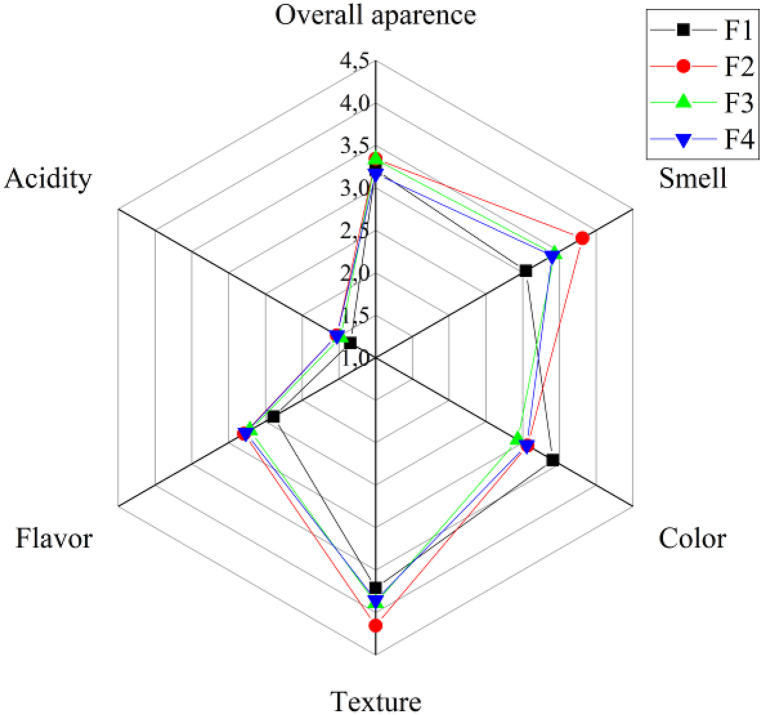
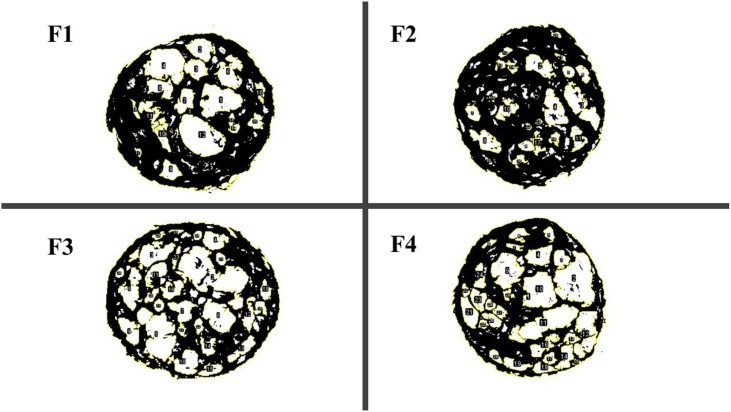
Food security is a pressing issue, emphasizing the necessity for food designs that address the current geopolitical and geoeconomic challenges. This study evaluates the impact of including different percentages (10 %, 20 %, 30 %, and 60 %) of high protein quinoa flour (HPQF) in the development of a new rice-based snack. The aim is to create four snack formulations with a protein content enriched with probiotics, surpassing those currently available in the market. Probiotics were added at a 0.1 % concentration. Once the rice flour and quinoa flour are mixed, they are mixed with the probiotic, to move on to the extrusion process. Following the incorporation of probiotics, the snacks were packaged in a modified atmosphere, and their physicochemical properties, probiotic viability, tolerance to artificial gastroenteric juice (TAGJ), starch digestibility, and sensory acceptance were assessed. Significant differences were observed in the expansion index, with the 60 % inclusion snack exhibiting the least expansion. Despite having a higher density, this snack reached a porosity index similar to that of the 20 % HPQF snack. Achieving a 17 % protein content in the snacks was possible with a 60 % inclusion rate. Texture was notably affected by the inclusion of HPQF, with snacks having higher inclusion levels showing increased hardness. Probiotic viability evaluation consistently remained above 10 UFC/g of snack, while TAGJ exhibited a viability of 75 %. Although HPQF inclusion led to a decrease in the glycemic index (GI), snacks still maintained a GI above 70 %. Regarding antioxidant properties, snacks with 60 % HPQF inclusion displayed superior results, reaching 35.29, 5.52, and 13.74 μmol of AA/g, measured via ABTS, DPPH, and FRAP methods, respectively. These findings demonstrate a heightened antioxidant capacity compared to other formulations. Our results indicate that the new probiotic snack serves as a rich source of protein and probiotics and is well-received sensorially. However, it is worth noting that it falls within the category of high GI foods, prompting the need for future studies aimed at reducing this parameter.
粮食安全是一个紧迫的问题,这凸显了设计能应对当前地缘政治和地缘经济挑战的食品的必要性。本研究评估了在一种新型大米基零食的开发中加入不同比例(10%、20%、30%和60%)的高蛋白藜麦粉(HPQF)所产生的影响。目的是创建四种富含益生菌的零食配方,使其蛋白质含量超过目前市场上的同类产品。益生菌的添加浓度为0.1%。将米粉和藜麦粉混合后,再与益生菌混合,然后进入挤压过程。加入益生菌后,将零食包装在气调包装中,并评估其物理化学性质、益生菌活力、对人工胃肠液(TAGJ)的耐受性、淀粉消化率和感官接受度。在膨胀指数方面观察到显著差异,60%添加量的零食膨胀最小。尽管该零食密度较高,但其孔隙率指数与20%HPQF添加量的零食相似。60%的添加率能够使零食中的蛋白质含量达到17%。质地明显受到HPQF添加量的影响,添加量较高的零食硬度增加。益生菌活力评估始终保持在每克零食10 UFC以上,而TAGJ的活力为75%。尽管HPQF的加入导致血糖指数(GI)降低,但零食的GI仍保持在70以上。在抗氧化性能方面,60%HPQF添加量的零食表现出优异的结果,通过ABTS、DPPH和FRAP方法测得的抗氧化能力分别达到35.29、5.52和13.74 μmol AA/g。与其他配方相比,这些结果表明其抗氧化能力更强。我们的结果表明,这种新型益生菌零食是蛋白质和益生菌的丰富来源,并且在感官上很受欢迎。然而,值得注意的是,它属于高GI食品类别,这促使未来需要开展旨在降低该参数的研究。