Department of Anesthesiology, Fujian Provincial Maternity and Child Health Hospital, Fuzhou, China.
College of Clinical Medicine for Obstetrics & Gynecology and Pediatrics, Fujian Medical University, Fuzhou, China.
Medicine (Baltimore). 2024 May 31;103(22):e38363. doi: 10.1097/MD.0000000000038363.
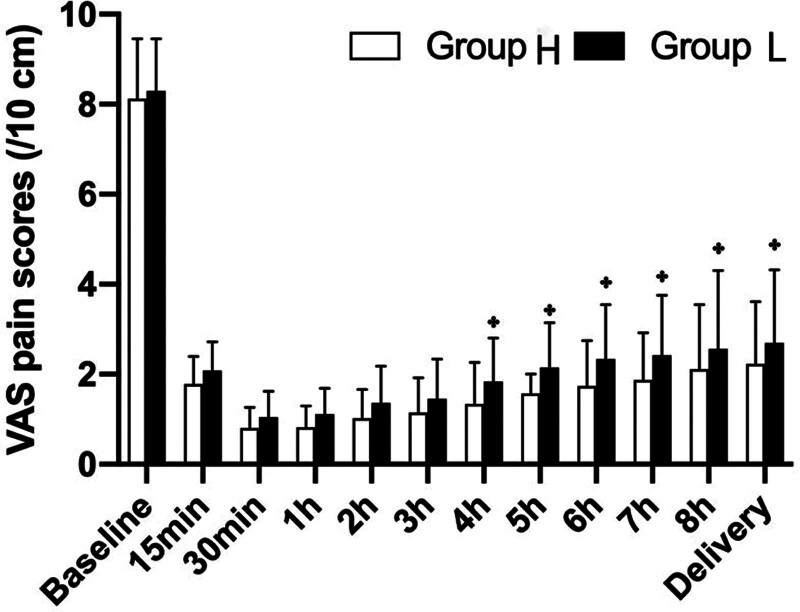
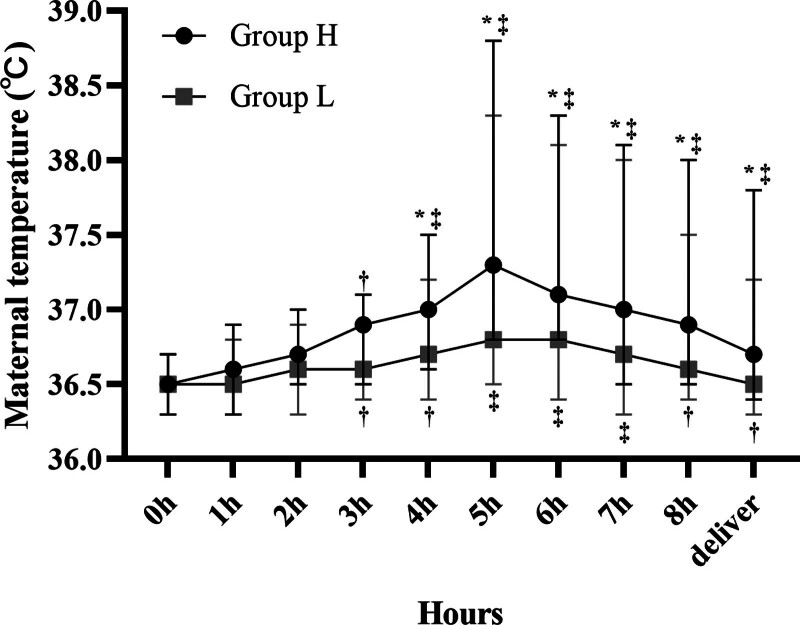
Labor epidural analgesia (LEA) is associated with increased maternal body temperature; however, the responsible mechanism is unknown. Recent studies suggest that changes in EA affect the incidence of fever and that epidural sufentanil supplementation enhances analgesia and reduces the amount of local anesthetic. The aim of this study was to evaluate the effect of different concentrations of sufentanil combined with ropivacaine on intrapartum fever during delivery. We performed a retrospective study comparing maternal fever rates in patients receiving labor analgesia between December 2018 and January 2019. Each patient receiving different concentrations of sufentanil in their EA received either proposal H (0.08% ropivacaine + 0.4 µg/mL sufentanil) or proposal L (0.08% ropivacaine + 0.2 µg/mL sufentanil), with the same nulliparous status. The primary outcome of this study was the incidence of intrapartum maternal fever, which was defined as any temperature ≥ 38°C during labor using Fisher exact test. Secondary outcome measures included visual analog scale (VAS) pain scores, birth events, and neonatal outcomes. We observed a perinatal fever incidence rate of 11.7% in the group receiving proposal L, while the incidence rate was 19.8% in the group receiving proposal H (P = .001). Five hours after administration, the average body temperature of the puerpera decreased significantly in the proposal L group compared with proposal H group. In addition, treatment with 0.2 µg/mL sufentanil provided satisfactory pain relief during labor, shortened the first stage of labor and total labor time, reduced oxytocin use, and had no significant adverse effects on neonatal outcomes. EA may increase the risk of intrapartum epidural-associated fever. Compared with the 0.4 µg/mL sufentanil group, the 0.2 µg/mL sufentanil group can provide better analgesia and improve maternal fever. These retrospective results highlighted the importance of prospective and mechanistic studies of maternal fever associated with intraspinal analgesia.
分娩硬膜外镇痛(LEA)与产妇体温升高有关;然而,其相关机制尚不清楚。最近的研究表明,EA 变化会影响发热的发生率,而硬膜外舒芬太尼补充可增强镇痛效果并减少局部麻醉剂的用量。本研究旨在评估不同浓度舒芬太尼联合罗哌卡因对分娩时发热的影响。我们进行了一项回顾性研究,比较了 2018 年 12 月至 2019 年 1 月期间接受分娩镇痛的患者的产妇发热率。每位接受不同浓度舒芬太尼硬膜外镇痛的患者,分别接受方案 H(0.08%罗哌卡因+0.4μg/ml 舒芬太尼)或方案 L(0.08%罗哌卡因+0.2μg/ml 舒芬太尼),且均为初产妇。本研究的主要结局是分娩时产妇发热的发生率,采用 Fisher 确切检验定义为产时任何体温≥38°C。次要结局指标包括视觉模拟评分(VAS)疼痛评分、分娩事件和新生儿结局。我们观察到接受方案 L 的患者围产期发热发生率为 11.7%,而接受方案 H 的患者为 19.8%(P=0.001)。给药后 5 小时,方案 L 组产妇体温较方案 H 组明显下降。此外,0.2μg/ml 舒芬太尼治疗可在分娩期间提供满意的镇痛效果,缩短第一产程和总产程时间,减少催产素的使用,对新生儿结局无明显不良影响。硬膜外镇痛可能会增加分娩时硬膜外相关发热的风险。与 0.4μg/ml 舒芬太尼组相比,0.2μg/ml 舒芬太尼组可提供更好的镇痛效果,降低产妇发热的发生率。这些回顾性结果强调了对椎管内镇痛相关产妇发热进行前瞻性和机制研究的重要性。