Bartone Ryan D, Tisch Logan J, Dominguez Judith, Payne Christine K, Bonner James C
Toxicology Program, Department of Biological Sciences, North Carolina State University, Raleigh, North Carolina 27695, United States.
Thomas Lord Department of Mechanical Engineering and Materials Science, Duke University, Durham, North Carolina 27708, United States.
ACS Nano. 2024 Sep 11;18(38):26215-32. doi: 10.1021/acsnano.4c07893.
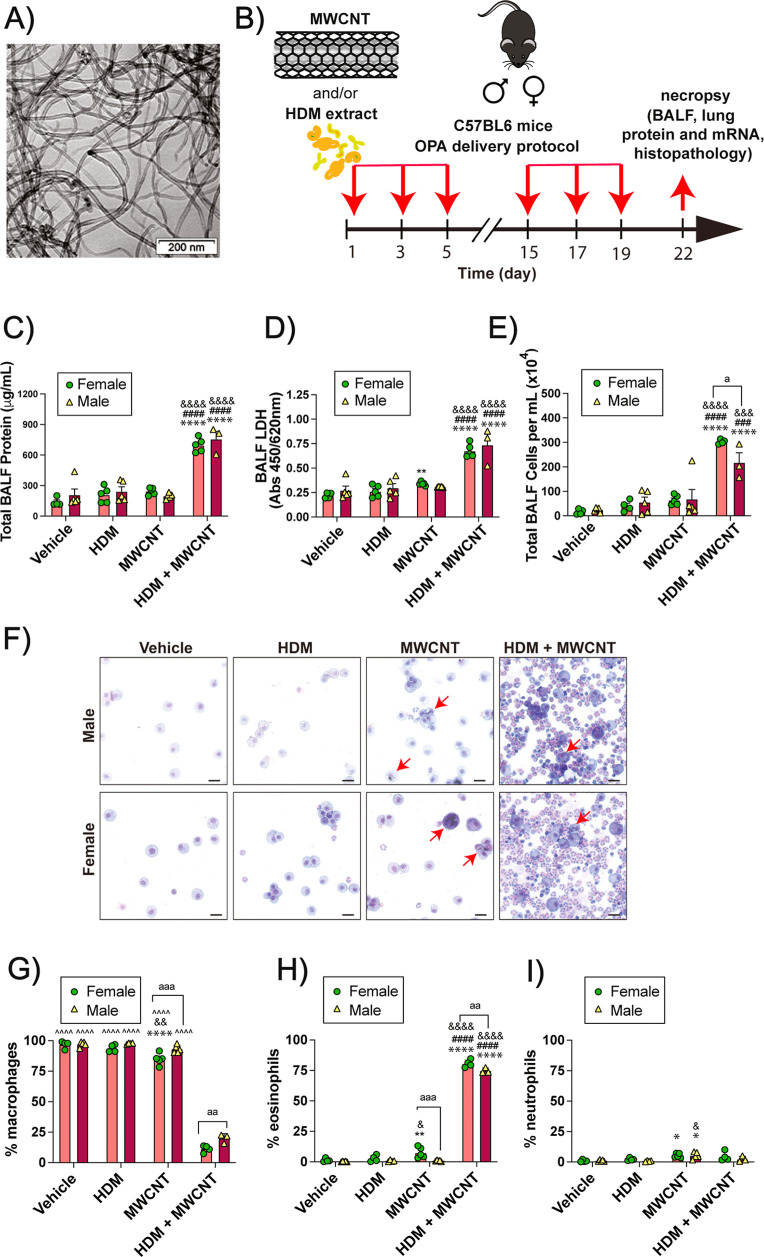
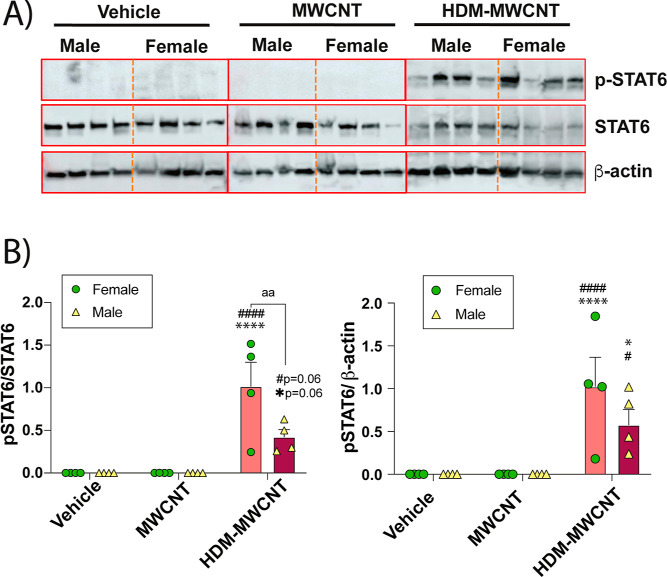
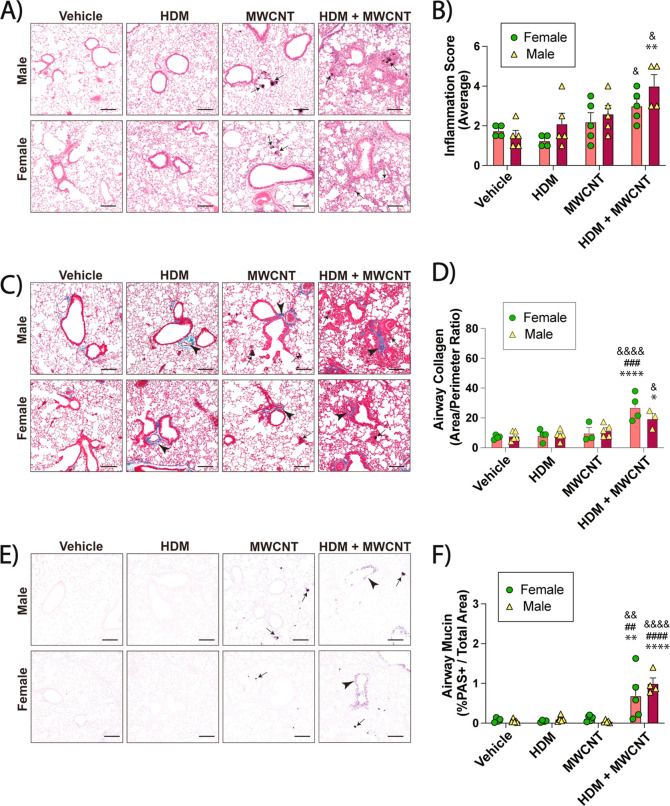
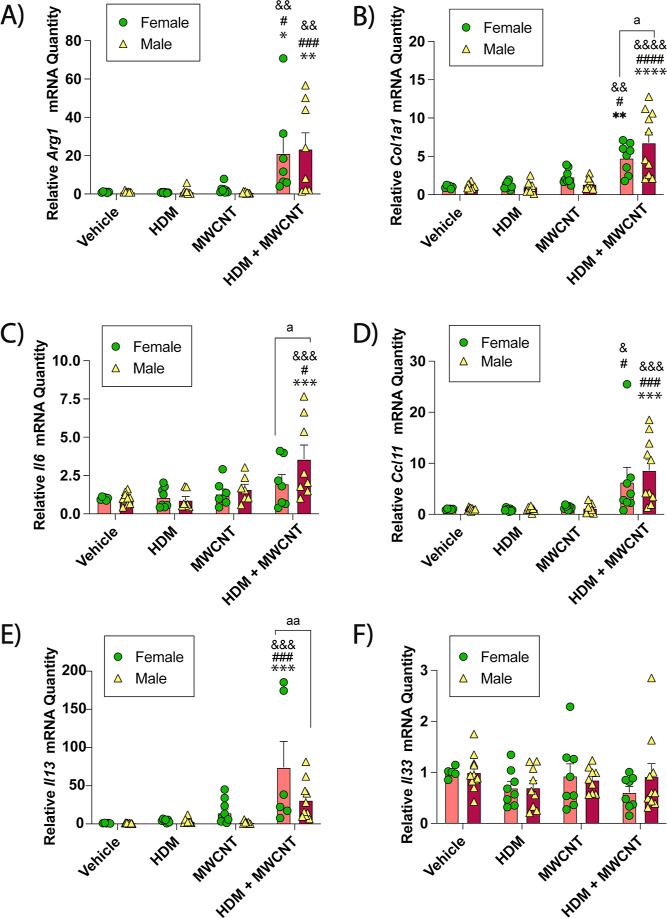
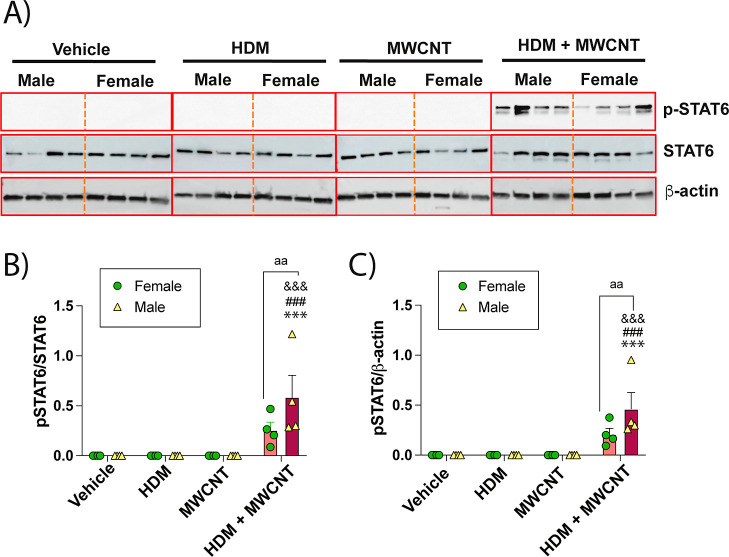
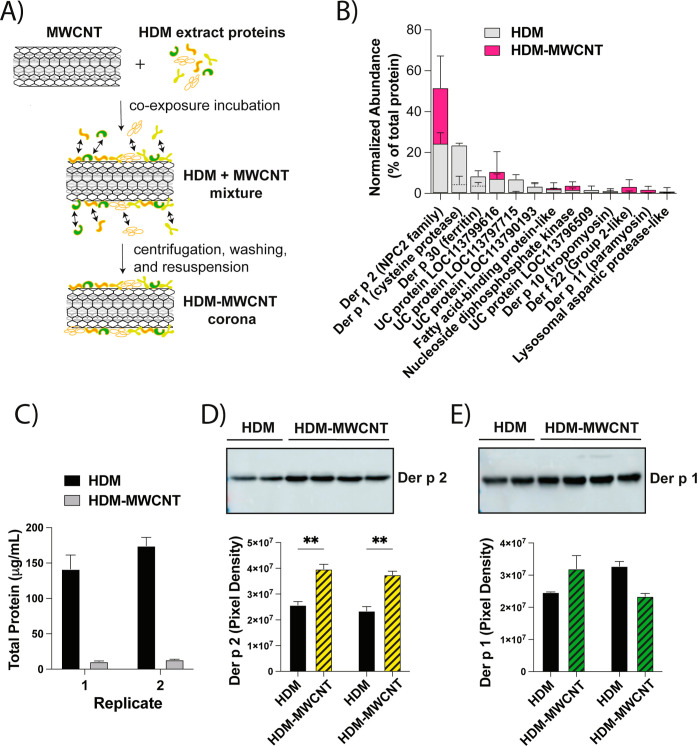
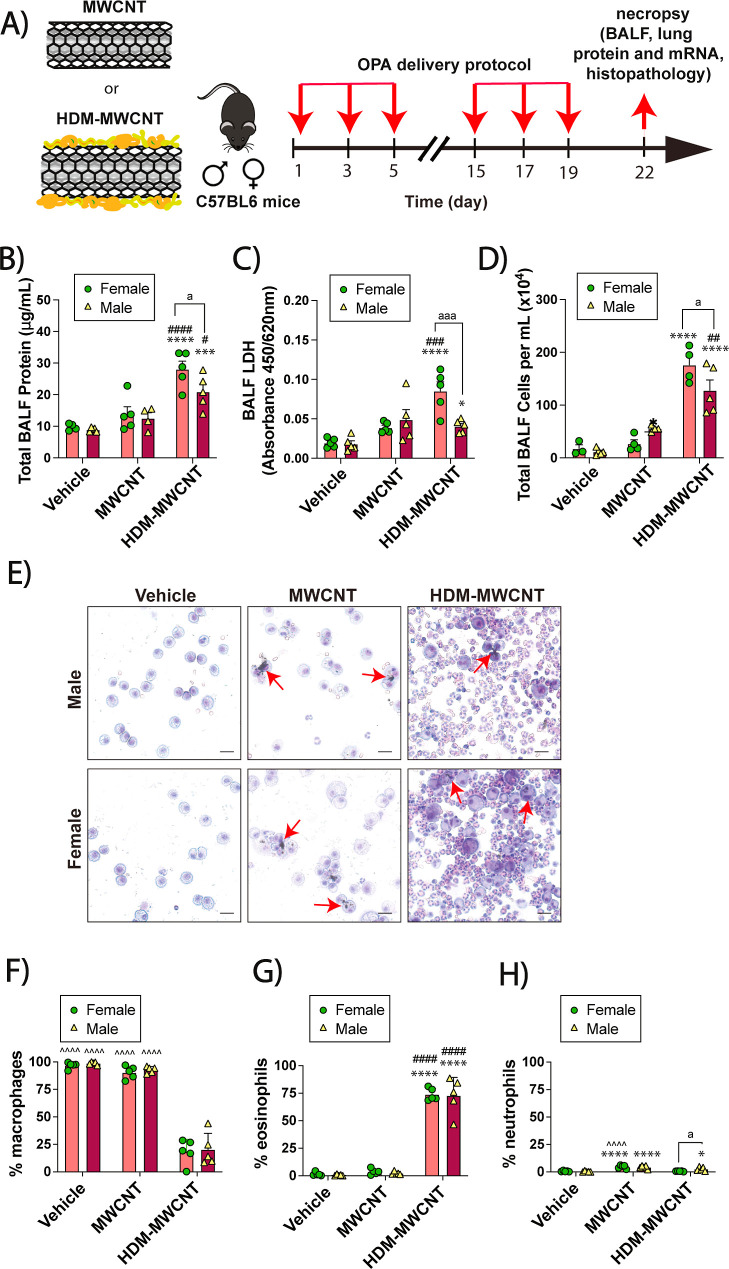
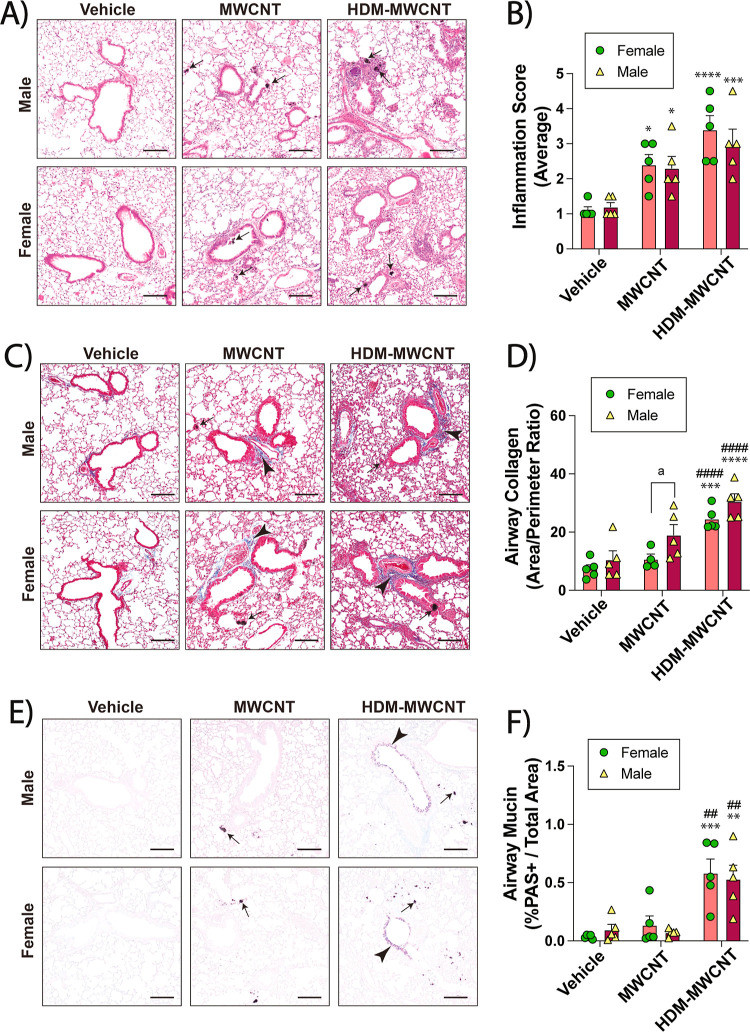
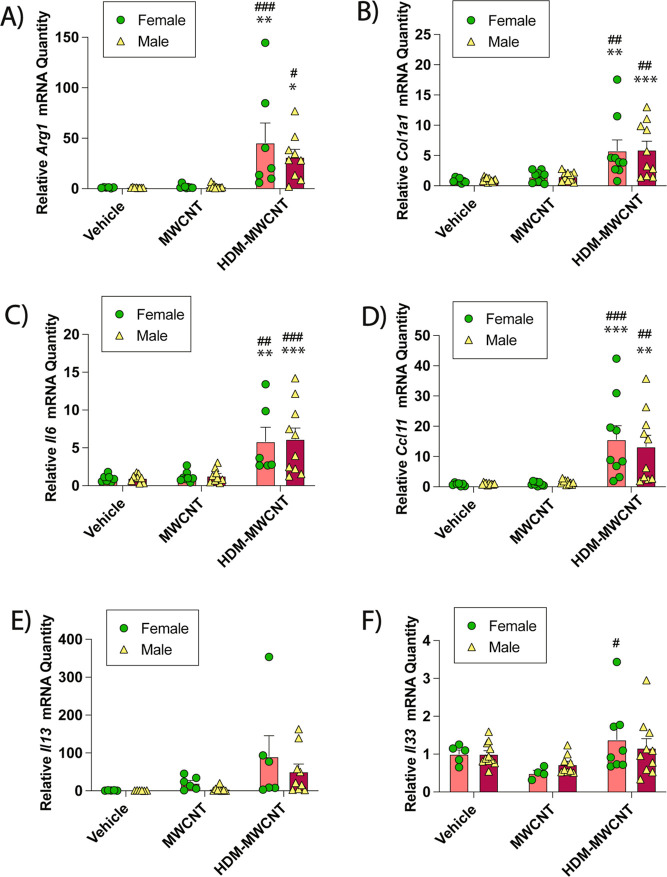
The increasing use of multiwalled carbon nanotubes (MWCNTs) could increase the risk of allergic lung disease in occupational or consumer settings. We previously reported that MWCNTs exacerbated allergic lung disease in mice induced by extract from house dust mites (HDM), a common cause of asthma in humans. Because MWCNTs avidly bind biomolecules to form protein coronas that can modify immunotoxicity, we hypothesized that exacerbation of allergic lung disease in mice caused by coexposure to MWCNTs and HDM extract was due to the formation of an allergen corona. In a first set of experiments, male and female C57BL/6J mice were coexposed to MWCNTs and HDM extract over 3 weeks compared to MWCNTs or HDM extract alone. In a second set of experiments, mice were exposed to pristine MWCNTs or MWCNTs with an HDM allergen corona (HDM-MWCNTs). HDM-MWCNTs were formed by incubating MWCNTs with HDM extract, where ∼7% of proteins adsorbed to MWCNTs, including Der p 1 and Der p 2. At necropsy, bronchoalveolar lavage fluid was collected from lungs to assess lactate dehydrogenase, total protein and inflammatory cells, while lung tissue was used for histopathology, qPCR, and Western blotting. Compared to MWCNTs or HDM extract alone, coexposure to MWCNTs and HDM extract or exposure to HDM-MWCNTs increased pathological outcomes associated with allergic lung disease (eosinophilia, fibrosis, mucous cell metaplasia), increased mRNAs associated with fibrosis (, ) and enhanced STAT6 phosphorylation in lung tissue. These findings indicated that exacerbation of HDM-induced allergic lung disease by MWCNTs is due to an allergen corona.
多壁碳纳米管(MWCNTs)使用的增加可能会在职业或消费环境中增加过敏性肺病的风险。我们之前报道过,MWCNTs会加剧由屋尘螨(HDM)提取物诱导的小鼠过敏性肺病,HDM是人类哮喘的常见病因。由于MWCNTs能 avidly 结合生物分子形成可改变免疫毒性的蛋白质冠层,我们推测同时暴露于MWCNTs和HDM提取物导致的小鼠过敏性肺病加剧是由于过敏原冠层的形成。在第一组实验中,将雄性和雌性C57BL/6J小鼠与MWCNTs和HDM提取物共同暴露3周,与单独暴露于MWCNTs或HDM提取物进行比较。在第二组实验中,将小鼠暴露于原始MWCNTs或带有HDM过敏原冠层的MWCNTs(HDM-MWCNTs)。HDM-MWCNTs是通过将MWCNTs与HDM提取物孵育形成的,其中约7%的蛋白质吸附到MWCNTs上,包括Der p 1和Der p 2。尸检时,从肺中收集支气管肺泡灌洗液以评估乳酸脱氢酶、总蛋白和炎症细胞,同时将肺组织用于组织病理学、qPCR和蛋白质印迹分析。与单独暴露于MWCNTs或HDM提取物相比,同时暴露于MWCNTs和HDM提取物或暴露于HDM-MWCNTs会增加与过敏性肺病相关的病理结果(嗜酸性粒细胞增多、纤维化、黏液细胞化生),增加与纤维化相关的mRNA(,)并增强肺组织中的STAT6磷酸化。这些发现表明,MWCNTs加剧HDM诱导的过敏性肺病是由于过敏原冠层。 (注:avidly这个词原文有误,推测可能是avidly,暂按此翻译,若原文准确词另有他意,翻译会有偏差)