Hajialiloo Sami Sam, Kargar Shooroki Khalil, Ammar Wael, Nahvizadeh Shimasadat, Mohammadi Mohammad, Dehghani Raza, Toloue Babak
Bone and Joint Reconstruction Research Center, Department of Orthopedics, School of Medicine, Iran University of Medical Sciences, Tehran, Iran.
Bone Jt Open. 2024 Sep 12;5(9):749-757. doi: 10.1302/2633-1462.59.BJO-2024-0088.R1.
The ulna is an extremely rare location for primary bone tumours of the elbow in paediatrics. Although several reconstruction options are available, the optimal reconstruction method is still unknown due to the rarity of proximal ulna tumours. In this study, we report the outcomes of osteoarticular ulna allograft for the reconstruction of proximal ulna tumours.
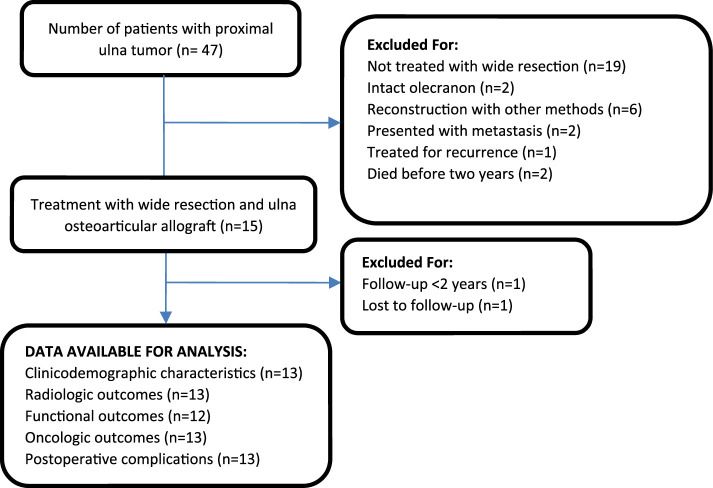
Medical profiles of 13 patients, who between March 2004 and November 2021 underwent osteoarticular ulna allograft reconstruction after the resection of the proximal ulna tumour, were retrospectively reviewed. The outcomes were measured clinically by the assessment of elbow range of motion (ROM), stability, and function, and radiologically by the assessment of allograft-host junction union, recurrence, and joint degeneration. The elbow function was assessed objectively by the Musculoskeletal Tumor Society (MSTS) score and subjectively by the Toronto Extremity Salvage Score (TESS) and Mayo Elbow Performance Score (MEPS) questionnaire.
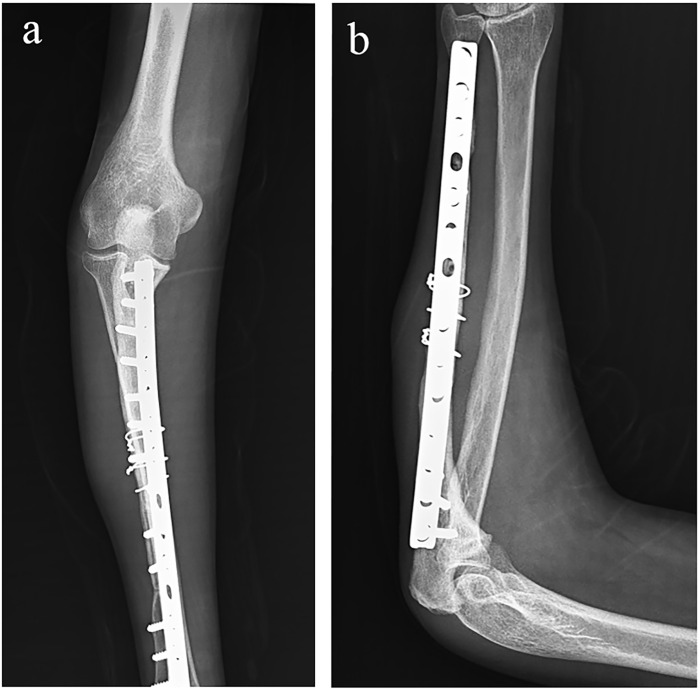
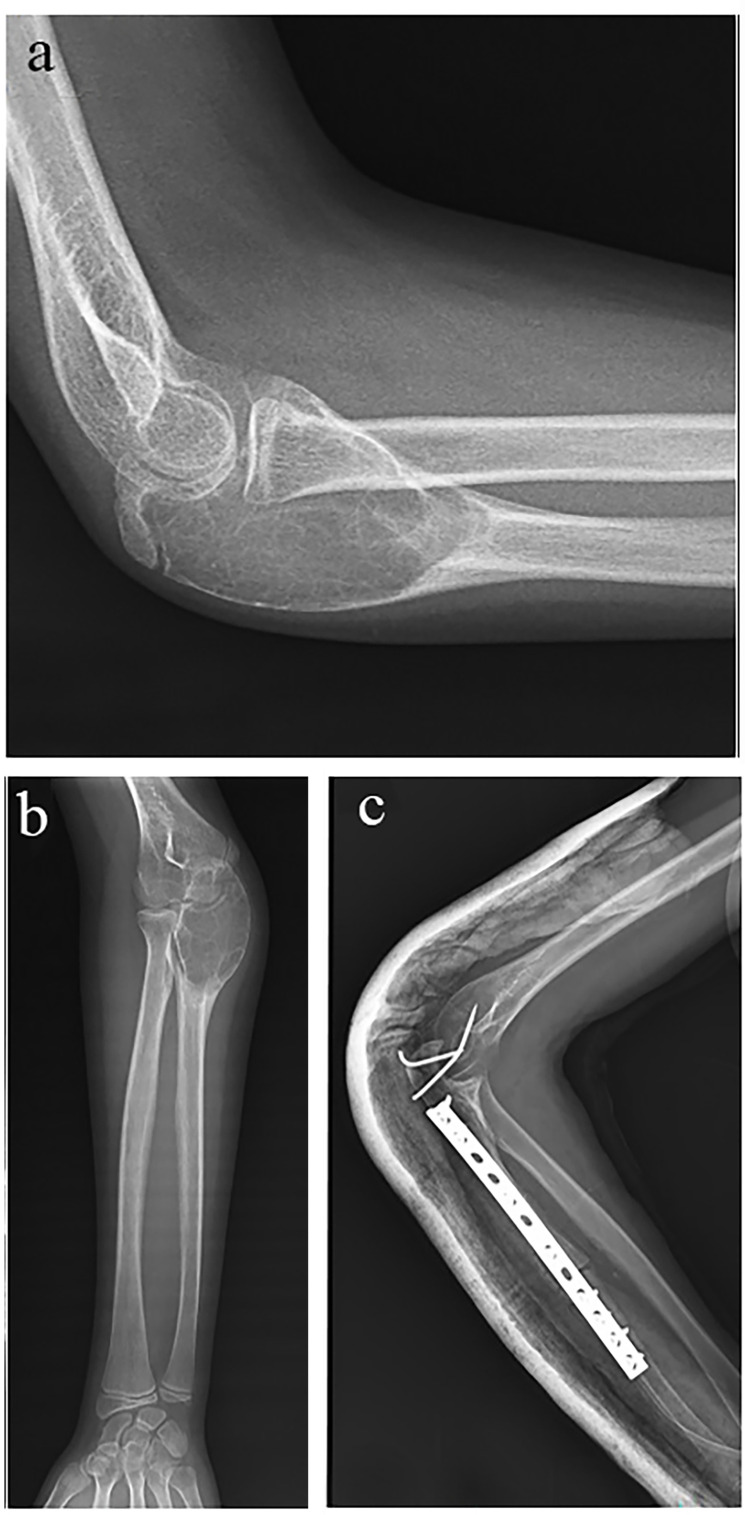
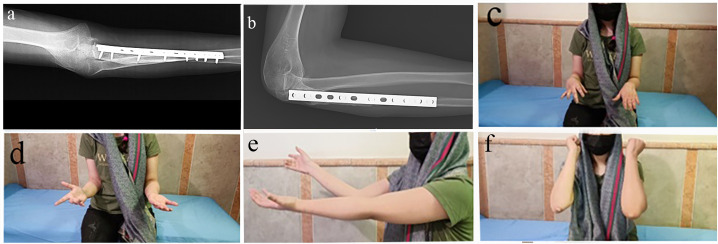
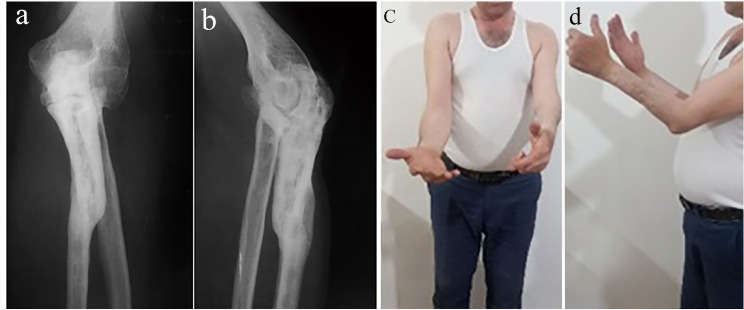
The mean follow-up of patients was 60.3 months (SD 28.5). The mean elbow flexion-extension ROM was 95.8° (SD 21). The mean MSTS of the patients was 84.4 (SD 8.2), the mean TESS was 83.8 (SD 6.7), and the mean MEPS was 79.2 (SD 11.5). All the patients had radiological union at the osteotomy site. Symptomatic osteoarthritic change was observed in three patients (23%), one of whom ended up with elbow joint fusion. Two patients (15.4%) had recurrence during the follow-up period. Surgical complications included two allograft fractures, two plate fractures, three medial instabilities, and two infections.
Osteoarticular ulna allograft reconstruction provides acceptable functional outcomes. Despite a high rate of complications, it is still a valuable reconstruction method, particularly in skeletally immature patients who need their distal humerus physis for the rest of hand growth.
尺骨是小儿肘部原发性骨肿瘤极为罕见的发病部位。虽然有多种重建方案可供选择,但由于近端尺骨肿瘤罕见,最佳重建方法仍不明确。在本研究中,我们报告了同种异体骨关节尺骨移植重建近端尺骨肿瘤的结果。
回顾性分析了2004年3月至2021年11月期间13例因近端尺骨肿瘤切除后接受同种异体骨关节尺骨移植重建患者的病历资料。通过评估肘关节活动范围(ROM)、稳定性和功能进行临床疗效评估,通过评估异体骨与宿主骨结合处愈合情况、复发情况和关节退变进行影像学评估。采用肌肉骨骼肿瘤学会(MSTS)评分进行客观的肘关节功能评估,采用多伦多肢体挽救评分(TESS)和梅奥肘关节功能评分(MEPS)问卷进行主观评估。
患者的平均随访时间为60.3个月(标准差28.5)。肘关节屈伸平均活动范围为95.8°(标准差21)。患者的平均MSTS评分为84.4(标准差8.2),平均TESS评分为83.8(标准差6.7),平均MEPS评分为79.2(标准差11.5)。所有患者截骨部位均实现影像学愈合。3例患者(23%)出现有症状的骨关节炎改变,其中1例最终进行了肘关节融合。2例患者(15.4%)在随访期间出现复发。手术并发症包括2例异体骨骨折、2例钢板骨折、3例内侧不稳定和2例感染。
同种异体骨关节尺骨移植重建可提供可接受的功能结果。尽管并发症发生率较高,但它仍是一种有价值的重建方法,特别是对于那些手部其余生长需要保留远端肱骨骨骺的骨骼未成熟患者。