Hainsworth Atticus H, Blackburn Thomas P, Bradshaw Elizabeth M, Elahi Fanny M, Gorelick Philip B, Isaacs Jeremy D, Wallin Anders, Williams Steven Cr
Molecular & Clinical Sciences Research Institute, St George's University of London, London, SW17 0RE, UK.
Department of Neurology, St George's University Hospitals NHS Foundation Trust, Blackshaw Road, London, SW17 0QT, UK.
Cereb Circ Cogn Behav. 2024 Aug 22;7:100364. doi: 10.1016/j.cccb.2024.100364. eCollection 2024.
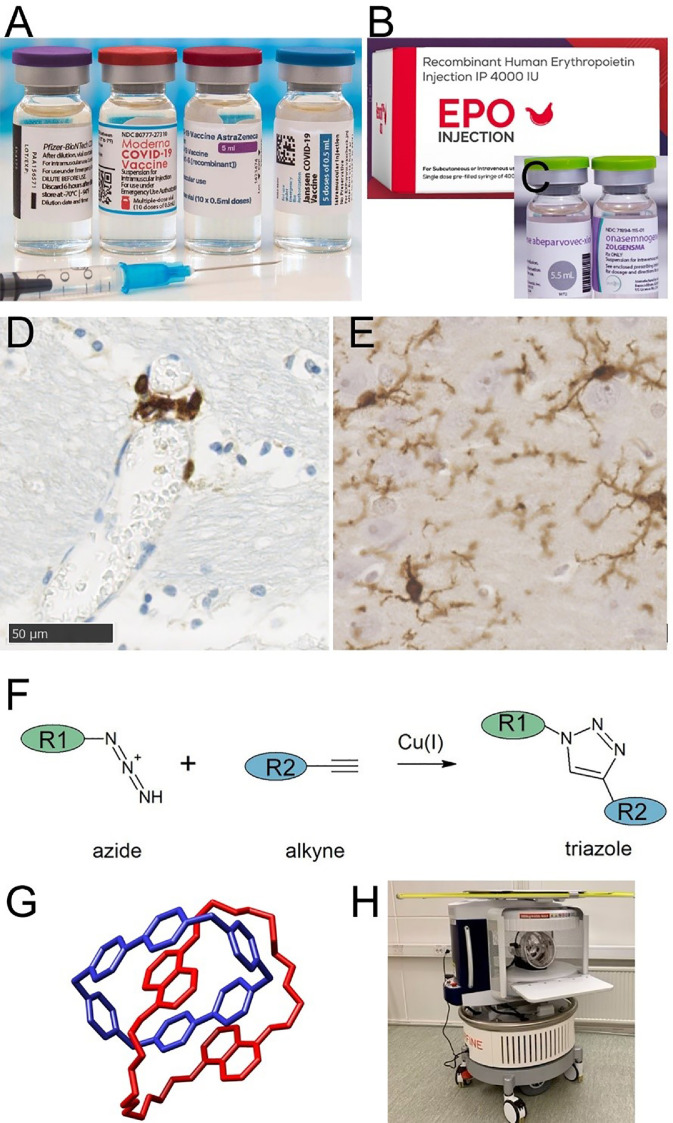
Brain health means optimal physiological brain function across the normal life-course. It encompasses not only healthy brain aging but also brain diseases, their diagnosis and treatment. In all these areas, molecular science has advanced our understanding. This multi-disciplinary review combines viewpoints from laboratory science, clinical medicine and the bioscience industry. First, we review the advances that molecular science has brought to brain health in the past twenty years. These include therapeutic antibodies for CNS diseases (multiple sclerosis, Alzheimer disease) and the dramatic introduction of RNA-targeted therapeutics. Second, we highlight areas where greater molecular understanding is needed. Salient examples are the relation of brain structure to cognitive symptoms, and molecular biomarkers for diagnosis, target discovery and testing of interventions. Finally, we speculate on aspects of molecular science that are likely to advance brain health in the next twenty years. These include: cell senescence and chronobiology; gene editing (notably, CRISPR) and RNA targeting (RNA interference, miRNA manipulation); brain-immune interactions; novel drug targets (AQP4, HIF1, Toll-like receptors); and novel chemistry to make new drugs (molecular machines, quantum molecular modelling and "click" chemistry). Early testing of the relationships between molecular pathways and clinical manifestations will drive much-needed breakthroughs in neurology and psychiatry.
脑健康意味着在正常生命历程中大脑具有最佳的生理功能。它不仅涵盖健康的大脑衰老,还包括脑部疾病、其诊断和治疗。在所有这些领域,分子科学增进了我们的理解。这篇多学科综述结合了实验室科学、临床医学和生物科学产业的观点。首先,我们回顾分子科学在过去二十年给脑健康带来的进展。这些进展包括用于中枢神经系统疾病(多发性硬化症、阿尔茨海默病)的治疗性抗体以及RNA靶向疗法的显著引入。其次,我们强调需要更深入分子理解的领域。突出的例子是脑结构与认知症状的关系,以及用于诊断、靶点发现和干预测试的分子生物标志物。最后,我们推测分子科学在未来二十年可能推动脑健康的方面。这些方面包括:细胞衰老和生物钟学;基因编辑(特别是CRISPR)和RNA靶向(RNA干扰、miRNA操纵);脑-免疫相互作用;新型药物靶点(水通道蛋白4、缺氧诱导因子1、Toll样受体);以及用于制造新药的新型化学方法(分子机器、量子分子建模和“点击”化学)。对分子途径与临床表现之间关系的早期测试将推动神经学和精神病学急需的突破。