Powell Hannah, Coarfa Cristian, Ruiz-Echartea Elisa, Grimm Sandra L, Najjar Omar, Yu Bing, Olivares Luis, Scheurer Michael E, Ballantyne Christie, Alsarraj Abeer, Salem Emad Mohamed, Thrift Aaron P, El Serag Hashem B, Kaochar Salma
Department of Medicine, Baylor College of Medicine, Houston, TX, USA.
Dan L Duncan Comprehensive Cancer Center, Baylor College of Medicine, Houston, TX, USA.
J Hepatocell Carcinoma. 2024 Sep 7;11:1699-1712. doi: 10.2147/JHC.S474010. eCollection 2024.
Early detection of hepatocellular carcinoma (HCC) is crucial for improving patient outcomes, but we lack robust clinical biomarkers. This study aimed to identify a metabolite and/or lipid panel for early HCC detection.
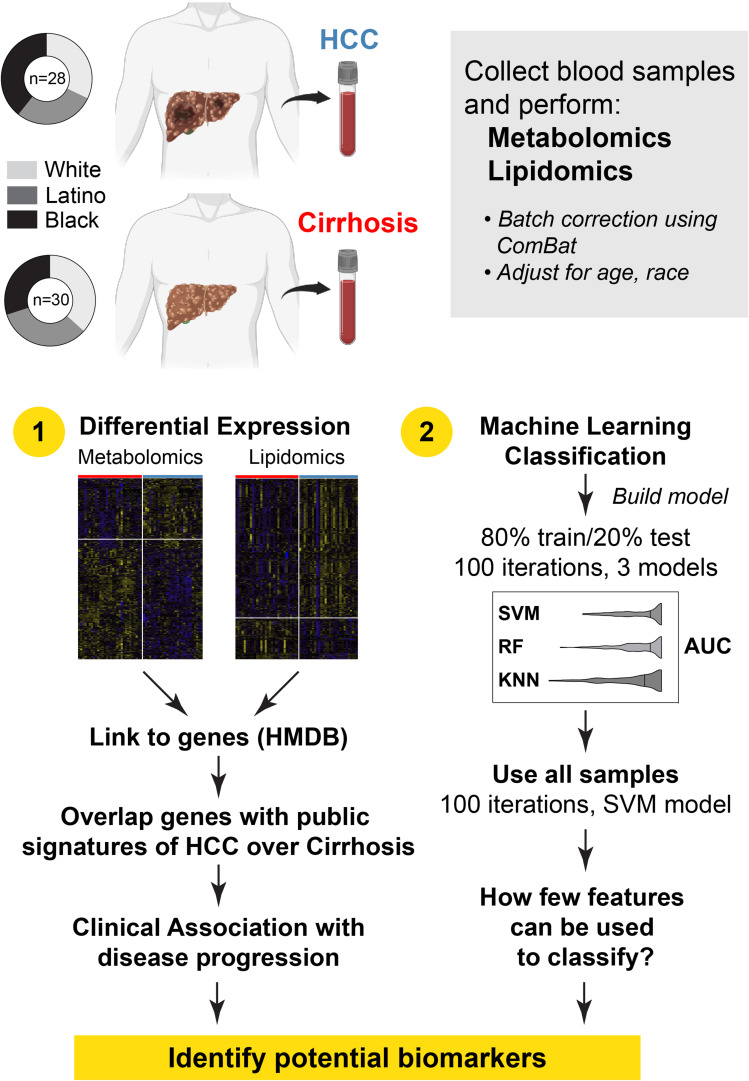
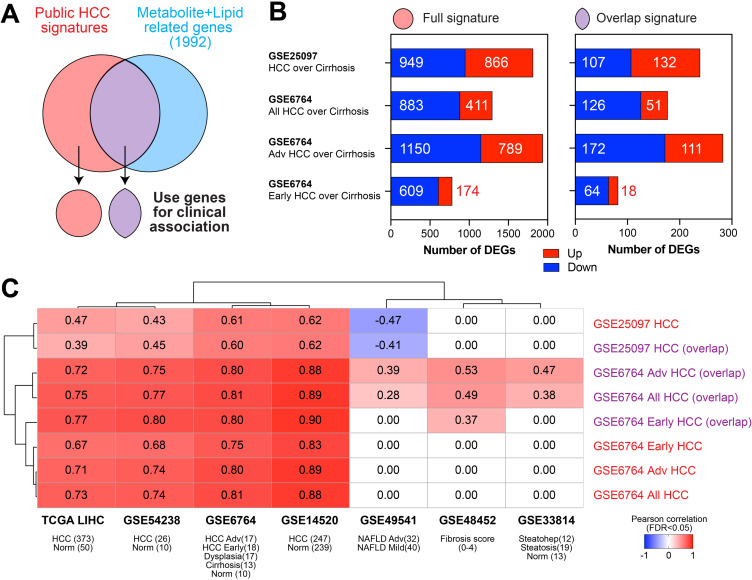
We developed a high-resolution liquid chromatography mass spectrometry (LC-MS)-based profiling platform and evaluated differences in the global metabolome and lipidome between 28 pre-diagnostic serum samples from patients with cirrhosis who subsequently developed HCC (cases) and 30 samples from patients with cirrhosis and no HCC (controls). We linked differentially expressed metabolites and lipids to their associated genes, proteins, and transcriptomic signatures in publicly available datasets. We used machine learning models to identify a minimal panel to distinguish between cases and controls.
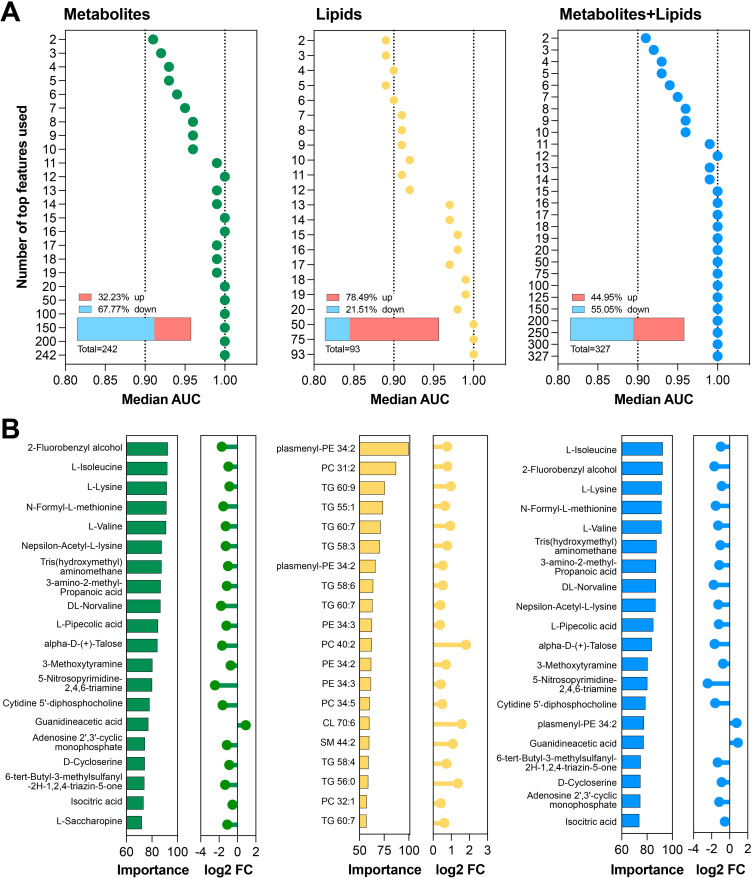
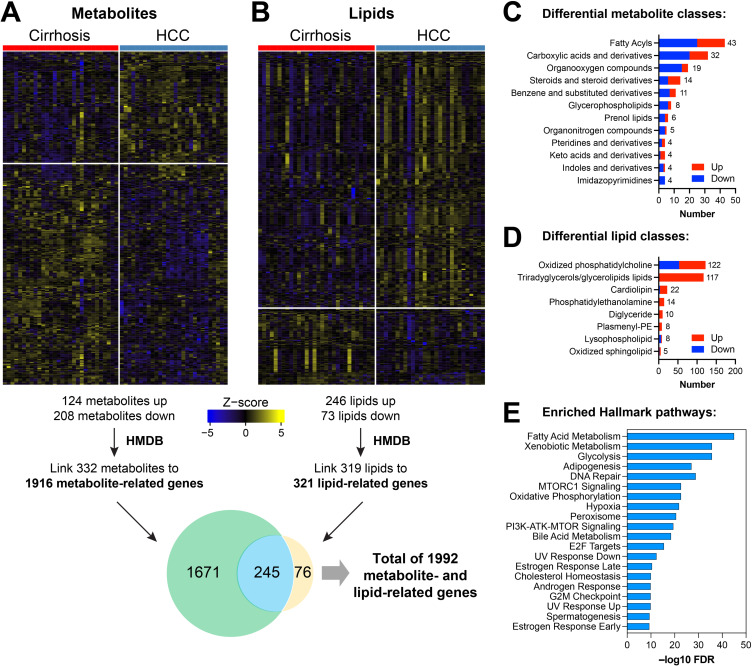
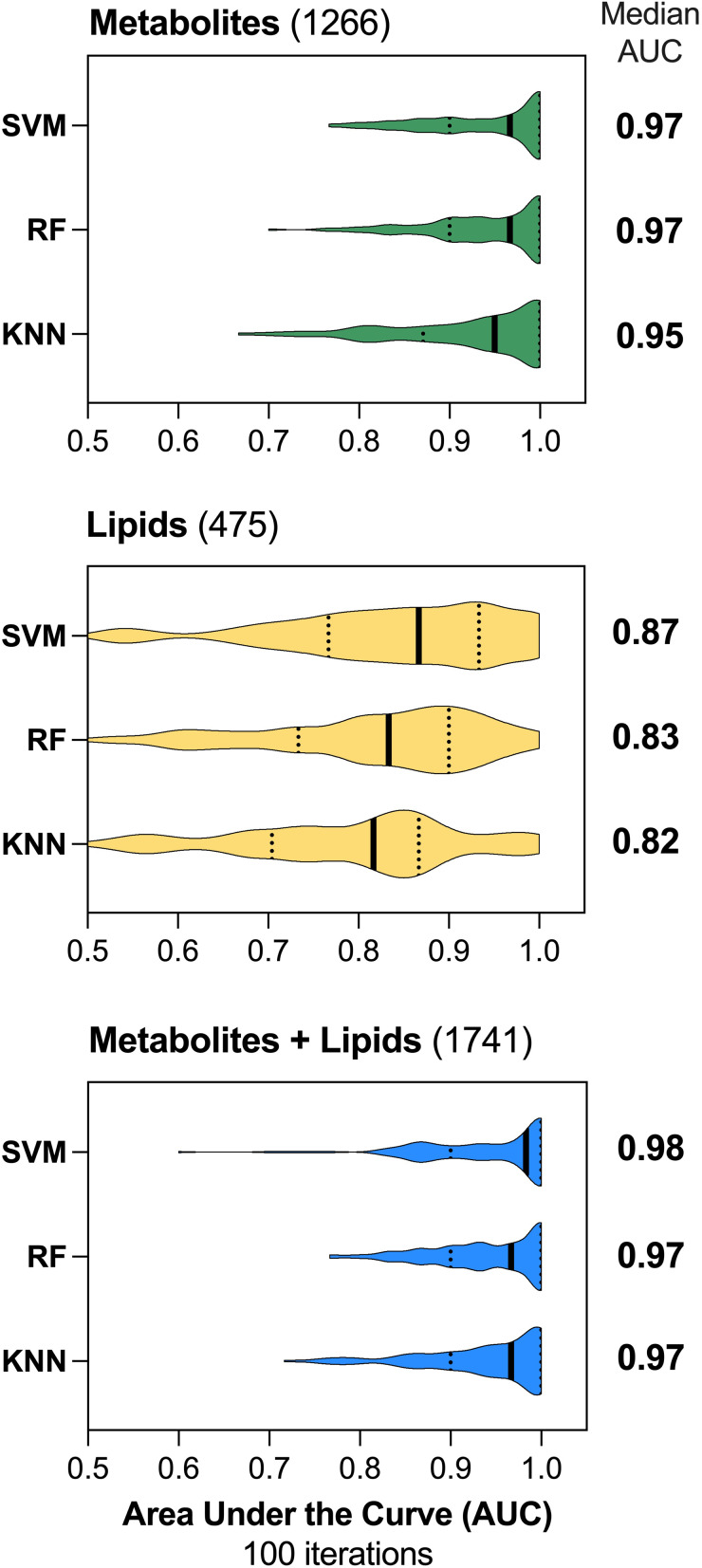
Among cases compared with controls, 124 metabolites and 246 lipids were upregulated, while 208 metabolites and 73 lipids were downregulated. The top upregulated metabolites were glycoursodeoxycholic acid, 5-methyltetrahydrofolic acid, octanoyl-coenzyme A, and glycocholic acid. Elevated lipids comprised glycerol lipids, cardiolipin, and phosphatidylethanolamine, whereas suppressed lipids included oxidized phosphatidylcholine and lysophospholipids. There was an overlap between differentially expressed metabolites and lipids and previously published transcriptomic signatures, illustrating an association with liver disease severity. A panel of 12 metabolites that distinguished between cases and controls with an area under the receiver operating curve of 0.98 for the support vector machine (interquartile range, 0.9-1).
Using prediagnostic serum samples, we identified a promising metabolites panel that accurately identifies patients with cirrhosis who progressed to HCC. Further validation of this panel is required.
肝细胞癌(HCC)的早期检测对于改善患者预后至关重要,但我们缺乏强大的临床生物标志物。本研究旨在确定用于早期HCC检测的代谢物和/或脂质组。
我们开发了一种基于高分辨率液相色谱质谱(LC-MS)的分析平台,并评估了28份来自随后发生HCC的肝硬化患者的诊断前血清样本(病例组)和30份来自无HCC的肝硬化患者的样本(对照组)之间全球代谢组和脂质组的差异。我们将差异表达的代谢物和脂质与其在公开可用数据集中相关的基因、蛋白质和转录组特征联系起来。我们使用机器学习模型来确定一个最小的组来区分病例组和对照组。
与对照组相比,病例组中有124种代谢物和246种脂质上调,而208种代谢物和73种脂质下调。上调最多的代谢物是甘氨鹅去氧胆酸、5-甲基四氢叶酸、辛酰辅酶A和甘氨胆酸。升高的脂质包括甘油脂质、心磷脂和磷脂酰乙醇胺,而受抑制的脂质包括氧化磷脂酰胆碱和溶血磷脂。差异表达的代谢物和脂质与先前发表的转录组特征之间存在重叠,表明与肝病严重程度有关。一组12种代谢物可区分病例组和对照组,支持向量机的受试者工作特征曲线下面积为0.98(四分位间距,0.9 - 1)。
使用诊断前血清样本,我们确定了一个有前景的代谢物组,可准确识别进展为HCC的肝硬化患者。需要对该组进行进一步验证。