Department of Medicine, The University of Melbourne, The Peter Doherty Institute for Infection and Immunity, Melbourne, VIC, 3000, Australia.
Centre for Epidemiology and Biostatistics, Melbourne School of Population and Global Health, The University of Melbourne, Parkville, VIC, 3010, Australia.
BMC Med. 2024 Sep 12;22(1):388. doi: 10.1186/s12916-024-03604-8.
Plasmodium falciparum erythrocyte membrane protein 1 (PfEMP1) proteins are expressed on the surface of infected erythrocytes, mediating parasite sequestration in the vasculature. PfEMP1 is a major target of protective antibodies, but the features of the antibody response are poorly defined.
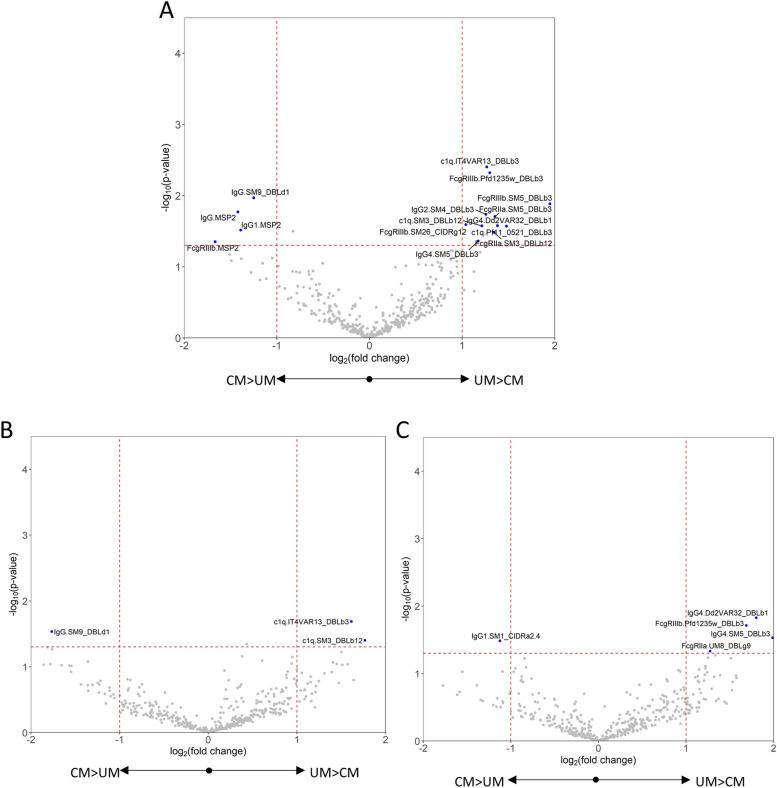
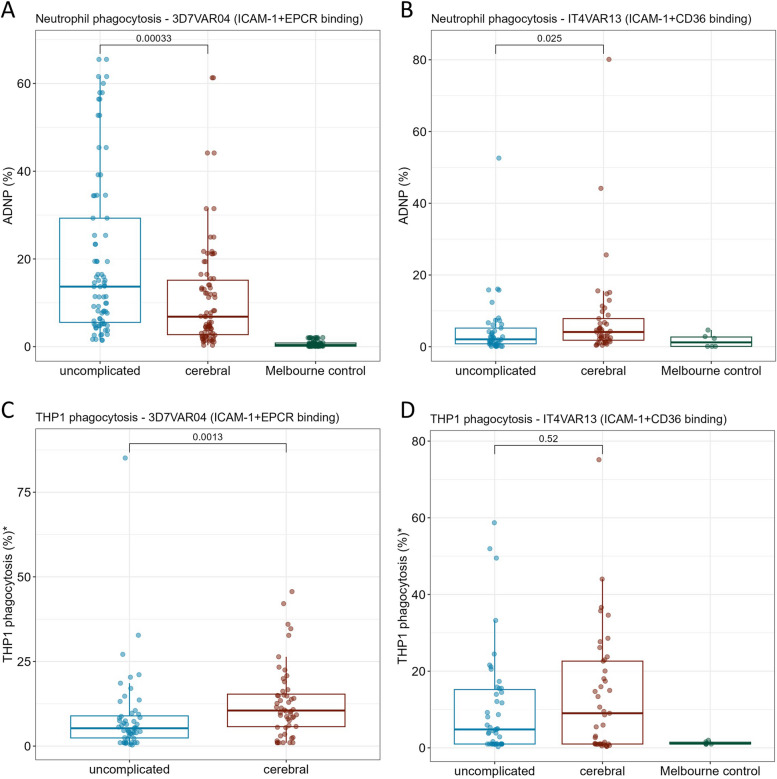
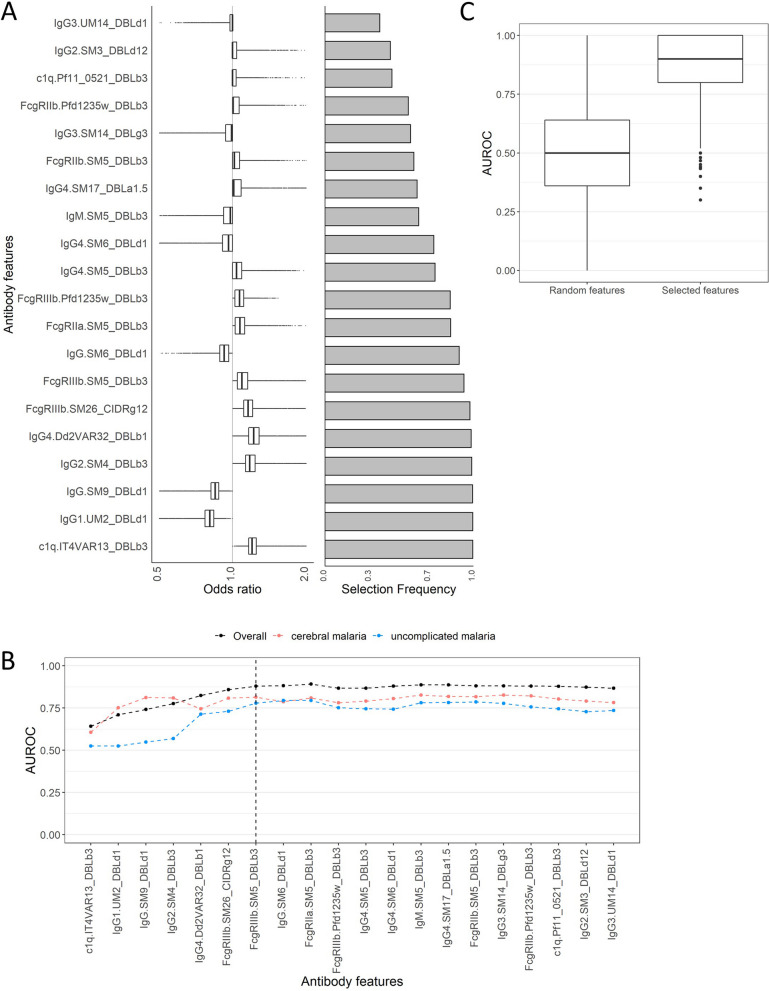
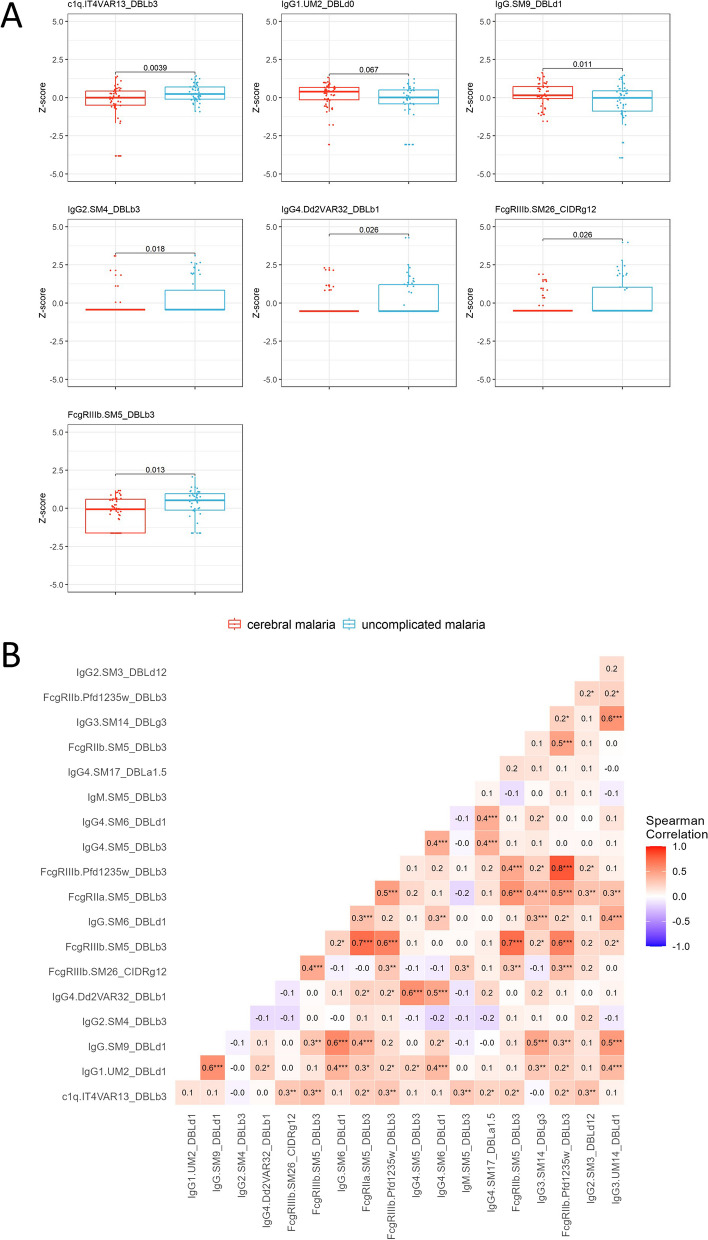
In Malawian children with cerebral or uncomplicated malaria, we characterized the antibody response to 39 recombinant PfEMP1 Duffy binding like (DBL) domains or cysteine-rich interdomain regions (CIDRs) in detail, including measures of antibody classes, subclasses, and engagement with Fcγ receptors and complement. Using elastic net regularized logistic regression, we identified a combination of seven antibody targets and Fc features that best distinguished between children with cerebral and uncomplicated malaria. To confirm the role of the selected targets and Fc features, we measured antibody-dependent neutrophil and THP-1 cell phagocytosis of intercellular adhesion molecule-1 (ICAM-1) and endothelial protein C (EPCR) co-binding infected erythrocytes.
The selected features distinguished between children with cerebral and uncomplicated malaria with 87% accuracy (median, 80-96% interquartile range) and included antibody to well-characterized DBLβ3 domains and a less well-characterized CIDRγ12 domain. The abilities of antibodies to engage C1q and FcγRIIIb, rather than levels of IgG, correlated with protection. In line with a role of FcγRIIIb binding antibodies to DBLβ3 domains, antibody-dependent neutrophil phagocytosis of ICAM-1 and EPCR co-binding IE was higher in uncomplicated malaria (15% median, 8-38% interquartile range) compared to cerebral malaria (7%, 30-15%, p < 0.001).
Antibodies associated with protection from cerebral malaria target a subset of PfEMP1 domains. The Fc features of protective antibody response include engagement of FcγRIIIb and C1q, and ability to induce antibody-dependent neutrophil phagocytosis of infected erythrocytes. Identifying the targets and Fc features of protective immunity could facilitate the development of PfEMP1-based therapeutics for cerebral malaria.
恶性疟原虫红细胞膜蛋白 1(PfEMP1)蛋白在感染的红细胞表面表达,介导寄生虫在脉管系统中的隔离。PfEMP1 是保护性抗体的主要靶标,但抗体反应的特征尚不清楚。
在马拉维患有脑型或无并发症疟疾的儿童中,我们详细描述了对 39 种重组 PfEMP1 杜菲结合样(DBL)结构域或富含半胱氨酸的结构域间区(CIDR)的抗体反应,包括抗体类别、亚类以及与 Fcγ 受体和补体的结合。使用弹性网络正则化逻辑回归,我们确定了 7 种抗体靶标和 Fc 特征的组合,可以最好地区分患有脑型和无并发症疟疾的儿童。为了确认所选靶标和 Fc 特征的作用,我们测量了依赖抗体的中性粒细胞和 THP-1 细胞对细胞间黏附分子-1(ICAM-1)和内皮蛋白 C(EPCR)共结合感染红细胞的吞噬作用。
所选特征以 87%的准确率(中位数,80-96%四分位距)区分脑型和无并发症疟疾的儿童,包括对已充分描述的 DBLβ3 结构域和不太充分描述的 CIDRγ12 结构域的抗体。抗体结合 C1q 和 FcγRIIIb 的能力,而不是 IgG 的水平,与保护相关。与 FcγRIIIb 结合 DBLβ3 结构域抗体的作用一致,依赖抗体的中性粒细胞对 ICAM-1 和 EPCR 共结合 IE 的吞噬作用在无并发症疟疾中较高(中位数 15%,8-38%四分位距),而在脑型疟疾中较低(7%,30-15%,p<0.001)。
与预防脑型疟疾相关的抗体针对 PfEMP1 结构域的一个亚群。保护性抗体反应的 Fc 特征包括 FcγRIIIb 和 C1q 的结合,以及诱导依赖抗体的中性粒细胞对感染红细胞的吞噬作用的能力。确定保护性免疫的靶标和 Fc 特征可以促进基于 PfEMP1 的治疗脑型疟疾的药物的开发。