Meretsky Christopher R, Polychronis Andreas, Schiuma Anthony T
Surgery, St. George's University School of Medicine, Great River, USA.
General Surgery, St. George's University School of Medicine, Great River, USA.
Cureus. 2024 Aug 13;16(8):e66806. doi: 10.7759/cureus.66806. eCollection 2024 Aug.
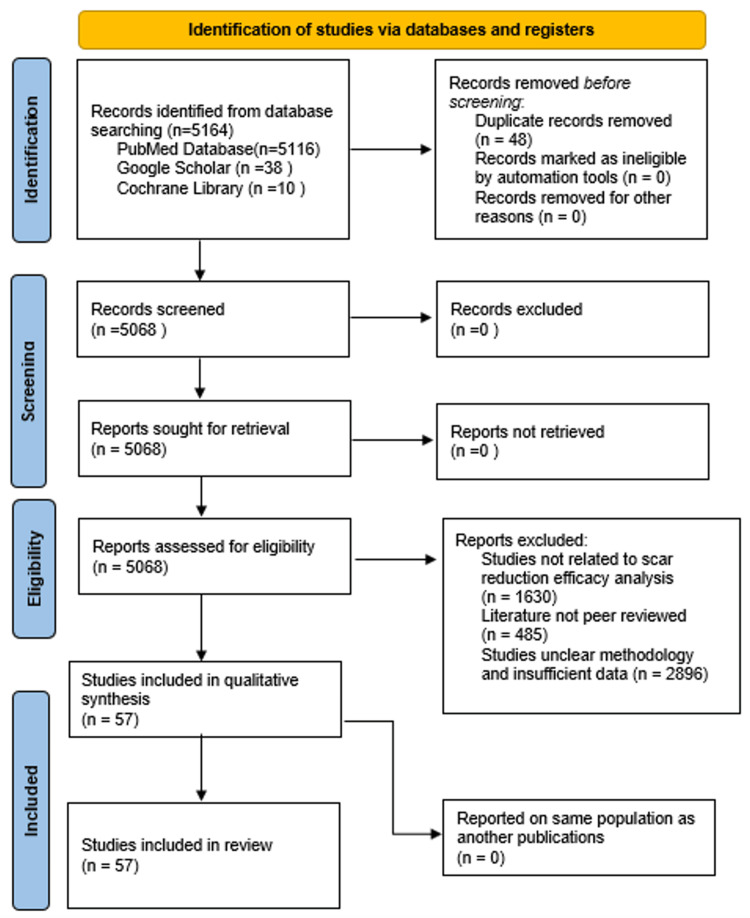
The study provides a comprehensive analysis of the latest methodologies and treatments aimed at improving scar management. Scar formation results from the replacement of normal skin with fibroblasts, leading to a structured unidirectional collagen bundle, as opposed to the collagen sheet matrix found in healthy skin. This review categorizes scars into hypertrophic scars and keloids, each with distinct pathophysiological characteristics. It highlights the importance of consistent scar assessment using scales such as the Vancouver Scar Scale and the Patient and Observer Scar Assessment Scale, emphasizing the need for standardized evaluation methods. The study systematically reviews various scar management techniques, ranging from traditional surgical methods to innovative treatments. Conventional approaches such as pressure garments and silicone gel sheeting are explored, noting their roles in maintaining hydration and occlusion. The efficacy of intralesional corticosteroid injections and laser therapies is discussed, with particular attention given to their combined use for optimal outcomes. The review also covers advanced techniques such as microneedling, platelet-rich plasma therapy, and stem cell-based treatments, detailing their mechanisms and potential benefits in scar remodelling. Additionally, the study underscores the emerging role of botulinum toxin A in both preventive and corrective scar treatments, offering promising results in reducing movement-induced scar exaggeration. The systematic review includes a thorough examination of existing literature, clinical trials, and meta-analyses to evaluate the effectiveness of these interventions. It concludes by calling for further research to refine these techniques and enhance their application in clinical practice, aiming to achieve better aesthetic and functional outcomes for patients with scars.
该研究对旨在改善瘢痕管理的最新方法和治疗进行了全面分析。瘢痕形成是由于成纤维细胞取代了正常皮肤,导致形成结构化的单向胶原束,这与健康皮肤中的胶原片层基质不同。本综述将瘢痕分为增生性瘢痕和瘢痕疙瘩,每种都有独特的病理生理特征。它强调了使用温哥华瘢痕量表和患者及观察者瘢痕评估量表等工具进行一致瘢痕评估的重要性,强调了标准化评估方法的必要性。该研究系统地回顾了各种瘢痕管理技术,从传统手术方法到创新治疗。探讨了压力衣和硅胶片等传统方法,指出它们在保持皮肤水分和封闭方面的作用。讨论了病灶内注射皮质类固醇和激光治疗的疗效,特别关注它们联合使用以获得最佳效果。该综述还涵盖了微针治疗、富血小板血浆疗法和基于干细胞的治疗等先进技术,详细介绍了它们在瘢痕重塑中的机制和潜在益处。此外,该研究强调了肉毒杆菌毒素A在预防和矫正瘢痕治疗中的新作用,在减少运动引起的瘢痕加重方面取得了有希望的结果。该系统综述包括对现有文献、临床试验和荟萃分析的全面审查,以评估这些干预措施的有效性。它呼吁进一步研究以完善这些技术并加强其在临床实践中的应用,旨在为瘢痕患者实现更好的美学和功能效果。