Abusabah Abdulelah M, Derkaoui Hamza R, Abusebah Hamad M, Assiri Abdullah A, Assiry Norah H, Al-Asmari Aidah S, Al Jaber Fatima M, Alshahrani Halimah A, Alshahrani Eman M, Alshomrani Saada H, AlShahrani Aishah, Alhubini Fatma A, Al-Ahmari Khayria S, Alwalah Layla A, Al-Madghidi Tahani M, Al Asmi Alia I, Alzein Eman I, Assiry Mithheba A, Alzain Sana I, Assiri Mosiah I, Al Asmari Samirah A, Al-Zein Fatima I
Preventive Medicine, King Khalid University, Abha, SAU.
Preventive Medicine, Ministry of Health, Abha, SAU.
Cureus. 2024 Aug 13;16(8):e66788. doi: 10.7759/cureus.66788. eCollection 2024 Aug.
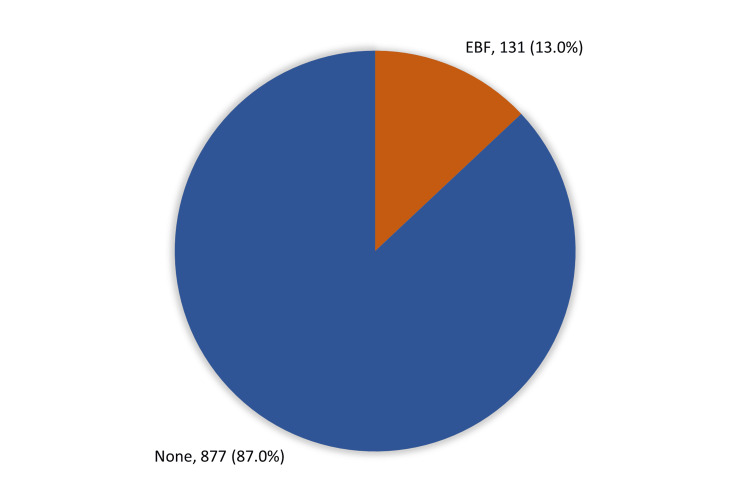
Background Exclusive breastfeeding (EBF) is crucial for infant and maternal health, providing optimal nutrition and immune protection for infants while reducing maternal postpartum depression and cancer risk. However, global trends show an early cessation of breastfeeding and the introduction of other foods. This study aims to determine the prevalence and factors influencing EBF among mothers in the Aseer region of Saudi Arabia. Methodology A cross-sectional study using a multistage cluster sampling approach was conducted from January to March 2024 in primary healthcare centers across the Aseer region. Participants included mothers of children aged 6-24 months attending primary healthcare centers for immunizations or routine check-ups. A pretested structured questionnaire, developed after an extensive literature review and expert consultation, was used to interview consenting participants. The questionnaire covered sociodemographic data, obstetric and medical history, child data, EBF practices, maternal knowledge and perception of breastfeeding, counseling about breastfeeding, antenatal care, breastfeeding support, and barriers and motivators of EBF. Results A total of 1,008 eligible mothers were included. Only 131 (13%) fulfilled the World Health Organization criteria for EBF. Moreover, 257 (25.5%) mothers initiated breastfeeding within the first hour after delivery, and 387 (38.4%) exclusively breastfed for six months or more. EBF was less frequent among mothers with higher education (8%, n = 2) compared to those with lower education (23%, n = 23, p = 0.017). EBF was also less frequent among mothers who delivered via cesarean section (7.9%, n = 28) compared to those who had a vaginal delivery (15.8%, n = 103, p = 0.001). Conversely, EBF was more common among mothers with more than five pregnancies (15.8%, n = 45) compared to those with one to two pregnancies (9.4%, n = 37, p = 0.023). EBF was also more common among mothers who had breastfed more than four children (16.7%, n = 39) compared to those who had not (12.1%, n = 49, p = 0.048). Finally, EBF was more common among mothers without postpartum complications (13.4%, n = 131) or whose infants had no birth complications (13.4%, n = 128) compared to their respective counterparts (p = 0.029 and p = 0.048, respectively). Conclusions This study found a low prevalence of EBF in the Aseer region, despite high maternal knowledge and positive perceptions. Factors such as low education, medical barriers, unemployment, and high parity were associated with increased EBF rates. Interventions should focus on improving workplace support and increasing maternal awareness of EBF recommendations.
背景 纯母乳喂养对婴儿和母亲的健康至关重要,能为婴儿提供最佳营养和免疫保护,同时降低母亲产后抑郁和患癌风险。然而,全球趋势显示母乳喂养过早停止且开始引入其他食物。本研究旨在确定沙特阿拉伯阿西尔地区母亲中纯母乳喂养的患病率及影响因素。
方法 2024年1月至3月,在阿西尔地区的初级医疗保健中心采用多阶段整群抽样方法进行了一项横断面研究。参与者包括带6至24个月大孩子到初级医疗保健中心进行免疫接种或常规检查的母亲。在广泛的文献综述和专家咨询后制定的一份经过预测试的结构化问卷,用于访谈同意参与的参与者。问卷涵盖社会人口统计学数据、产科和病史、儿童数据、纯母乳喂养做法、母亲对母乳喂养的知识和认知、母乳喂养咨询、产前护理、母乳喂养支持以及纯母乳喂养的障碍和动机。
结果 共纳入1008名符合条件的母亲。只有131名(13%)符合世界卫生组织的纯母乳喂养标准。此外,257名(25.5%)母亲在分娩后第一小时内开始母乳喂养,387名(38.4%)纯母乳喂养六个月或更长时间。与低学历母亲(23%,n = 23,p = 0.017)相比,高学历母亲中纯母乳喂养的情况较少(8%,n = 2)。与顺产母亲(15.8%,n = 103,p = 0.001)相比,剖宫产母亲中纯母乳喂养的情况也较少(7.9%,n = 28)。相反,与有一到两次怀孕的母亲(9.4%,n = 37,p = 0.023)相比,怀孕超过五次的母亲中纯母乳喂养更为常见(15.8%,n = 45)。与未生育过四个以上孩子的母亲(12.1%,n = 49,p = 0.048)相比,生育过四个以上孩子的母亲中纯母乳喂养也更为常见(16.7%,n = 39)。最后,与有产后并发症的母亲(p = 0.029)或其婴儿有出生并发症的母亲(p = 0.048)相比,无产后并发症的母亲(13.4%,n = 131)或其婴儿无出生并发症的母亲(13.4%,n = 128)中纯母乳喂养更为常见。
结论 本研究发现,尽管母亲知识水平高且认知积极,但阿西尔地区纯母乳喂养的患病率较低。低学历、医疗障碍、失业和高生育次数等因素与纯母乳喂养率增加有关。干预措施应侧重于改善工作场所支持并提高母亲对纯母乳喂养建议的认识。