Department of Epidemiology, Biostatistics, and Disease Control, School of Public Health, University for Development Studies, Tamale, Ghana.
Center for Population Health, Institute of Global Health Equity Research, University of Global Health Equity, Kigali, Rwanda.
BMC Health Serv Res. 2024 Sep 13;24(1):1063. doi: 10.1186/s12913-024-11491-1.
Over the past two decades, antenatal care (ANC) coverage has increased in most settings across low- and middle-income countries, including Ghana. However, evidence shows that there is a need to focus on both access and quality to improve maternal and newborn health outcomes. We investigated ANC quality among public healthcare facilities in the northern region of Ghana.
We conducted a facility-based study involving 420 postpartum women, selected randomly from five public health facilities. We collected information on a set of prenatal services that respondents self-reported to have received during their most recent pregnancy. Women who received all the interventions assessed were considered to have received quality ANC. Using multilevel (mixed-effects) regression analysis, we identified the independent factors associated with ANC quality, with healthcare facility as the cluster variable.
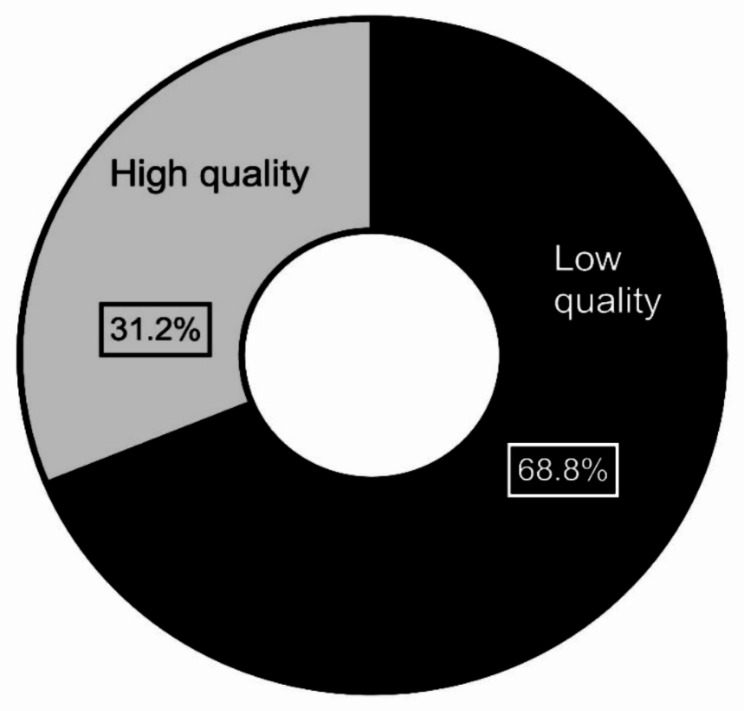
Of the 420 women, 31.2% (95% CI: 26.9, 35.8) received ANC services of high quality. ANC quality differed significantly by women's background characteristics and ANC use. However, gestational age at first ANC and the number of follow-up visits before delivery were significantly associated with ANC quality: booking the first visit in the second or third trimester reduced the odds of receiving high-quality ANC compared to booking in the first trimester (aOR = 0.15, 95% CI: 0.07, 0.31, and aOR = 0.09, 95% CI: 0.01, 0.83, respectively). In contrast, achieving a minimum of eight ANC follow-ups before delivery increased the odds of receiving high-quality ANC compared to attaining fewer than eight visits (aOR = 4.82, 95% CI: 2.33, 9.99).
A significant proportion of pregnant women in the study setting received suboptimal quality ANC during their most recent pregnancy. ANC quality was primarily associated with the timing of the first visit and the number of follow-up visits before delivery. Timely initiation of ANC and frequent follow-up visits will be crucial in the study's setting for pregnant women to benefit from comprehensive ANC services.
在过去的二十年中,包括加纳在内的中低收入国家的大多数地区的产前保健(ANC)覆盖率都有所提高。然而,有证据表明,需要同时关注可及性和质量,以改善母婴健康结果。我们调查了加纳北部地区公立医疗保健机构的 ANC 质量。
我们进行了一项基于机构的研究,涉及从五个公立卫生机构中随机选择的 420 名产后妇女。我们收集了受访者在最近一次怀孕期间接受的一系列产前服务的信息。被认为接受了优质 ANC 的妇女接受了所有评估的干预措施。使用多水平(混合效应)回归分析,我们确定了与 ANC 质量相关的独立因素,以医疗保健机构为聚类变量。
在 420 名妇女中,31.2%(95%CI:26.9,35.8)接受了高质量的 ANC 服务。ANC 质量因妇女的背景特征和 ANC 使用情况而异。然而,首次 ANC 的孕龄和分娩前的随访次数与 ANC 质量显著相关:与在第一孕期预约相比,在第二或第三孕期预约首次就诊会降低接受高质量 ANC 的几率(aOR=0.15,95%CI:0.07,0.31 和 aOR=0.09,95%CI:0.01,0.83)。相反,与就诊少于 8 次相比,在分娩前至少进行 8 次 ANC 随访会增加接受高质量 ANC 的几率(aOR=4.82,95%CI:2.33,9.99)。
在研究环境中,相当一部分孕妇在最近一次怀孕期间接受了不理想的 ANC 质量。ANC 质量主要与首次就诊时间和分娩前的随访次数有关。在研究环境中,及时开始 ANC 和频繁的随访就诊对孕妇从全面的 ANC 服务中受益至关重要。