UCI Cardiogenomics Program, Pediatrics and Biological Chemistry, UC Irvine School of Medicine, Irvine, CA 92697, USA.
Sue & Bill Gross Stem Cell Research Center, University of California, Irvine, Irvine, CA 92697, USA.
Cells. 2024 Sep 3;13(17):1479. doi: 10.3390/cells13171479.
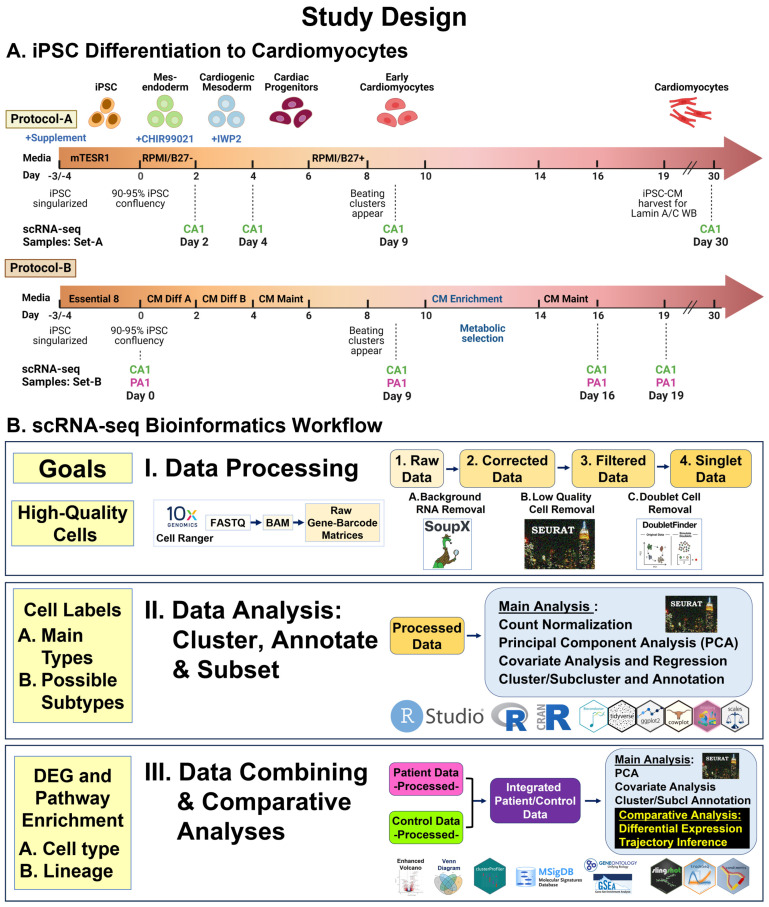
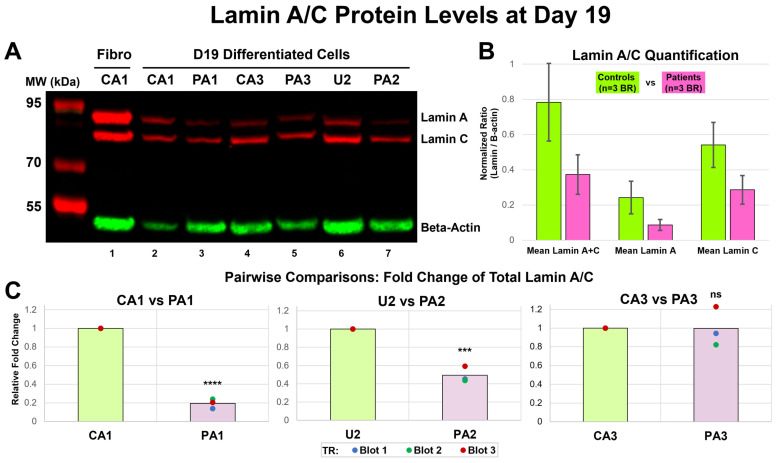
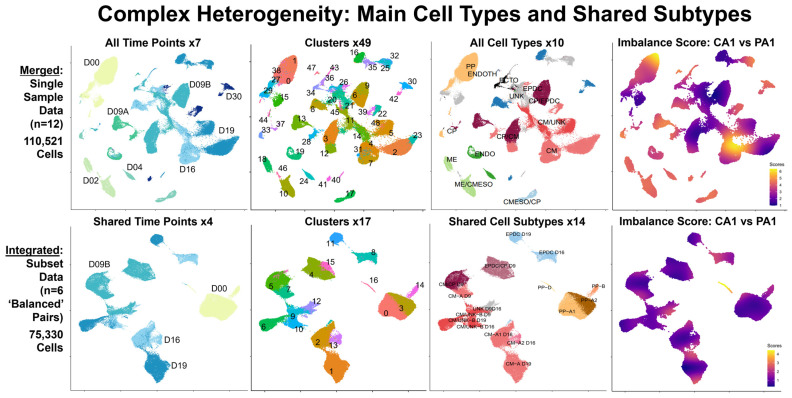
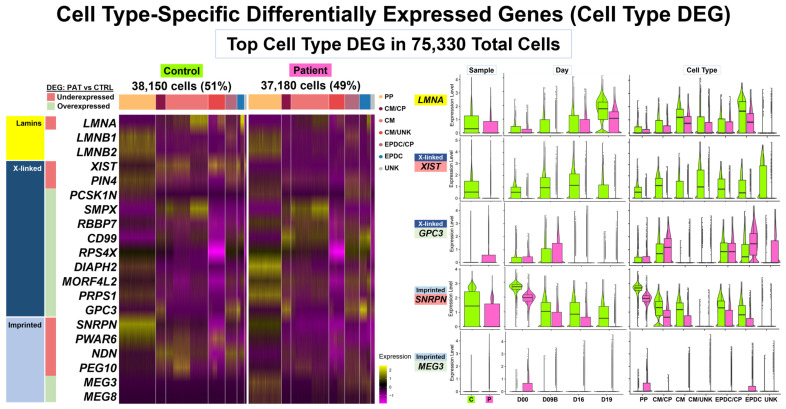
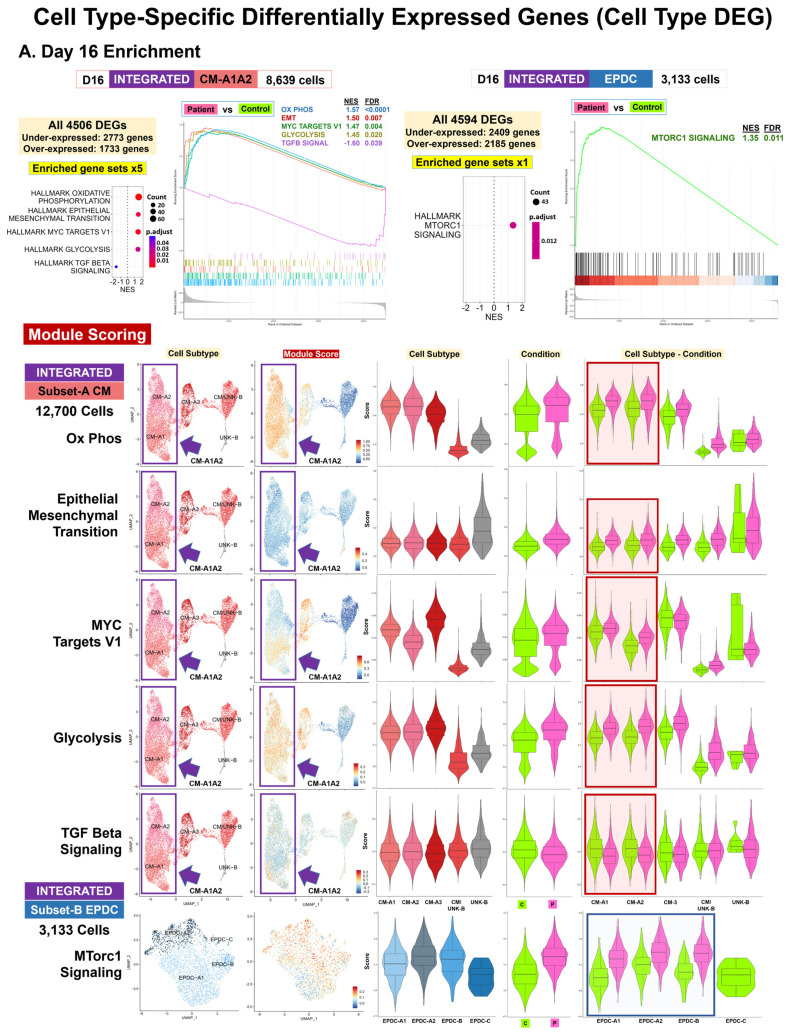
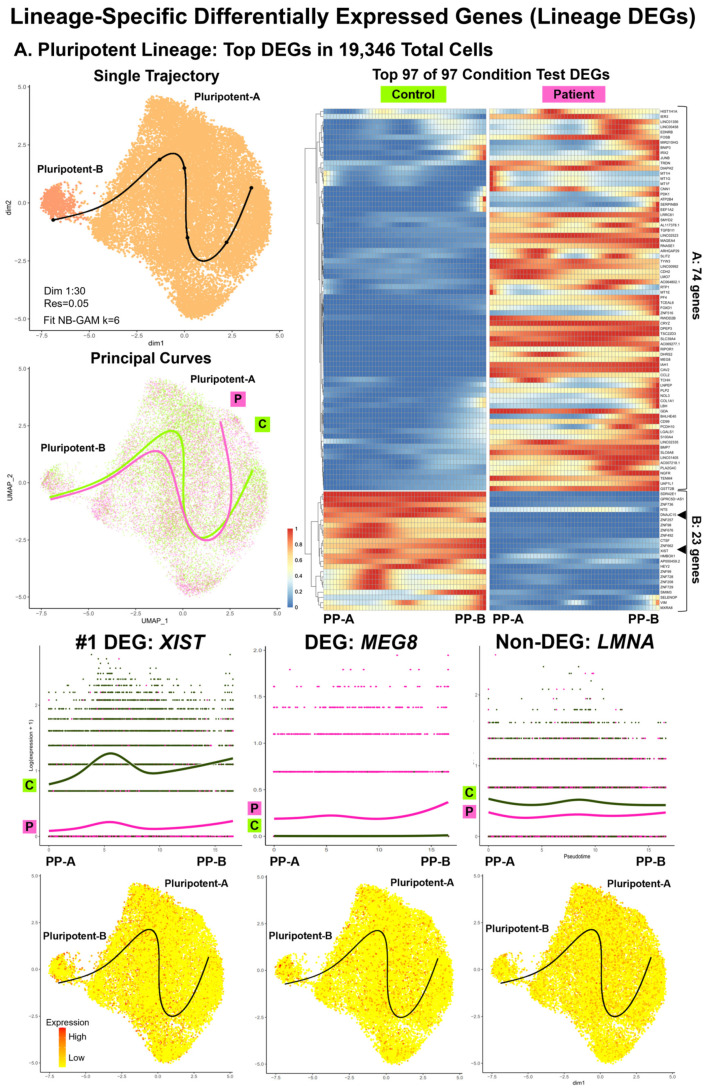
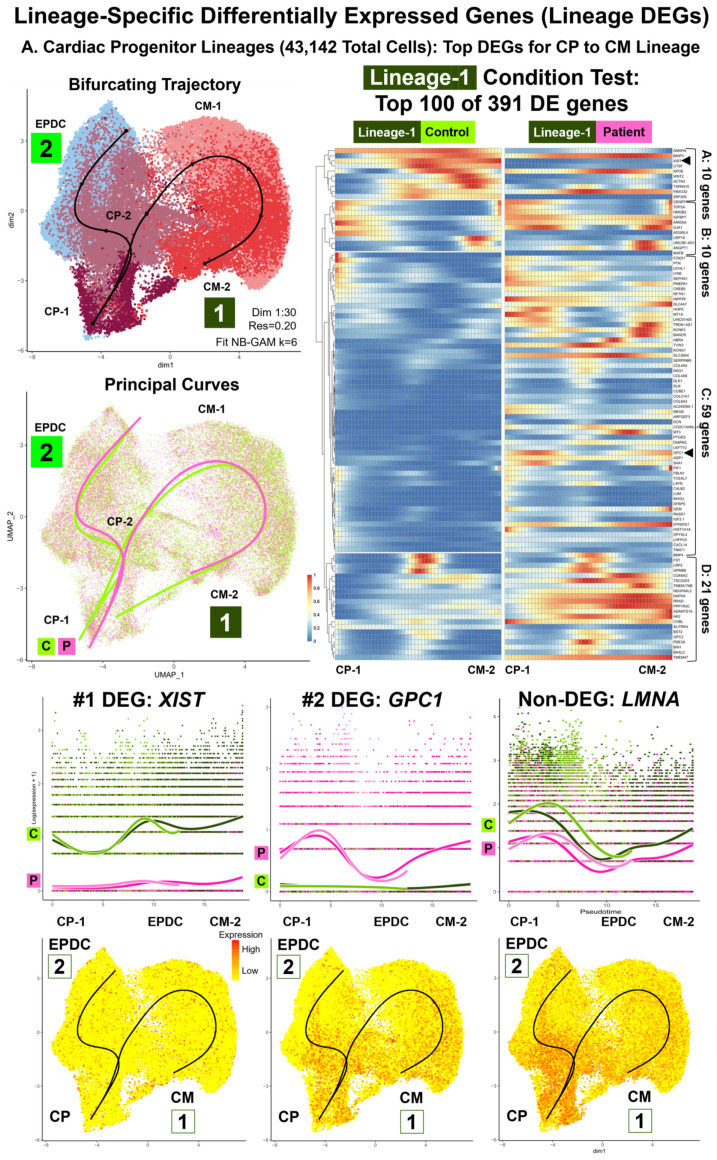
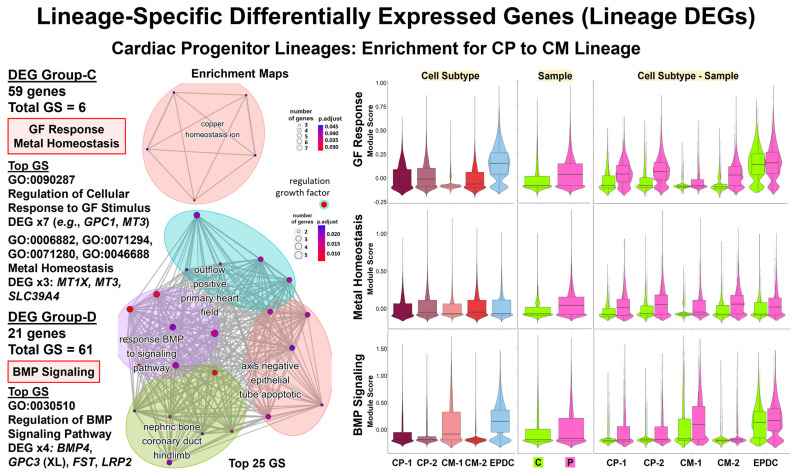
-related dilated cardiomyopathy (DCM) is an autosomal-dominant genetic condition with cardiomyocyte and conduction system dysfunction often resulting in heart failure or sudden death. The condition is caused by mutation in the Lamin A/C () gene encoding Type-A nuclear lamin proteins involved in nuclear integrity, epigenetic regulation of gene expression, and differentiation. The molecular mechanisms of the disease are not completely understood, and there are no definitive treatments to reverse progression or prevent mortality. We investigated possible mechanisms of -related DCM using induced pluripotent stem cells derived from a family with a heterozygous c.357-2A>G splice-site mutation. We differentiated one -mutant iPSC line derived from an affected female (Patient) and two non-mutant iPSC lines derived from her unaffected sister (Control) and conducted single-cell RNA sequencing for 12 samples (four from Patients and eight from Controls) across seven time points: Day 0, 2, 4, 9, 16, 19, and 30. Our bioinformatics workflow identified 125,554 cells in raw data and 110,521 (88%) high-quality cells in sequentially processed data. Unsupervised clustering, cell annotation, and trajectory inference found complex heterogeneity: ten main cell types; many possible subtypes; and lineage bifurcation for cardiac progenitors to cardiomyocytes (CMs) and epicardium-derived cells (EPDCs). Data integration and comparative analyses of Patient and Control cells found cell type and lineage-specific differentially expressed genes (DEGs) with enrichment, supporting pathway dysregulation. Top DEGs and enriched pathways included 10 genes and RNA polymerase II transcription in pluripotent cells (PP); and TGF Beta/BMP signaling, sarcomere gene subsets and cardiogenesis, and EMT in CMs; and epigenetic regulation, as well as and mTORC1 signaling in EPDCs. Top DEGs also included and other X-linked genes, six imprinted genes (, , , , , ), and enriched gene sets related to metabolism, proliferation, and homeostasis. We confirmed Lamin A/C haploinsufficiency by allelic expression and Western blot. Our complex Patient-derived iPSC model for Lamin A/C haploinsufficiency in PP, CM, and EPDC provided support for dysregulation of genes and pathways, many previously associated with Lamin A/C defects, such as epigenetic gene expression, signaling, and differentiation. Our findings support disruption of epigenomic developmental programs, as proposed in other disease models. We recognized other factors influencing epigenetics and differentiation; thus, our approach needs improvement to further investigate this mechanism in an iPSC-derived model.
相关扩张型心肌病(DCM)是一种常染色体显性遗传疾病,其心肌细胞和传导系统功能障碍常导致心力衰竭或猝死。这种情况是由编码 A 型核纤层蛋白的 Lamin A/C()基因的突变引起的,该基因参与核完整性、基因表达的表观遗传调控和分化。该疾病的分子机制尚不完全清楚,也没有明确的治疗方法来逆转进展或预防死亡。我们使用来自一个携带杂合 c.357-2A>G 剪接位点突变的家族的诱导多能干细胞 (iPSC) 研究了相关 DCM 的可能机制。我们从受影响的女性 (患者) 中分化出一个 -突变的 iPSC 系,并从她未受影响的姐妹 (对照) 中分化出两个非突变的 iPSC 系,并对 12 个样本 (四个来自患者,八个来自对照) 进行单细胞 RNA 测序在七个时间点:第 0 天、第 2 天、第 4 天、第 9 天、第 16 天、第 19 天和第 30 天。我们的生物信息学工作流程在原始数据中识别出 125,554 个细胞,在经过连续处理的数据中识别出 110,521 个(88%)高质量细胞。无监督聚类、细胞注释和轨迹推断发现了复杂的异质性:十种主要细胞类型;许多可能的亚型;以及心脏祖细胞向心肌细胞 (CM) 和心外膜衍生细胞 (EPDC) 的谱系分叉。数据整合和患者与对照细胞的比较分析发现了细胞类型和谱系特异性差异表达基因 (DEG),并进行了富集分析,支持了通路失调。顶级 DEG 和富集通路包括 10 个基因和多能细胞中的 RNA 聚合酶 II 转录 (PP);CM 中的 TGF Beta/BMP 信号、肌节基因亚群和心肌发生、EMT;EPDC 中的表观遗传调控以及 mTORC1 信号。顶级 DEG 还包括 等 X 连锁基因、六个印记基因 (、、、、、),以及与代谢、增殖和动态平衡相关的富集基因集。我们通过等位基因表达和 Western blot 确认了 Lamin A/C 的单倍不足。我们在多能细胞 (PP)、CM 和 EPDC 中为 Lamin A/C 单倍不足提供的复杂患者衍生 iPSC 模型支持了基因和通路的失调,其中许多与 Lamin A/C 缺陷有关,如表观遗传基因表达、信号和分化。我们的发现支持了表观基因组发育程序的中断,这在其他 疾病模型中也有提出。我们还认识到影响表观遗传学和分化的其他因素;因此,我们的方法需要改进,以便在 iPSC 衍生模型中进一步研究这种机制。