Department of Pharmaceutical Chemistry, Faculty of Pharmacy, Sinai University-Kantara Branch, Ismailia 41636, Egypt.
Medical Biochemistry and Molecular Biology Department, Faculty of Medicine, Suez Canal University, Ismailia 41522, Egypt.
Int J Mol Sci. 2024 Aug 27;25(17):9284. doi: 10.3390/ijms25179284.
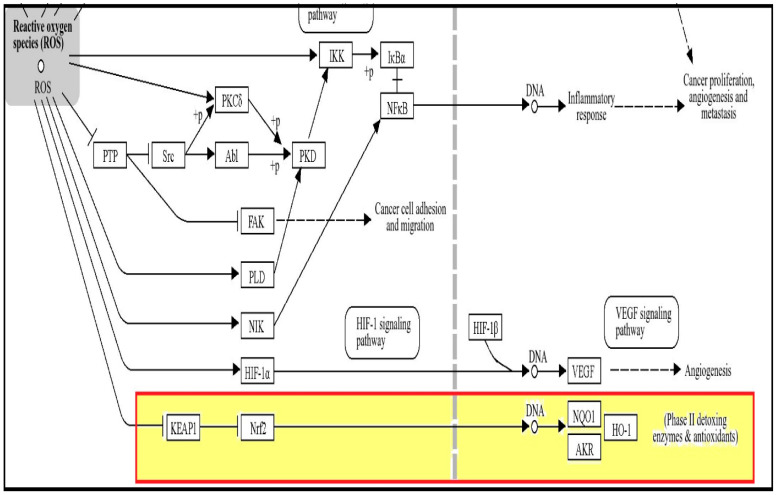
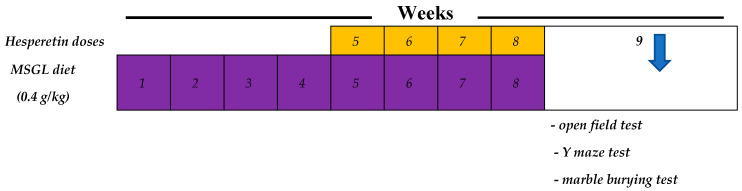
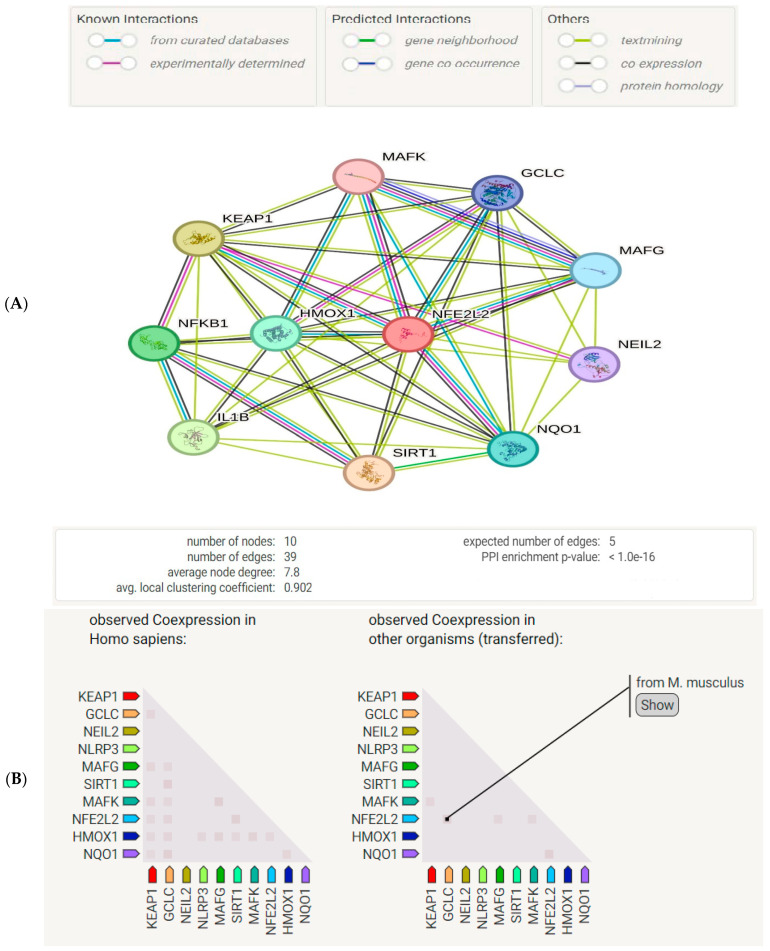
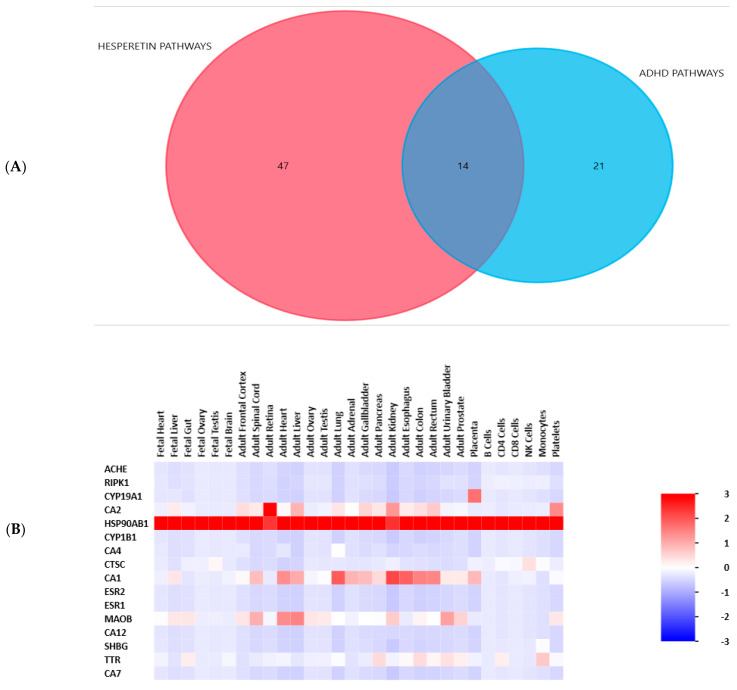
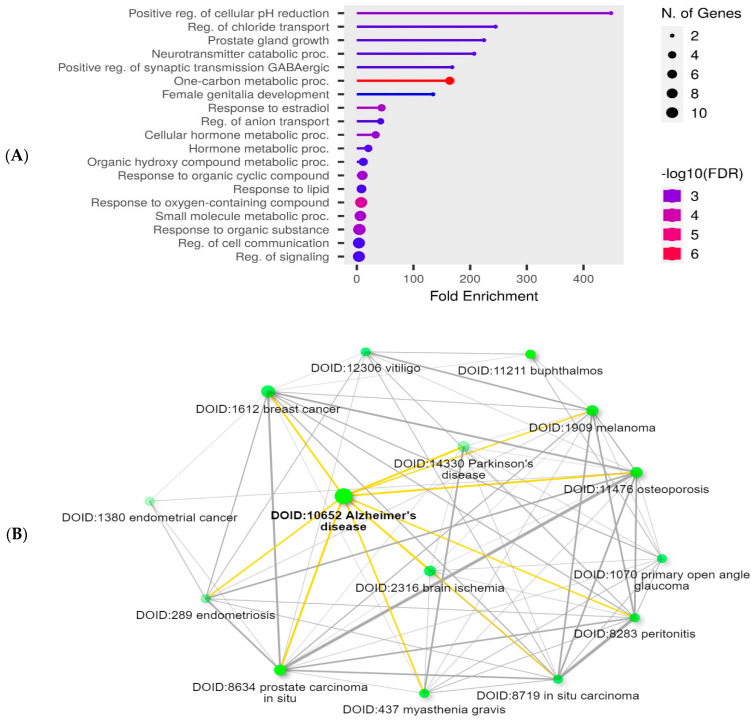
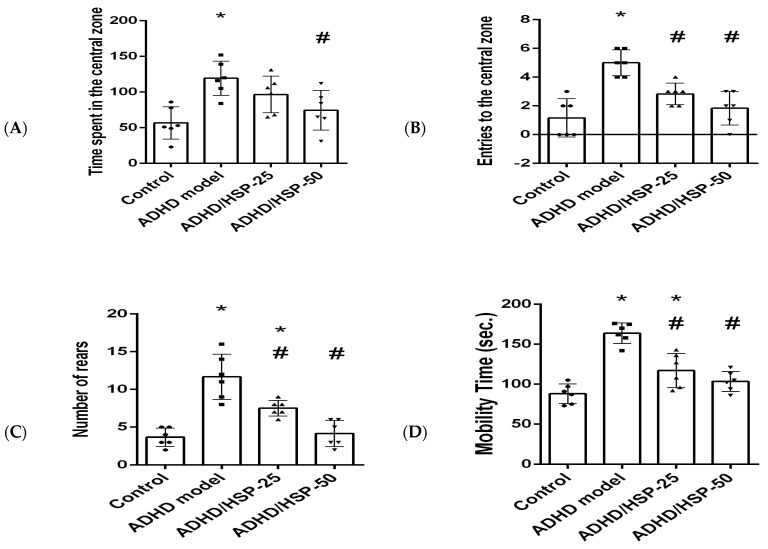
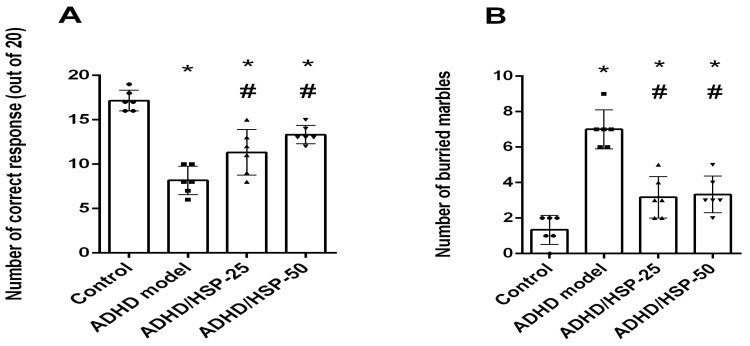
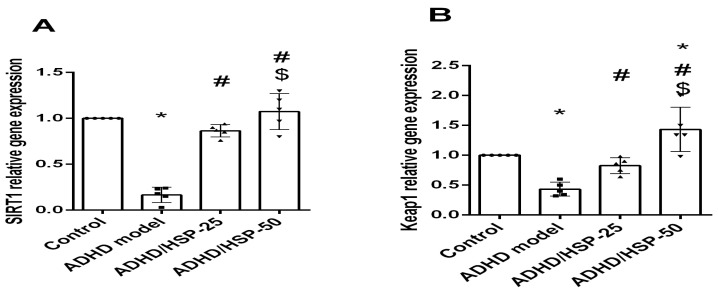
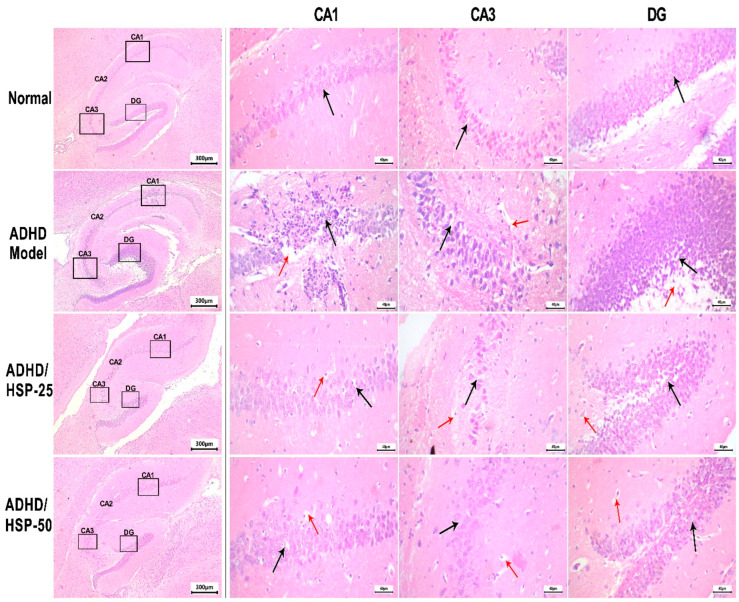
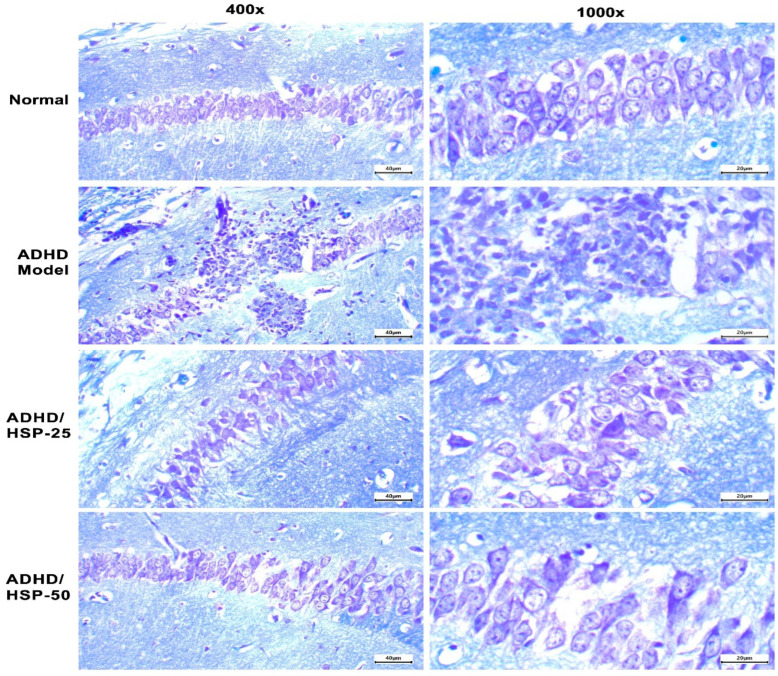
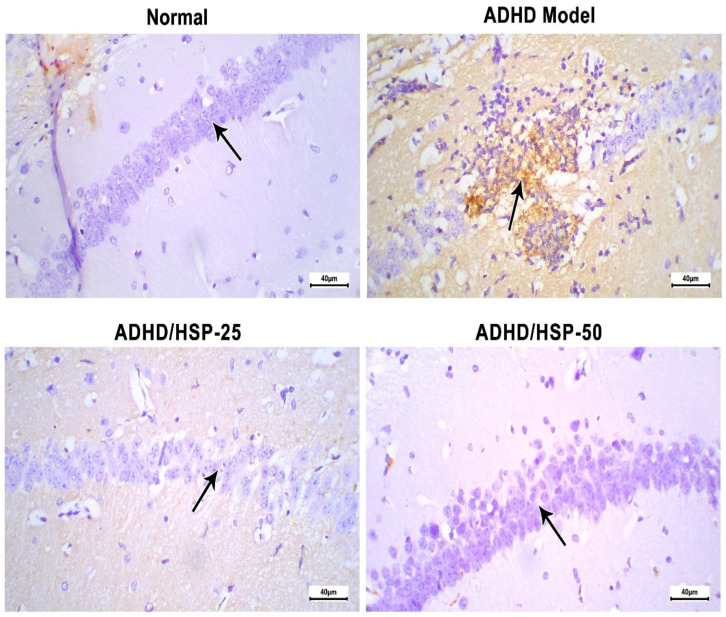
Attention deficit hyperactivity disorder (ADHD) manifests as poor attention, hyperactivity, as well as impulsive behaviors. Hesperetin (HSP) is a citrus flavanone with strong antioxidant and anti-inflammatory activities. The present study aimed to test hesperetin efficacy in alleviating experimental ADHD in mice and its influence on hippocampal neuron integrity and sirtuin 1 (SIRT1) signaling. An in silico study was performed to test the related proteins. Groups of mice were assigned as control, ADHD model, ADHD/HSP (25 mg/kg), and ADHD/HSP (50 mg/kg). ADHD was induced by feeding with monosodium glutamate (0.4 g/kg, for 8 weeks) and assessed by measuring the motor and attentive behaviors (open filed test, Y-maze test, and marble burying test), histopathological examination of the whole brain tissues, and estimation of inflammatory markers. The in-silico results indicated the putative effects of hesperetin on ADHD by allowing the integration and analysis of large-scale genomic, transcriptomic, and proteomic data. The in vivo results showed that ADHD model mice displayed motor hyperactivity and poor attention in the behavioral tasks and shrank neurons at various hippocampal regions. Further, there was a decline in the mRNA expression and protein levels for SIRT1, the erythroid 2-related factor-2 (Nrf2), kelch like ECH associated protein 1 (Keap1) and hemeoxygenase-1 (OH-1) proteins. Treatment with HSP normalized the motor and attentive behaviors, prevented hippocampal neuron shrinkage, and upregulated SIRT1/Nrf2/Keap1/OH-1 proteins. Taken together, HSP mainly acts by its antioxidant potential. However, therapeutic interventions with hesperetin or a hesperetin-rich diet can be suggested as a complementary treatment in ADHD patients but cannot be suggested as an ADHD treatment per se as it is a heterogeneous and complex disease.
注意缺陷多动障碍(ADHD)表现为注意力不集中、多动和冲动行为。橙皮素(HSP)是一种具有强抗氧化和抗炎活性的柑橘类黄酮。本研究旨在测试橙皮素在缓解实验性 ADHD 小鼠中的疗效及其对海马神经元完整性和沉默调节蛋白 1(SIRT1)信号的影响。进行了一项计算机模拟研究来测试相关蛋白。将小鼠分为对照组、ADHD 模型组、ADHD/HSP(25mg/kg)组和 ADHD/HSP(50mg/kg)组。通过给予谷氨酸单钠(0.4g/kg,8 周)来诱导 ADHD,并通过测量运动和注意力行为(旷场试验、Y 迷宫试验和埋珠试验)、全脑组织的组织病理学检查以及炎症标志物的估计来评估 ADHD。计算机模拟结果表明,橙皮素通过允许整合和分析大规模基因组、转录组和蛋白质组数据,对 ADHD 具有潜在作用。体内结果表明,ADHD 模型小鼠在行为任务中表现出运动过度和注意力不集中,并且各种海马区的神经元萎缩。此外,SIRT1、红细胞 2 相关因子 2(Nrf2)、Kelch 样 ECH 相关蛋白 1(Keap1)和血红素加氧酶 1(OH-1)蛋白的 mRNA 表达和蛋白水平下降。HSP 治疗使运动和注意力行为正常化,防止海马神经元萎缩,并上调 SIRT1/Nrf2/Keap1/OH-1 蛋白。总之,HSP 主要通过其抗氧化潜力发挥作用。然而,橙皮素或富含橙皮素的饮食治疗可以作为 ADHD 患者的辅助治疗建议,但不能作为 ADHD 治疗本身的建议,因为它是一种异质且复杂的疾病。