Soriano-Cuadrado Belén, Fontecha-Cámara Mᵃ Ángeles, Mañas-Villar María, Delgado-Blanca Irene, Ramírez-Rodríguez María Dolores
Andaltec, Plastic Technological Center, 23600 Martos, Spain.
Polymers (Basel). 2024 Aug 29;16(17):2462. doi: 10.3390/polym16172462.
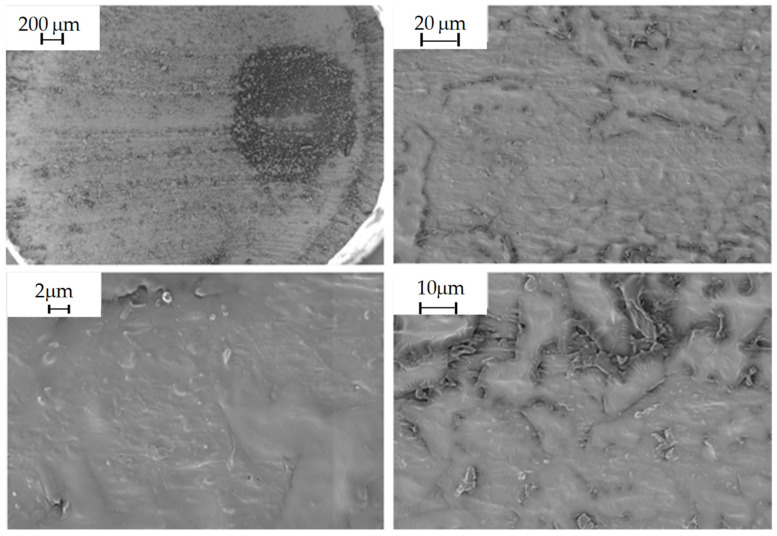
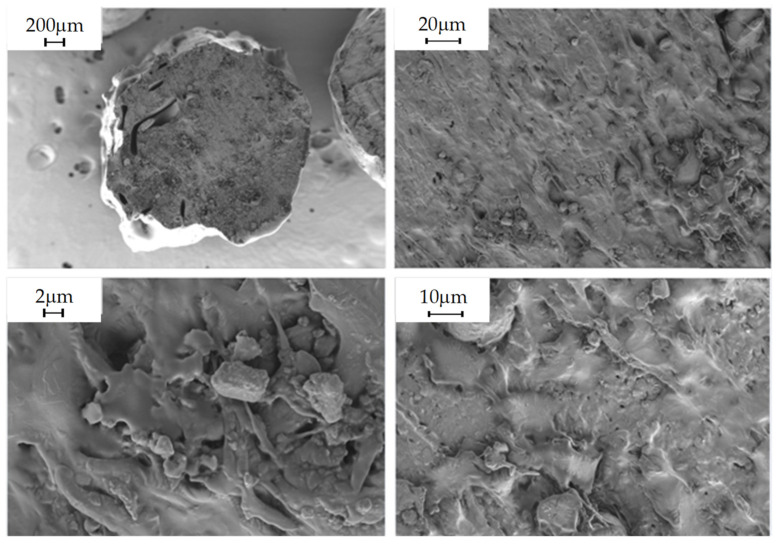
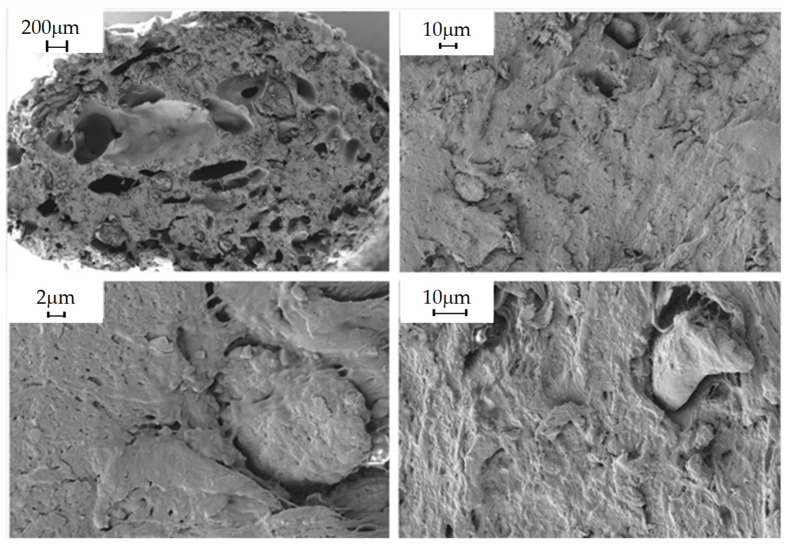
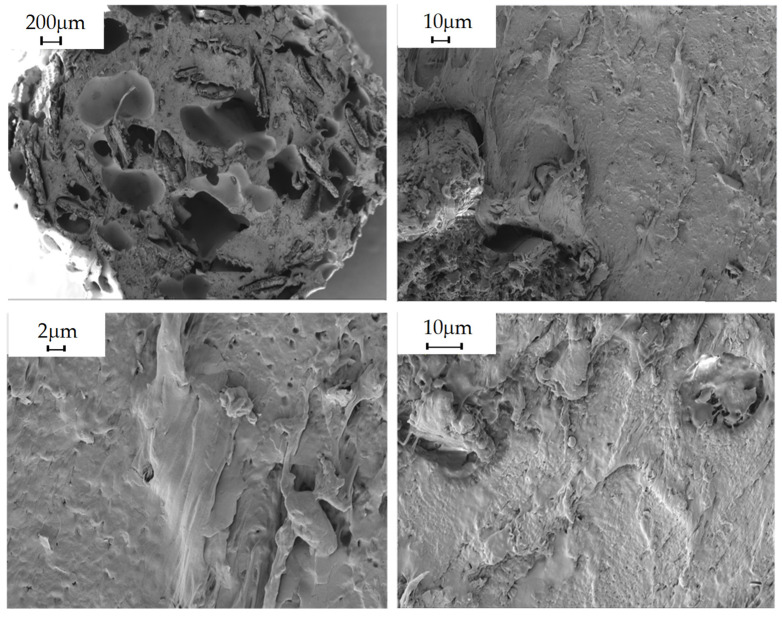
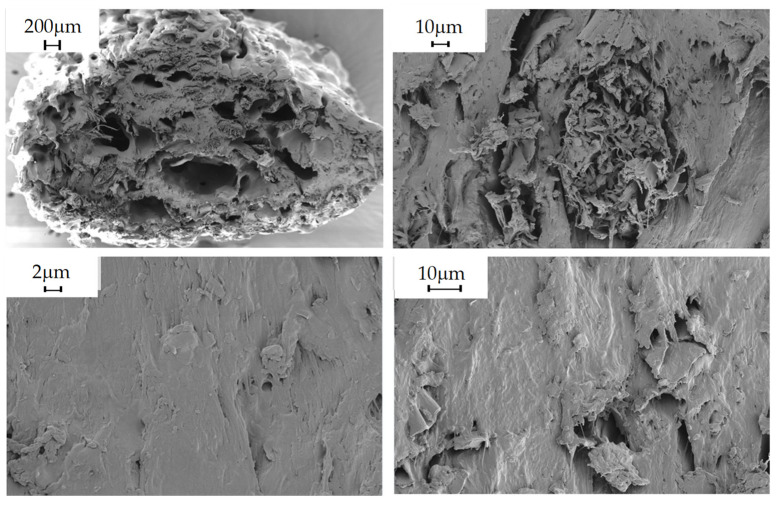
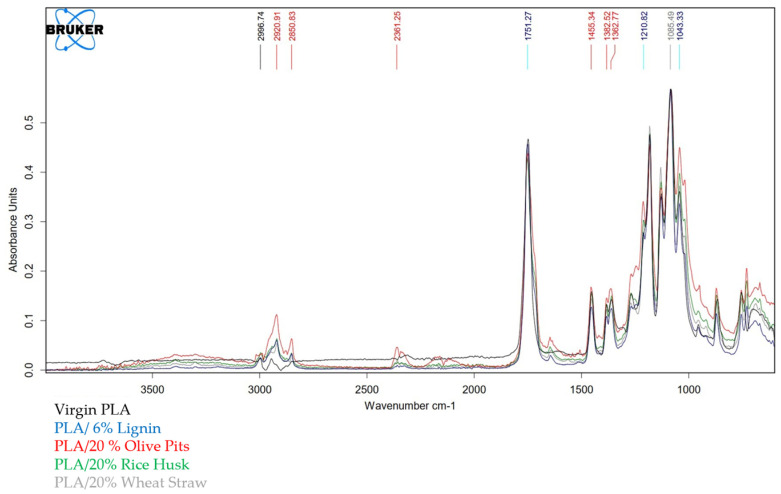
This study investigates the performance of different poly(lactic acid) (PLA) composites incorporating agri-food waste additives and commercial lignin, comparing their properties with those of virgin PLA. The following composites were prepared using a single-screw extruder: PLA with 20% rice husk, PLA with 20% wheat straw and PLA with 20% olive pit. Additionally, PLA was blended with commercial lignin at the maximum feasible proportion using the same methodology. The resulting composites were injection-molded into specimens for analysis of their mechanical, thermal and morphological behavior. The primary objectives were to assess the dispersion of the additives within the PLA matrix and to evaluate the mechanical properties of the composites. The results indicate that the addition of high percentages of agricultural residues does not significantly compromise the mechanical properties of the composites. Notably, in the case of the PLA with 20% rice husk composite, the elastic modulus surpassed that of virgin PLA, despite the evident heterogeneity in filler particle sizes. It was feasible to incorporate a higher percentage of agricultural residues compared to commercial lignin, attributed to the larger volume occupied by the latter.
本研究调查了不同的聚乳酸(PLA)复合材料(包含农业食品废料添加剂和商业木质素)的性能,并将其性能与纯PLA的性能进行比较。使用单螺杆挤出机制备了以下复合材料:含20%稻壳的PLA、含20%麦秸的PLA和含20%橄榄核的PLA。此外,采用相同方法将PLA与商业木质素按最大可行比例进行共混。将所得复合材料注塑成试样,以分析其力学、热学和形态学行为。主要目的是评估添加剂在PLA基体中的分散情况,并评估复合材料的力学性能。结果表明,添加高比例的农业残余物不会显著损害复合材料的力学性能。值得注意的是,对于含20%稻壳的PLA复合材料,尽管填料粒径存在明显的不均匀性,但其弹性模量超过了纯PLA。与商业木质素相比,纳入更高比例的农业残余物是可行的,这归因于商业木质素占据的体积更大。