Gerhardt Bruna Cardoso, Serra Jovana Giacobo, Zimmer Camila, Arteche Adriane Xavier
Pontifícia Universidade Católica do Rio Grande do Sul, Post Graduate Program in Psychology, Porto Alegre (RS), Brazil.
Psicol Reflex Crit. 2024 Sep 14;37(1):38. doi: 10.1186/s41155-024-00321-2.
A significant percentage of women experience psychopathological symptoms during the postpartum period, which can impact not only their mental health and well-being but also the relationship between mother and baby. However, studies investigating how specific psychological factors, such as self-compassion and self-criticism, contribute to the development and maintenance of these symptoms are scarce.
This cross-sectional study aimed to examine the relationship among compassionate self-responding (CSR), uncompassionate self-responding (USR), maternal mental health indicators, mother-infant bonding, and the perceived impact of the COVID-19 pandemic. Data were collected online from 189 Brazilian women with infants aged 0 to 12 months. Participants completed measures of sociodemographic characteristics, Self-Compassion Scale (SCS), Edinburgh Postnatal Depression Scale (EPDS), Postpartum Specific Anxiety Scale (PSAS-BR-RSF-C), Postpartum Bonding Questionnaire (PBQ), and COVID-19-Impact on Quality of Life (COV19-QoL).
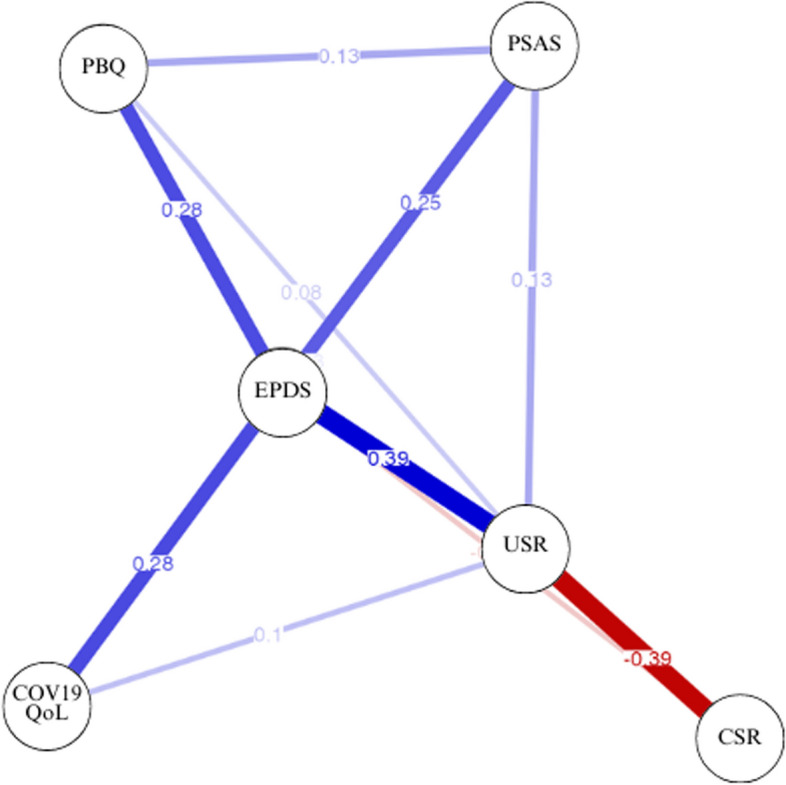
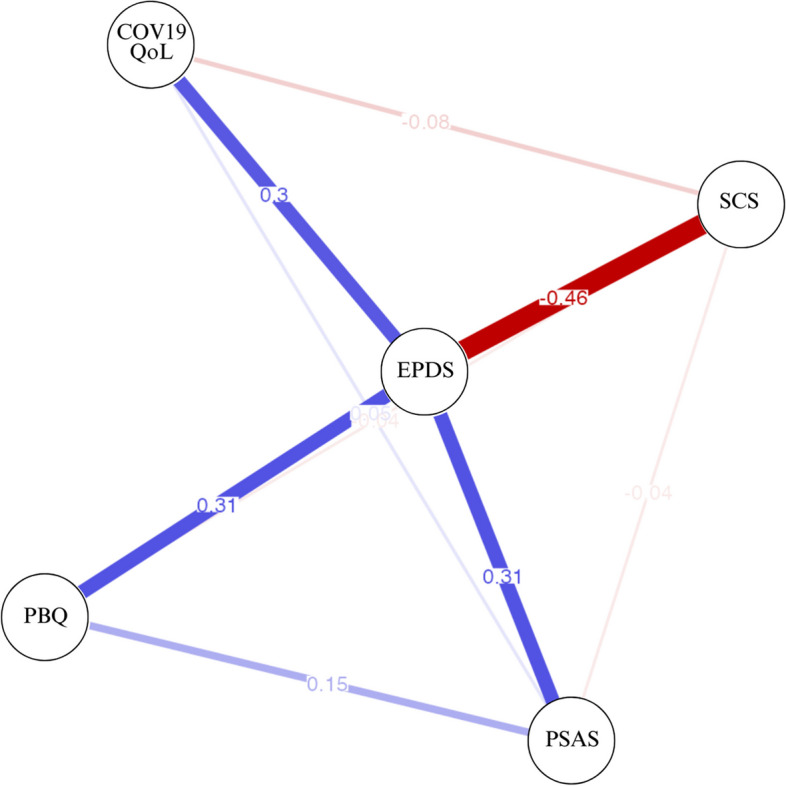
Through network analysis, our findings highlighted that postpartum depression played a central role in the structuring of variables in this system. Furthermore, USR, instead of CSR, emerged as the variable most strongly associated with levels of postpartum depression, which, in turn, was associated with mother-infant bonding.
Mitigating levels of self-criticism in mothers may represent a pathway to prevent the development of postpartum depression, which, in turn, could impact the quality of the mother-infant relationship. Given the significance of the child's early years for their emotional development, intervening early in maternal mental health may be a means to prevent mental disorders in the child as well.
相当大比例的女性在产后会出现精神病理症状,这不仅会影响她们的心理健康和幸福感,还会影响母婴关系。然而,研究特定心理因素,如自我同情和自我批评,如何导致这些症状的发展和持续的研究却很少。
这项横断面研究旨在考察同情性自我反应(CSR)、非同情性自我反应(USR)、产妇心理健康指标、母婴联结以及COVID-19大流行的感知影响之间的关系。数据通过在线方式从189名有0至12个月婴儿的巴西女性中收集。参与者完成了社会人口学特征测量、自我同情量表(SCS)、爱丁堡产后抑郁量表(EPDS)、产后特定焦虑量表(PSAS-BR-RSF-C)、产后联结问卷(PBQ)以及COVID-19对生活质量的影响(COV19-QoL)。
通过网络分析,我们的研究结果突出表明产后抑郁在该系统变量的结构中起核心作用。此外,与产后抑郁水平最密切相关的变量是USR,而非CSR,产后抑郁又与母婴联结相关。
减轻母亲的自我批评水平可能是预防产后抑郁发展的一条途径,而产后抑郁反过来又可能影响母婴关系的质量。鉴于儿童早期对其情感发展的重要性,尽早干预产妇心理健康也可能是预防儿童精神障碍的一种手段。