Neurobiota Research Center, College of Pharmacy, Kyung Hee University, Seoul, 02447, Korea.
School of Pharmacy, Jeonbuk National University, Jeonju-si, Korea.
J Neuroinflammation. 2024 Sep 14;21(1):224. doi: 10.1186/s12974-024-03211-7.
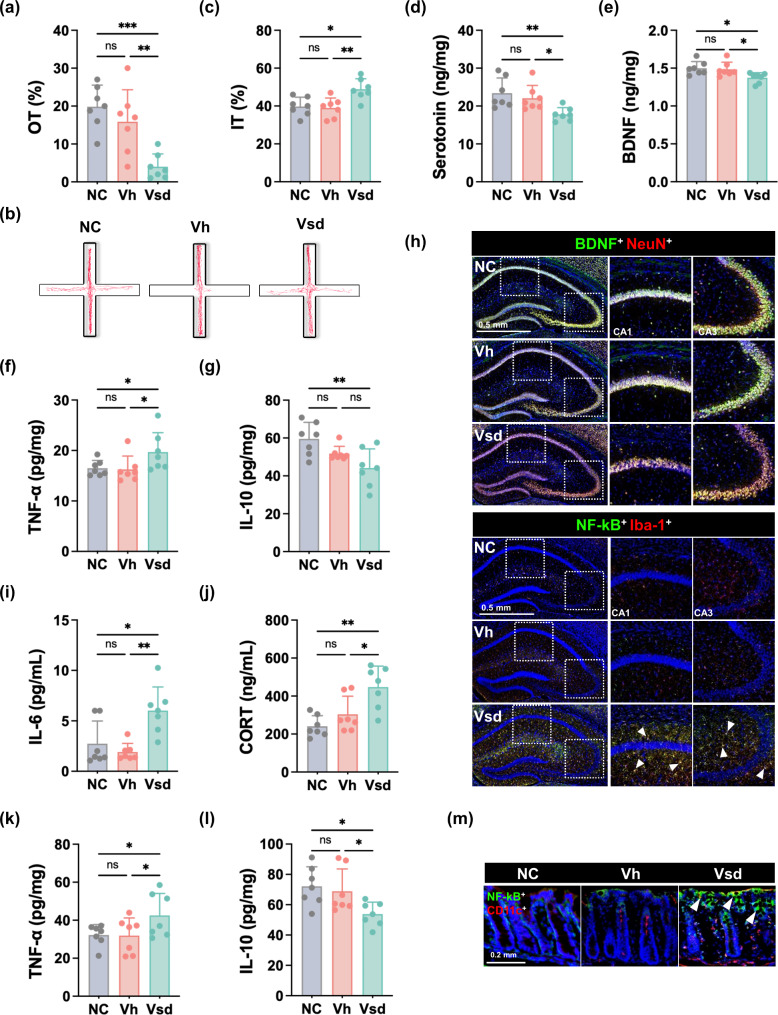
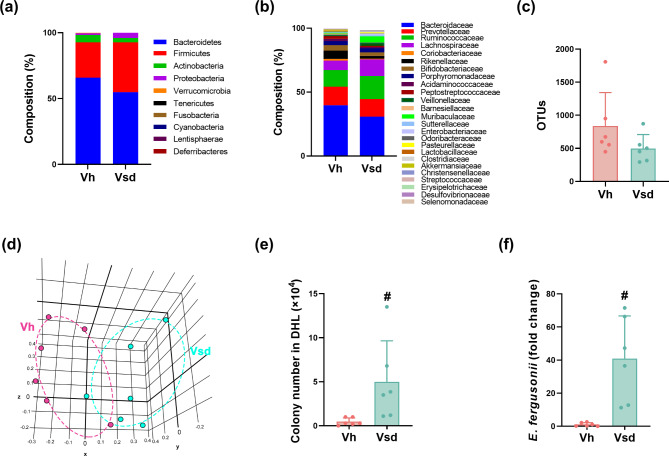
Gut microbiota dysbiosis is closely associated with psychiatric disorders such as depression and anxiety (DA). In our preliminary study, fecal microbiota transplantation from volunteers with psychological stress and subclinical symptoms of depression (Vsd) induced DA-like behaviors in mice. Escherichia fergusonii (Esf) was found to be more abundant in the feces of Vsd compared to healthy volunteers. Therefore, we investigated the effect of Esf on DA-like behavior and neuroinflammation in mice with and without celiac vagotomy.
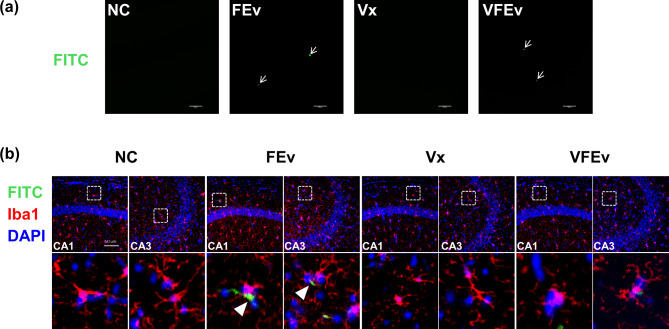
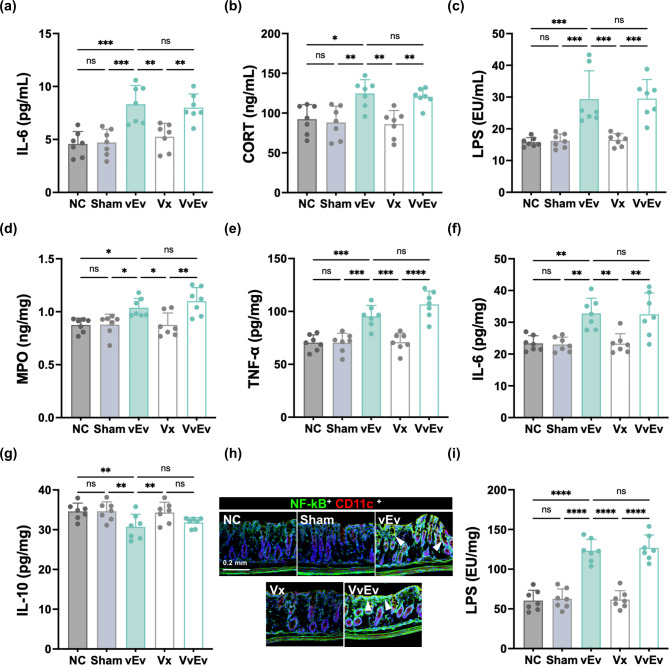
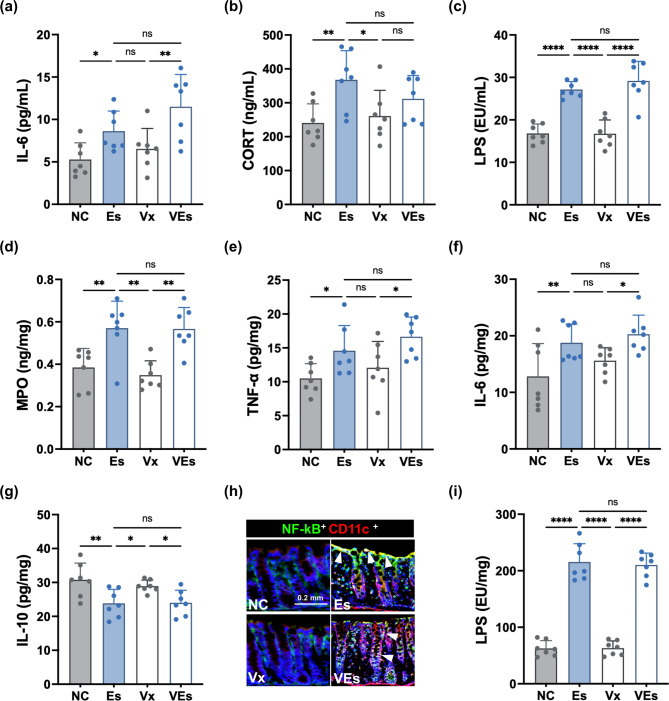
Orally gavaged Esf increased DA-like behaviors, tumor necrosis factor (TNF)-α, and toll-like receptor-4 (TLR4) expression, and NF-κBIba1 and lipopolysaccharide (LPS)Iba1 cell populations, while decreasing serotonin, 5-HT receptor, and brain-derived neurotrophic factor (BDNF) expression in the hippocampus and prefrontal cortex. However, celiac vagotomy attenuated Esf-induced DA-like behavior and neuroinflammation. Orally gavaged extracellular vesicle (EV) from Vsd feces (vfEV) or Esf culture (esEV) induced DA-like behavior and inflammation in hippocampus, prefrontal cortex and colon. However, celiac vagotomy attenuated vfEV- or esEV-induced DA-like behaviors and inflammation in the brain alone, while vfEV- or esEV-induced blood LPS and TNF-α levels, colonic TNF-α expression and NF-κB-positive cell number, and fecal LPS level were not. Although orally gavaged fluorescence isothiocyanate-labeled esEV was translocated into the blood and hippocampus, celiac vagotomy decreased its translocation into the hippocampus alone.
esEVs may be translocated into the brain via the vagus nerve and bloodstream, subsequently inducing TNF-α expression and suppressing serotonin, its receptor, and BDNF expression through the activation of TLR4-mediated NF-κB signaling, thereby contributing to DA pathogenesis.
肠道微生物群失调与抑郁症和焦虑症(DA)等精神疾病密切相关。在我们的初步研究中,从有心理压力和亚临床抑郁症状的志愿者(Vsd)中移植粪便微生物群会在小鼠中引起类似 DA 的行为。与健康志愿者相比,Vsd 粪便中埃希氏菌(Esf)更为丰富。因此,我们研究了 Esf 对有和无腹腔迷走神经切断术的小鼠类似 DA 行为和神经炎症的影响。
口服 Esf 增加了类似 DA 的行为、肿瘤坏死因子(TNF)-α 和 toll 样受体-4(TLR4)的表达,以及 NF-κBIba1 和脂多糖(LPS)Iba1 细胞群,同时降低了海马体和前额叶皮质中的血清素、5-HT 受体和脑源性神经营养因子(BDNF)的表达。然而,腹腔迷走神经切断术减弱了 Esf 诱导的类似 DA 的行为和神经炎症。口服 Vsd 粪便(vfEV)或 Esf 培养物(esEV)的细胞外囊泡(EV)诱导了海马体、前额叶皮层和结肠中的类似 DA 行为和炎症。然而,腹腔迷走神经切断术仅减弱了 vfEV 或 esEV 诱导的类似 DA 行为和炎症在大脑中的作用,而 vfEV 或 esEV 诱导的血液 LPS 和 TNF-α 水平、结肠 TNF-α 表达和 NF-κB 阳性细胞数以及粪便 LPS 水平没有。尽管口服给予荧光异硫氰酸酯标记的 esEV 被转移到血液和海马体中,但腹腔迷走神经切断术仅减少了其向海马体的转移。
esEV 可能通过迷走神经和血流转移到大脑,随后通过 TLR4 介导的 NF-κB 信号转导抑制血清素、其受体和 BDNF 的表达,从而诱导 TNF-α 的表达,导致 DA 发病机制。