Shin Yoon-Jung, Ma Xiaoyang, Baek Ji-Su, Kim Dong-Hyun
Neurobiota Research Center, College of Pharmacy, Kyung Hee University, Seoul 02447, Republic of Korea.
Microorganisms. 2025 Apr 21;13(4):955. doi: 10.3390/microorganisms13040955.
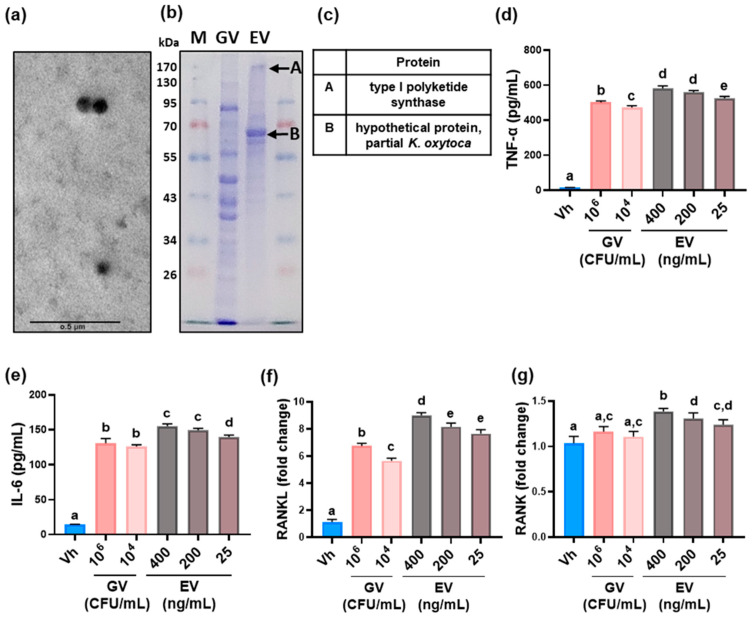
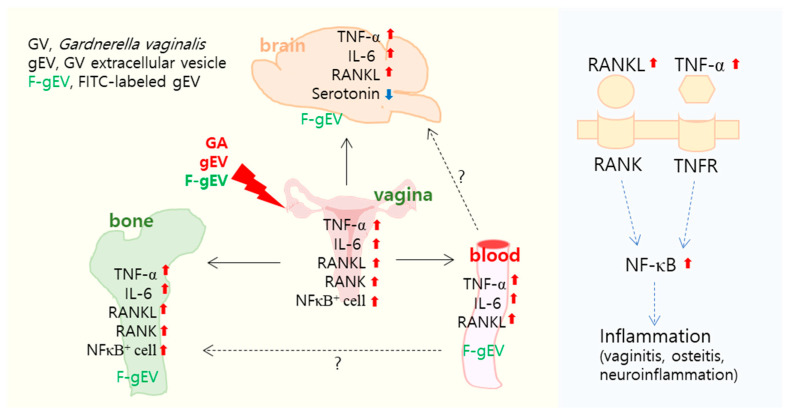
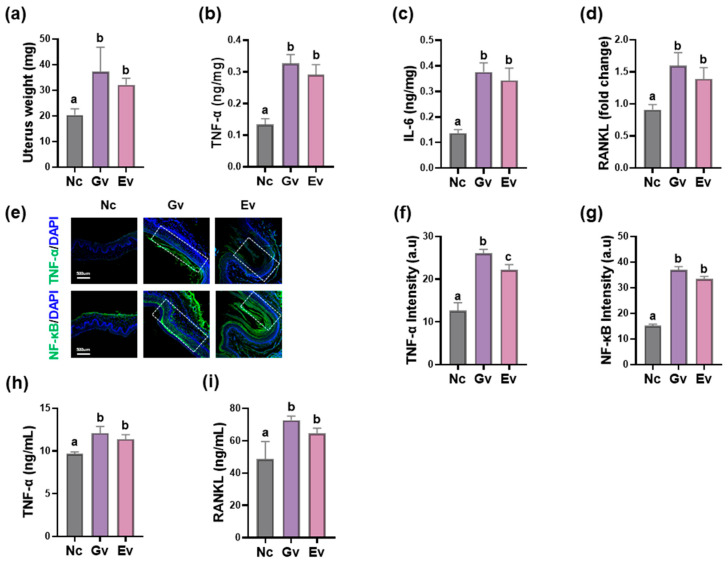
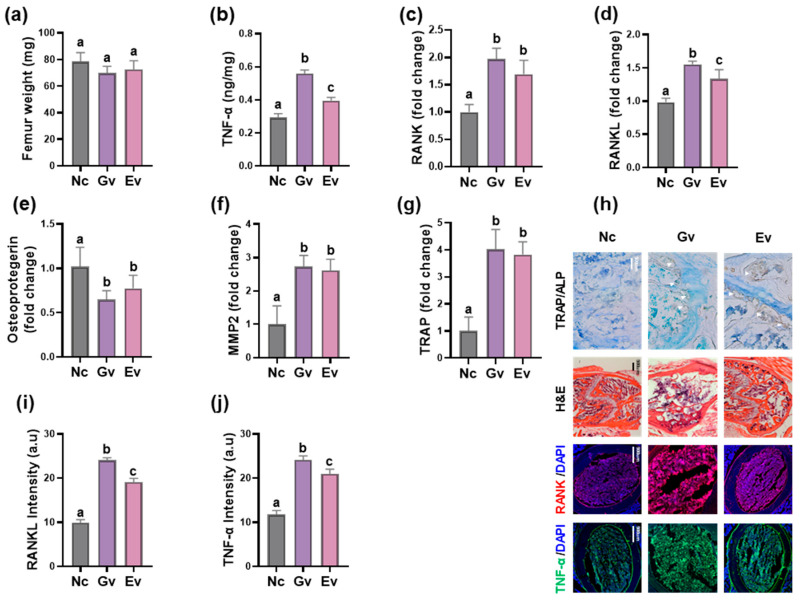
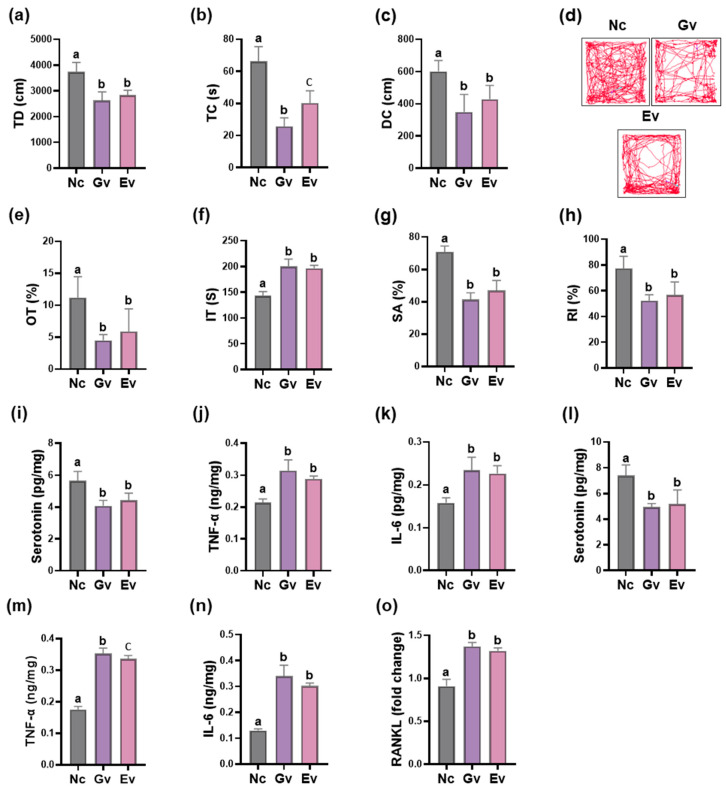
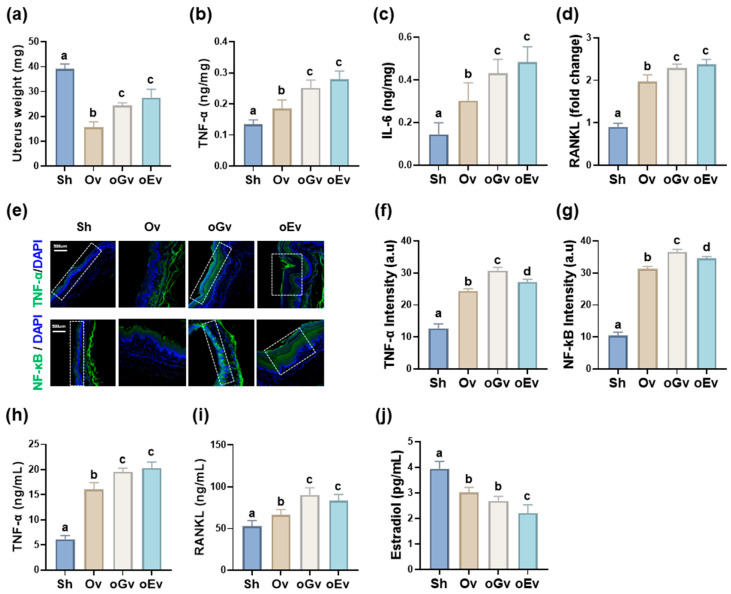
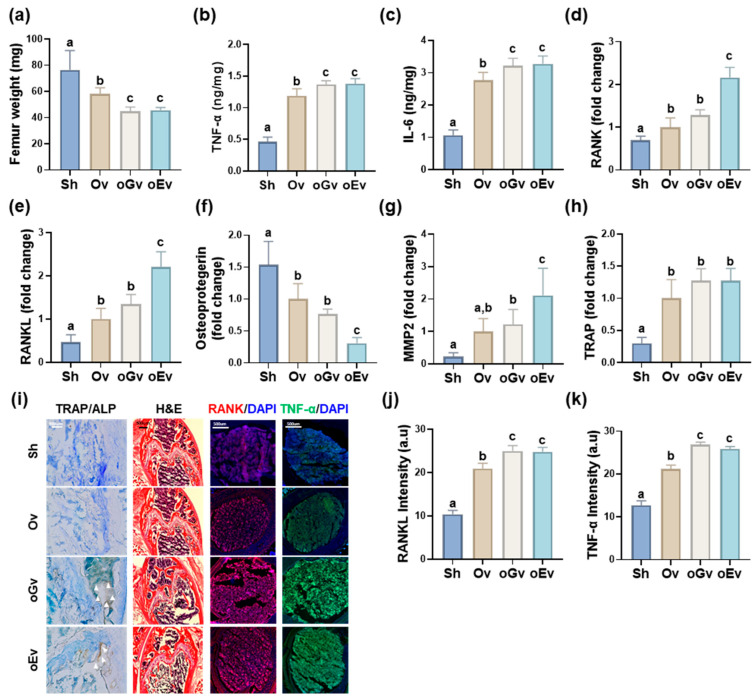
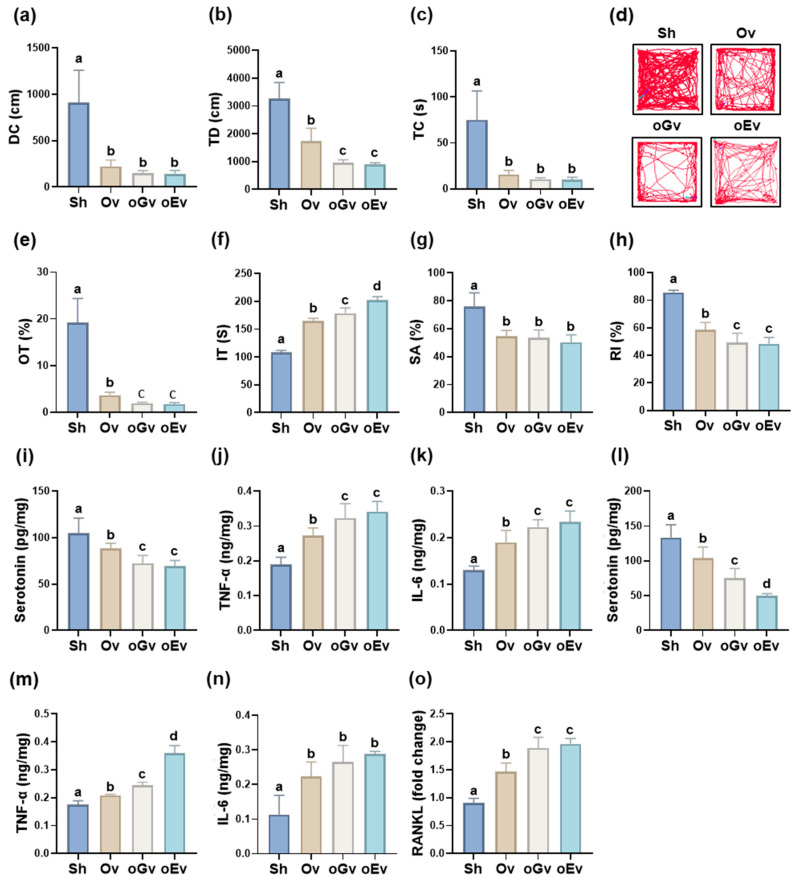
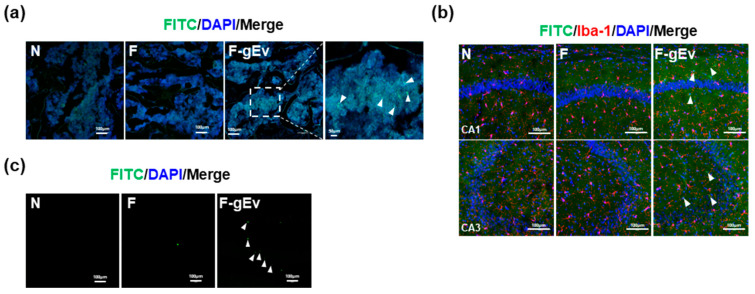
(GV), an opportunistic pathogen excessively proliferated in vaginal dysbiosis, causes systemic inflammation including vaginitis, neuroinflammation, and osteitis. To understand its systemic inflammation-triggering factor, we purified extracellular vesicles isolated from GV (gEVs) and examined their effect on the occurrence of vaginitis, osteitis, and neuroinflammation in mice with and without ovariectomy (Ov). The gEVs consisted of lipopolysaccharide, proteins, and nucleic acid and induced TNF-α and RANKL expression in macrophage cells. When the gEVs were vaginally exposed in mice without Ov, they significantly induced RANK, RANKL, and TNF-α expression and NF-κB cell numbers in the vagina, femur, hypothalamus, and hippocampus, as observed in GV infection. The gEVs decreased time spent in the open field (OT) in the elevated plus maze test by 47.3%, as well as the distance traveled in the central area (DC) by 28.6%. In the open field test, they also decreased the time spent in the central area (TC) by 39.3%. Additionally, gEVs decreased spontaneous alteration (SA) in the Y-maze test by 33.8% and the recognition index (RI) in the novel object recognition test by 26.5%, while increasing the immobility time (IT) in the tail suspension test by 36.7%. In mice with OV (Ov), the gEVs also induced RANK, RANKL, and TNF-α expression and increased NF-κB cell numbers in the vagina, femur, hypothalamus, and hippocampus compared to vehicle-treated mice. When gEVs were exposed to mice with Ov, gEVs also reduced the DC, TC, OT, SA, and RI to 62.1%, 62.7%, 28.2%, 90.7%, and 85.4% of mice with Ov, respectively, and increased IT to 122.9% of mice with Ov. Vaginally exposed fluorescein-isothiocyanate-tagged gEVs were detected in the blood, femur, and hippocampus. These findings indicate that GV-derived gEVs may induce systemic inflammation through the activation of RANK/RANKL-involved NF-κB signaling, leading to systemic disorders including vaginitis, osteoporosis, depression, and cognitive impairment. Therefore, gEVs may be an important risk factor for vaginitis, osteoporosis, depression, and cognitive impairment in women.
加德纳菌(GV)是一种在阴道生态失调中过度增殖的机会致病菌,可引发全身性炎症,包括阴道炎、神经炎症和骨炎。为了解其引发全身性炎症的因素,我们纯化了从加德纳菌分离出的细胞外囊泡(gEVs),并研究了它们对有或无卵巢切除术(Ov)的小鼠阴道炎、骨炎和神经炎症发生情况的影响。gEVs由脂多糖、蛋白质和核酸组成,并在巨噬细胞中诱导肿瘤坏死因子-α(TNF-α)和核因子κB受体活化因子配体(RANKL)的表达。当gEVs经阴道暴露于未进行卵巢切除术的小鼠时,它们显著诱导了阴道、股骨、下丘脑和海马中核因子κB受体活化因子(RANK)、RANKL和TNF-α的表达以及NF-κB细胞数量,这与加德纳菌感染时的情况一致。在高架十字迷宫试验中,gEVs使旷场试验中在开放区域停留的时间减少了47.3%,中央区域移动的距离减少了28.6%。在旷场试验中,它们还使在中央区域停留的时间减少了39.3%。此外,gEVs使Y迷宫试验中的自发交替率降低了33.8%,新物体识别试验中的识别指数降低了26.5%,同时使悬尾试验中的不动时间增加了36.7%。在进行卵巢切除术(Ov)的小鼠中,与赋形剂处理的小鼠相比,gEVs也诱导了阴道、股骨、下丘脑和海马中RANK、RANKL和TNF-α的表达,并增加了NF-κB细胞数量。当gEVs暴露于进行卵巢切除术的小鼠时,gEVs还分别使进行卵巢切除术小鼠的中央区域移动距离、中央区域停留时间、开放区域停留时间、自发交替率和识别指数降低至62.1%、62.7%、28.2%、90.7%和85.4%,并使不动时间增加至进行卵巢切除术小鼠的122.9%。在血液、股骨和海马中检测到了经阴道暴露的异硫氰酸荧光素标记的gEVs。这些发现表明,加德纳菌来源的gEVs可能通过激活涉及RANK/RANKL的NF-κB信号通路诱导全身性炎症,导致包括阴道炎、骨质疏松症、抑郁症和认知障碍在内的全身性疾病。因此,gEVs可能是女性阴道炎、骨质疏松症、抑郁症和认知障碍的重要危险因素。