Suppree Joshua S, Hart Sophia, Keshwara Sumirat M, Trichinopoly Krishna Sandhya, Gillespie Conor S, Richardson George E, Mustafa Mohammad A, Mallucci Conor L, Pizer Barry, Hayden James, Islim Abdurrahman I, Jenkinson Michael D, Millward Christopher P
School of Medicine, University of Liverpool, Liverpool, UK.
Department of Neurosurgery, The Walton Centre NHS Foundation Trust, Liverpool, UK.
Neurooncol Pract. 2024 May 11;11(5):617-632. doi: 10.1093/nop/npae042. eCollection 2024 Oct.
It is of vital importance to comprehensively and transparently report clinical trial activity. The SPIRIT 2013 and CONSORT 2010 statements exist to define items to be reported in clinical trial protocols and randomized controlled trials, respectively. The aim of this methodological review was to assess the reporting quality of pediatric neuro-oncology trial protocols and trial result articles.
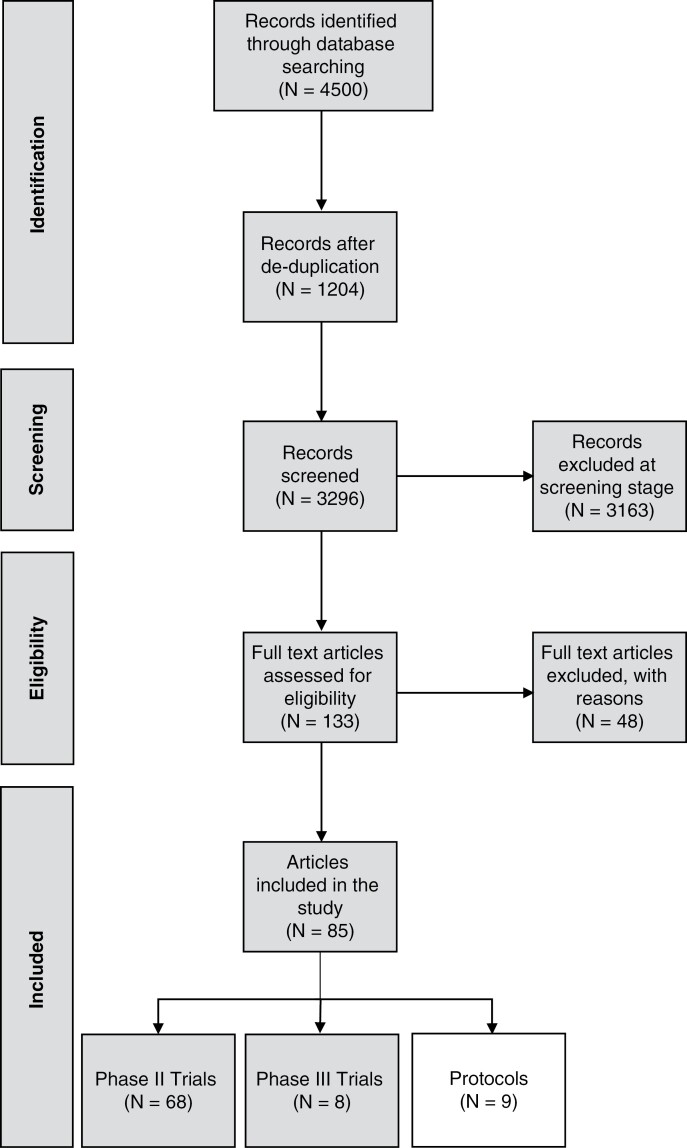
Published trial protocols and phase II/III trial result articles relating to pediatric brain tumors (published after the introduction of the SPIRIT 2013 statement), were identified through searches of 4 electronic bibliographic databases. The reporting quality of included trial protocols and result articles was assessed against the aforementioned statements. In addition, the CONSORT-A checklist was used to assess the abstracts of trial result articles. Percentage adherence was calculated for each article.
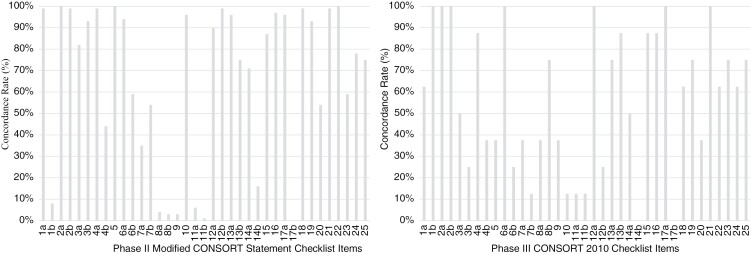
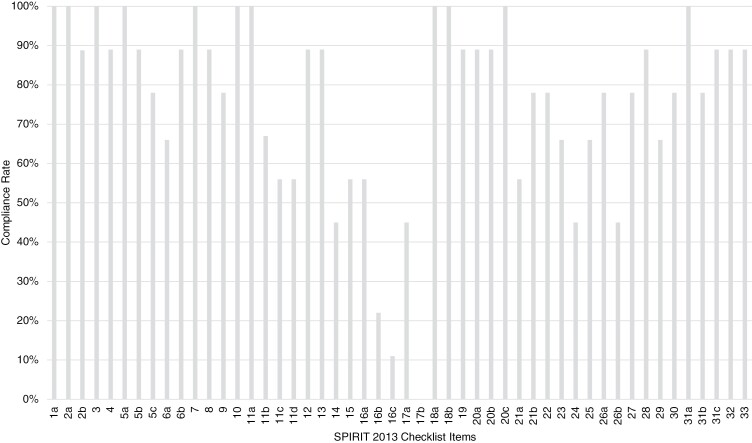
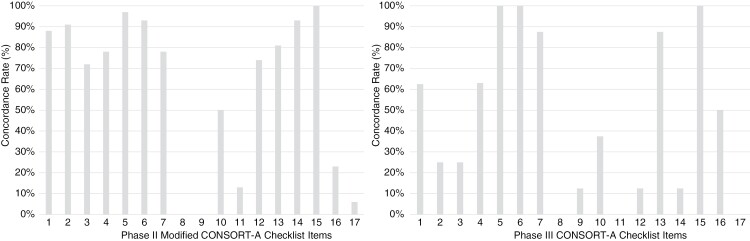
Nine trial protocols, 68 phase II trials, and 8 phase III trial result articles were included. Mean adherence of trial protocols to the SPIRIT statement was 76.8% (: 0.09). Mean adherence of trial abstracts to CONSORT-A was 67.4% (: 0.13) for phase II abstracts and 47.5% (: 0.09) for phase III abstracts. Adherence of trial result articles to CONSORT was 71.3% (: 0.10) for phase II trials and 70.3% (: 0.13) for phase III trials.
The reporting quality of pediatric neuro-oncology trial protocols and trial result articles requires improvement, particularly in the areas of randomization and blinding. This is consistent with our previously published findings following similar assessment of reporting quality for adult neuro-oncology trial protocols and result articles.
全面且透明地报告临床试验活动至关重要。《2013年标准协议条目和报告规范(SPIRIT)》及《2010年随机对照试验报告规范(CONSORT)》分别用于定义临床试验方案和随机对照试验中应报告的项目。本方法学综述的目的是评估儿科神经肿瘤学试验方案和试验结果文章的报告质量。
通过检索4个电子文献数据库,识别出与小儿脑肿瘤相关的已发表试验方案以及II/III期试验结果文章(在《2013年标准协议条目和报告规范(SPIRIT)》发布后发表)。根据上述规范评估纳入的试验方案和结果文章的报告质量。此外,使用CONSORT-A清单评估试验结果文章的摘要。计算每篇文章的依从率百分比。
纳入9个试验方案、68个II期试验和8个III期试验结果文章。试验方案对SPIRIT规范的平均依从率为76.8%(标准差:0.09)。II期摘要对CONSORT-A的平均依从率为67.4%(标准差:0.13),III期摘要为47.5%(标准差:0.09)。II期试验结果文章对CONSORT的依从率为71.3%(标准差:0.10),III期试验为70.3%(标准差:0.13)。
儿科神经肿瘤学试验方案和试验结果文章的报告质量需要改进,尤其是在随机化和盲法方面。这与我们之前对成人神经肿瘤学试验方案和结果文章报告质量进行类似评估后的发现一致。