Harper Joshua Méndez, Bumbaugh Robin E, Hendon Christopher H
Electrical and Computer Engineering, Portland State University, 1900 SW 4th Avenue, Portland, Oregon 97201, US.
Department of Chemistry and Biochemistry, University of Oregon, 1253 University of Oregon, Eugene, Oregon 97403, US.
iScience. 2024 Aug 5;27(9):110639. doi: 10.1016/j.isci.2024.110639. eCollection 2024 Sep 20.
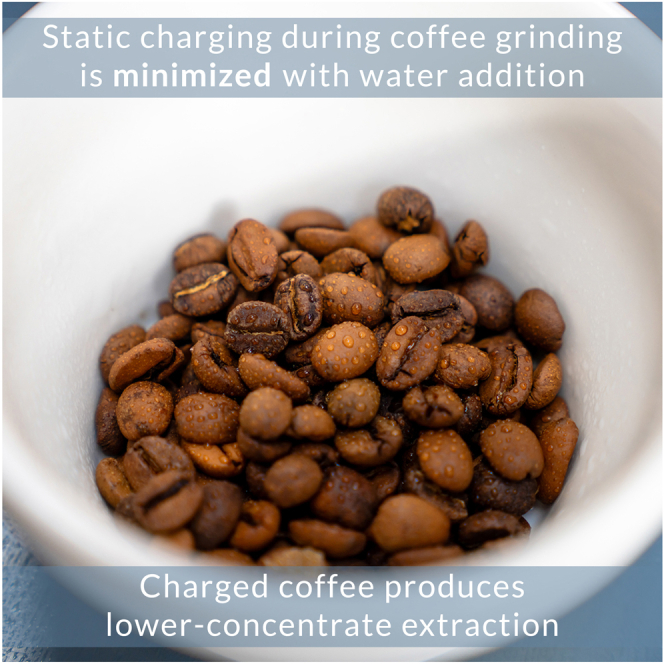
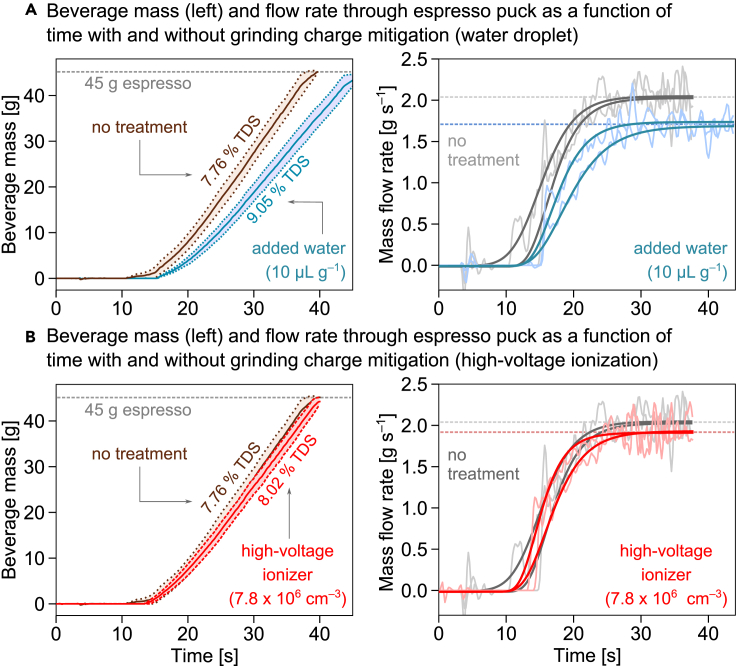
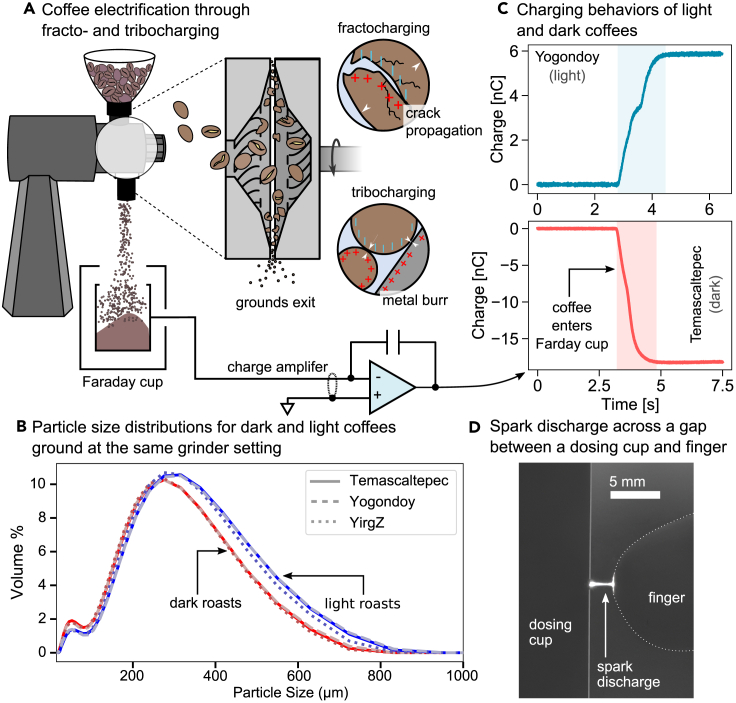
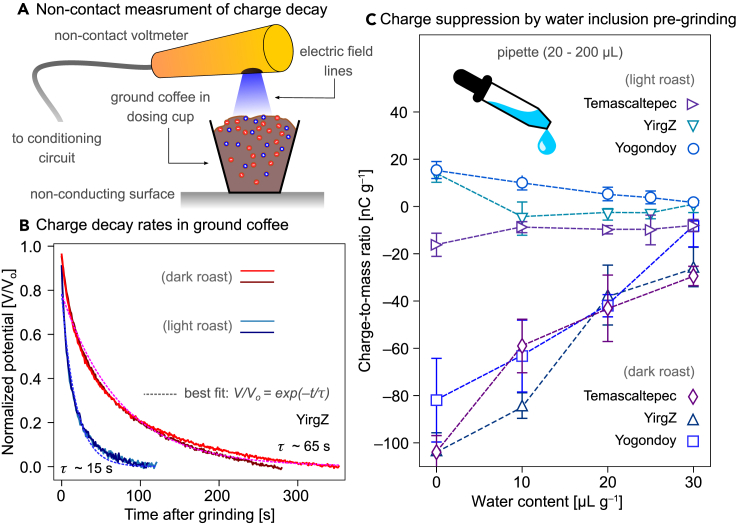
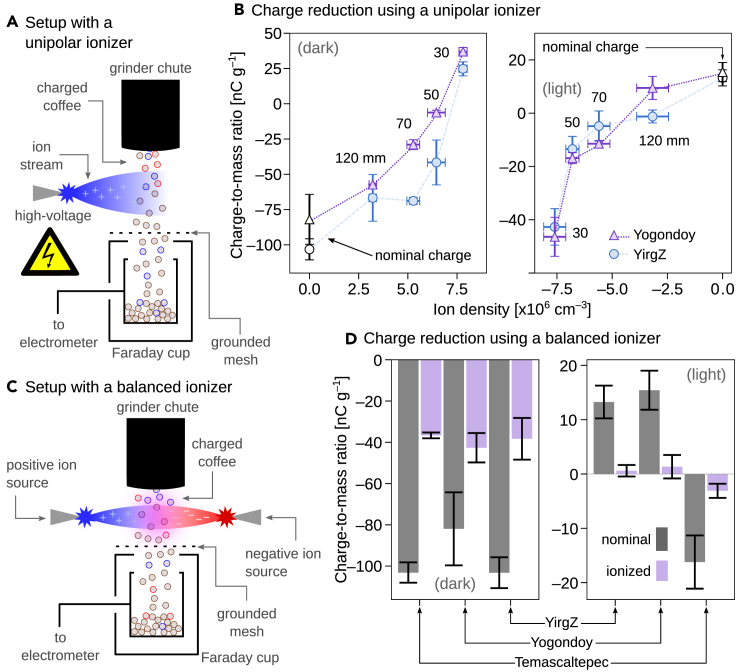
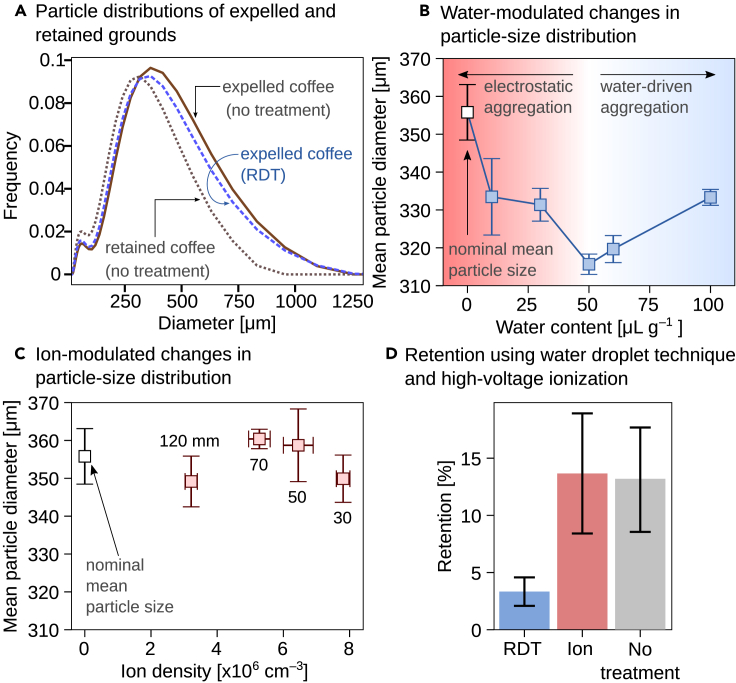
Coffee grinding generates electrostatically charged particles, causing clumping, spark discharge, and beyond. When brewing, the particle aggregates affect liquid-solid surface accessibility, leading to variable extraction quality. Here, we study four charge mitigation strategies. De-electrification is readily achieved by adding small amounts of water to whole beans or by bombarding the grounds with ions produced from a high-voltage ionizer. While these techniques helped reduce visible mess, only water inclusion was found to impact coffee extracts prepared as espresso. Wetting whole beans with less than 0.05 mL/g resulted in a marked shift in particle size distribution, by preventing clump formation and preventing fine particles from sticking to the grinder. This particle size shift results in at least a 15% higher coffee concentration for espresso extracts prepared from darker roasts. These findings encourage the widespread implementation of water use to de-electrify coffee during grinding with the benefit of increased coffee extraction efficiency.
研磨咖啡会产生带静电的颗粒,导致结块、火花放电等问题。冲泡时,颗粒聚集体会影响液固表面的可达性,从而导致萃取质量不稳定。在此,我们研究了四种电荷缓解策略。通过向整粒咖啡豆中加入少量水或用高压电离器产生的离子轰击咖啡粉,很容易实现去电。虽然这些技术有助于减少可见的混乱,但发现只有加水会影响意式浓缩咖啡的萃取。用低于0.05 mL/g的水润湿整粒咖啡豆,可防止结块形成并防止细颗粒粘在研磨机上,从而导致粒度分布发生明显变化。这种粒度变化使得用较深烘焙咖啡豆制作的意式浓缩咖啡提取物的咖啡浓度至少提高15%。这些发现鼓励广泛采用加水的方法,在研磨过程中使咖啡去电,以提高咖啡萃取效率。