Cao Lina, Liu Min, Wang Zhe, Xu Zhujing, Sun Li, Xu Peiying, Liang Fei, Wang Hao, Xu Zhibing, Dong Li
Department of Nursing, Zhongshan Hospital, Fudan University, Shanghai, China.
Department of Nursing, Zhongshan Hospital Xiamen Branch, Fudan University, Xiamen, China.
Transl Androl Urol. 2024 Aug 31;13(8):1388-1394. doi: 10.21037/tau-24-3. Epub 2024 Aug 26.
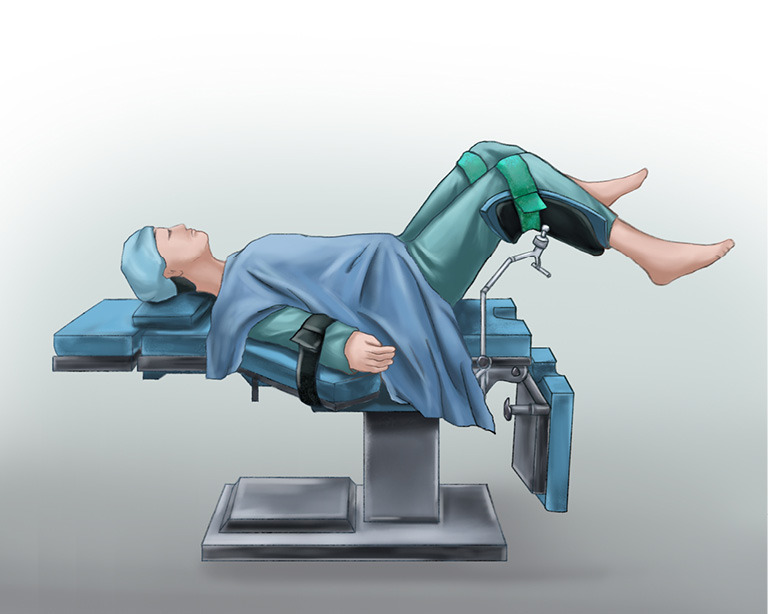
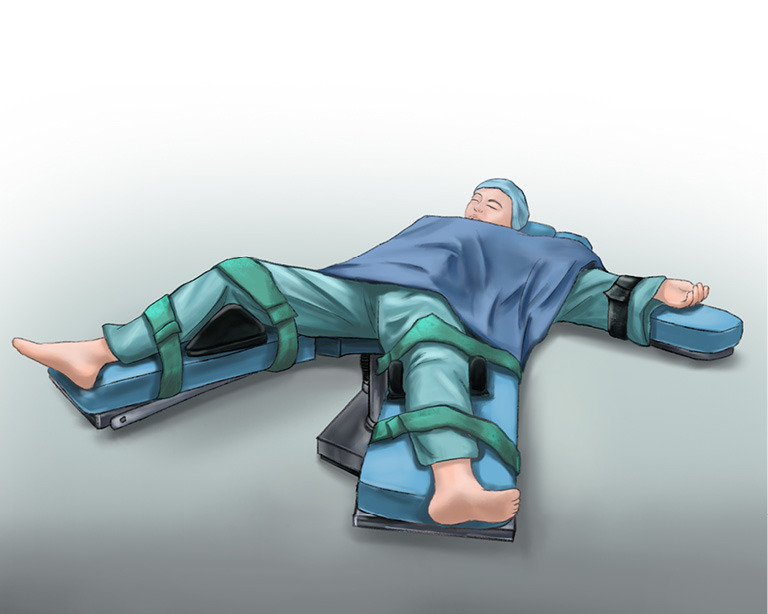
The lithotomy position (LP) may pose limitations and discomfort for elderly patients and those with a history of lower limb surgery, potentially leading to an increased risk of complications. And the LP is the conventional position during flexible ureteroscopic lithotomy for the treatment of ureteral calculi. However, it has some disadvantages, such as peripheral nerve injury and deep venous thrombosis in the lower limbs, etc. Therefore, we performed a new approach, which is named as modified dorsal recumbent position (MDRP). Currently, there is a lack of systematic analysis and standardization regarding the surgical positioning for flexible ureteroscopic lithotripsy. The objective of the study was to assess whether there were any disparities in the overall duration of the procedure when comparing the MDRP with the LP. The investigation of the optimal position for flexible ureteroscopic lithotomy is essential for enhancing patient safety and comfort.
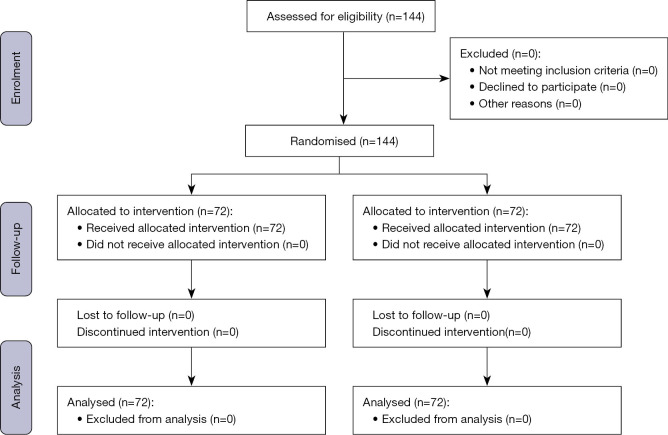
This is a prospective, multicenter, randomized clinical trial. A total of 144 patients with renal or ureteral calculi from April 2021 to June 2022 were enrolled. Eligible patients were randomized to the MDRP group (n=72) or LP group (n=72). The patient's demographics, the placement of the surgical position (time of position placement, time of disinfection and towel laying, time of position return, degree of medical fatigue) and the operation safety (time of operation, time of ureteroscope from bladder neck to ureteral orifice, heart rate, blood pressure) of two groups were compared and analyzed.
Between the two groups, the body positioning time (93.8±31.6 134.8±40.1 s, P=0.02), operation time (71.8±36.7 77.7±48.6 min, P=0.04), the time from the bladder neck to the ureteral orifice of the flexible ureteroscope spent by the doctors (3.4±4.7 10.3±14.7 s, P<0.001) and incidence rate of patient's lower limb soreness (19.4% 49.7%, P=0.01) in the MDRP group were significantly shorter than those in the LP group. However, there was no significant difference in the stone removal rate (87.6% 85.4%, P=0.09) or postoperative hospitalization days (4.3±1.4 4.1±1.6 d, P=0.08) between the two groups.
This trial showed that the MDRP could not only effectively shorten the operation time, shorten the time from the bladder neck to the ureteral orifice of the ureteroscopic lithotripsy, but also place the patient's body in a functional position, stabilize the blood pressure during the operation, improve the comfort of the patient.
Chinese Clinical Trial Registry (No. ChiCTR2100053416).
截石位(LP)可能给老年患者以及有下肢手术史的患者带来限制和不适,可能导致并发症风险增加。并且截石位是输尿管软镜取石术治疗输尿管结石时的传统体位。然而,它存在一些缺点,如下肢周围神经损伤和深静脉血栓形成等。因此,我们实施了一种新方法,即改良仰卧位(MDRP)。目前,关于输尿管软镜碎石术的手术体位缺乏系统分析和标准化。本研究的目的是评估将改良仰卧位与截石位进行比较时,手术总时长是否存在差异。探究输尿管软镜取石术的最佳体位对于提高患者安全性和舒适度至关重要。
这是一项前瞻性、多中心、随机临床试验。纳入了2021年4月至2022年6月期间共144例肾或输尿管结石患者。符合条件的患者被随机分为改良仰卧位组(n = 72)或截石位组(n = 72)。比较并分析两组患者的人口统计学特征、手术体位摆放情况(体位摆放时间、消毒铺巾时间、体位恢复时间、医疗疲劳程度)以及手术安全性(手术时间、输尿管镜从膀胱颈至输尿管口的时间、心率、血压)。
两组之间,改良仰卧位组的体位摆放时间(93.8±31.6 134.8±40.1秒,P = 0.02)、手术时间(71.8±36.7 77.7±48.6分钟,P = 0.04)、医生操作输尿管软镜从膀胱颈至输尿管口的时间(3.4±4.7 10.3±14.7秒,P<0.001)以及患者下肢酸痛发生率(19.4% 49.7%,P = 0.01)均显著短于截石位组。然而,两组之间的结石清除率(87.6% 85.4%,P = 0.09)或术后住院天数(4.3±1.4 4.1±1.6天,P = 0.08)无显著差异。
本试验表明,改良仰卧位不仅能有效缩短手术时间、缩短输尿管镜取石术从膀胱颈至输尿管口的时间,还能使患者身体处于功能位,术中稳定血压,提高患者舒适度。
中国临床试验注册中心(编号:ChiCTR2100053416)。