
二自由度比例积分微分跟踪微分器:一种互联热-水电力系统中负荷频率控制的新型混合控制方法。
2DOF-PID-TD: A new hybrid control approach of load frequency control in an interconnected thermal-hydro power system.
作者信息
Shahi Md Nazmush Shakib, Orka Nabil Anan, Ahmed Ashik
机构信息
Department of Electrical & Electronic Engineering, Islamic University of Technology, Gazipur, Dhaka, Bangladesh.
出版信息
Heliyon. 2024 Aug 23;10(17):e36753. doi: 10.1016/j.heliyon.2024.e36753. eCollection 2024 Sep 15.
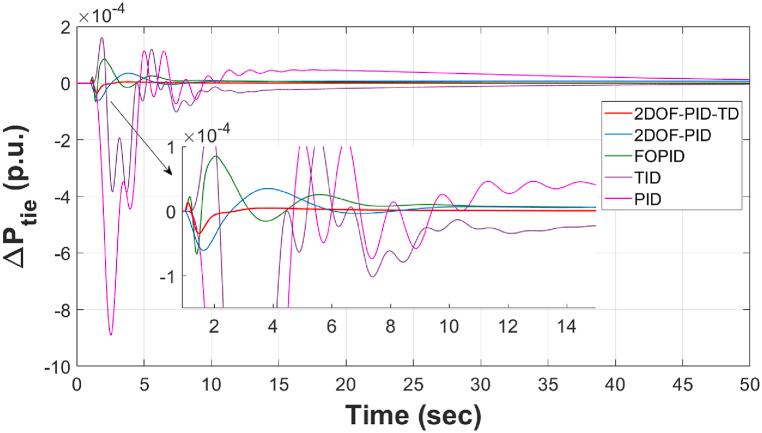
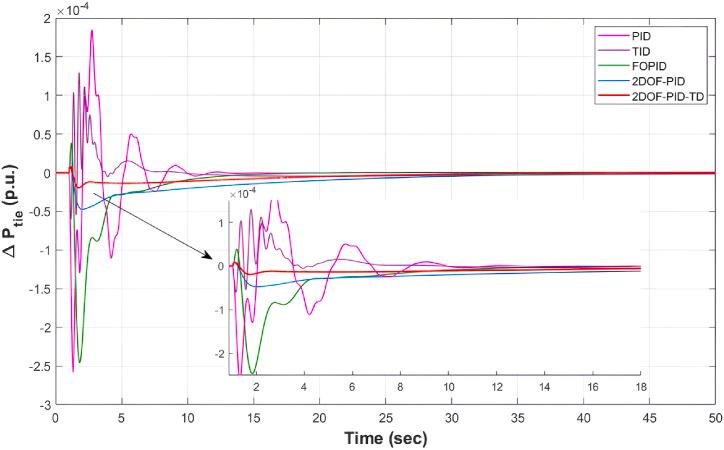
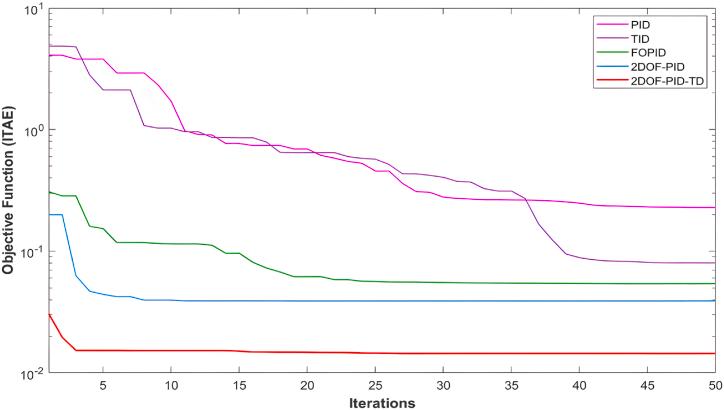
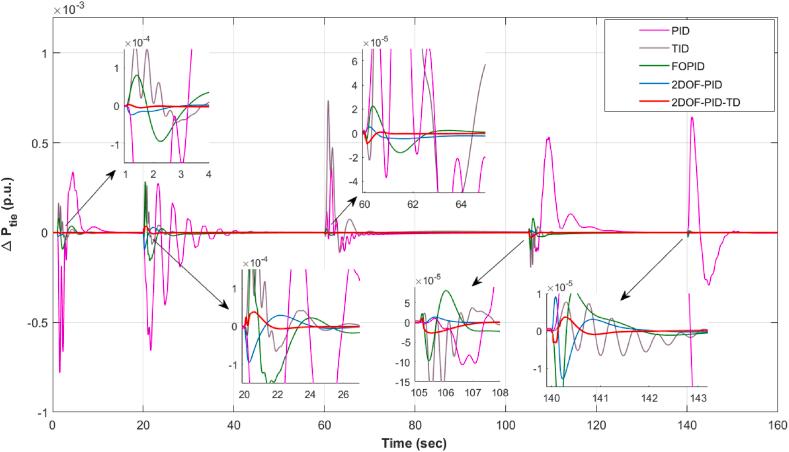
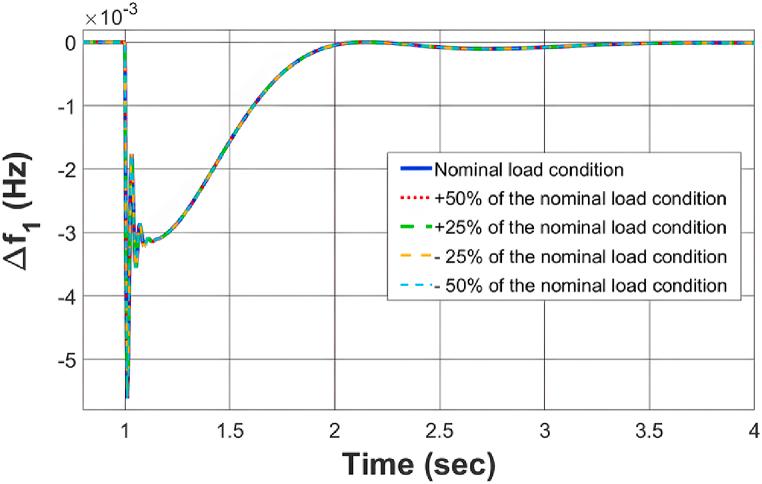
The Load Frequency Control (LFC) scheme, with its primary aim being the maintenance of uniform frequency, has been a heavily researched topic for decades. Achieving a consistent frequency necessitates a delicate balance between load demand and power generation. Researchers strive to find an optimal solution within the LFC domain-one that can effectively withstand drastic load fluctuations. Despite a plethora of efforts, the LFC dilemma remains unresolved, complicated by factors such as dwindling demand-supply and the rapid integration of renewables. Furthermore, the lack of innovation in controller structure design exacerbates the complexity of solving modern LFC problems. Consequently, a robust control approach capable of handling uncertainties while simultaneously regulating system frequency becomes crucial. In light of this, we propose a novel hybrid control architecture called 2DOF-PID-TD. This architecture combines Two Degrees Of Freedom Proportional-Integral-Derivative (2DOF-PID) and Tilt-Derivative (TD) controllers. To optimize the proposed controller, we employ a metaheuristic called the Artificial Gorilla Troops Optimizer (AGTO), which mimics the social behavior and intelligence of gorilla troops. The proposed approach is analyzed in a realistic multi-area multi-source hydro-thermal system, accounting for nonlinearities, random load perturbations, and system parametric uncertainties. Experimental results, when compared with current state-of-the-art optimization algorithms and traditional controller structures, demonstrate the prowess of our approach in terms of precision, robustness, and resilience.
负荷频率控制(LFC)方案的主要目标是维持频率均匀,几十年来一直是一个深入研究的课题。要实现频率一致,就需要在负荷需求和发电之间达成微妙的平衡。研究人员努力在LFC领域找到一个最优解决方案——一个能够有效抵御剧烈负荷波动的方案。尽管付出了诸多努力,但LFC困境仍未得到解决,需求供应减少和可再生能源快速整合等因素使其变得更加复杂。此外,控制器结构设计缺乏创新加剧了解决现代LFC问题的复杂性。因此,一种能够处理不确定性同时调节系统频率的鲁棒控制方法变得至关重要。有鉴于此,我们提出了一种名为2DOF-PID-TD的新型混合控制架构。该架构结合了二自由度比例积分微分(2DOF-PID)控制器和倾斜微分(TD)控制器。为了优化所提出的控制器,我们采用了一种名为人工大猩猩群优化器(AGTO)的元启发式算法,它模仿了大猩猩群的社会行为和智能。在所提出的方法在一个考虑了非线性、随机负荷扰动和系统参数不确定性的实际多区域多源水火电系统中进行了分析。与当前最先进的优化算法和传统控制器结构相比,实验结果证明了我们的方法在精度、鲁棒性和弹性方面的优势。






 Zotero 插件