Respiratory Research Group, Hull York Medical School, Castle Hill Hospital, Cottingham, HU16 5JQ, UK.
Respiratory Clinical Trials Unit, Hull University Teaching Hospitals NHS Trust, Castle Hill Hospital, Cottingham, HU16 5JQ, UK.
Lung. 2024 Oct;202(5):683-693. doi: 10.1007/s00408-024-00743-w. Epub 2024 Sep 16.
In sarcoidosis granulomas, monocyte-derived macrophages are activated by pro-inflammatory cytokines including TNF and IL-6. Current drug treatment for sarcoidosis aims to suppress inflammation but disabling side effects can ensue. The macrolide azithromycin may be anti-inflammatory. We aimed to determine whether treatment with azithromycin affects blood inflammatory gene expression and monocyte functions in sarcoidosis.
Blood samples were collected from patients with chronic pulmonary sarcoidosis enrolled in a single arm, open label clinical trial who received oral azithromycin 250 mg once daily for 3 months. Whole blood inflammatory gene expression with or without LPS stimulation was measured using a 770-mRNA panel. Phenotypic analysis and cytokine production were conducted by flow cytometry and ELISA after 24h stimulation with growth factors and TLR ligands. mTOR activity was assessed by measuring phosphorylated S6RP.
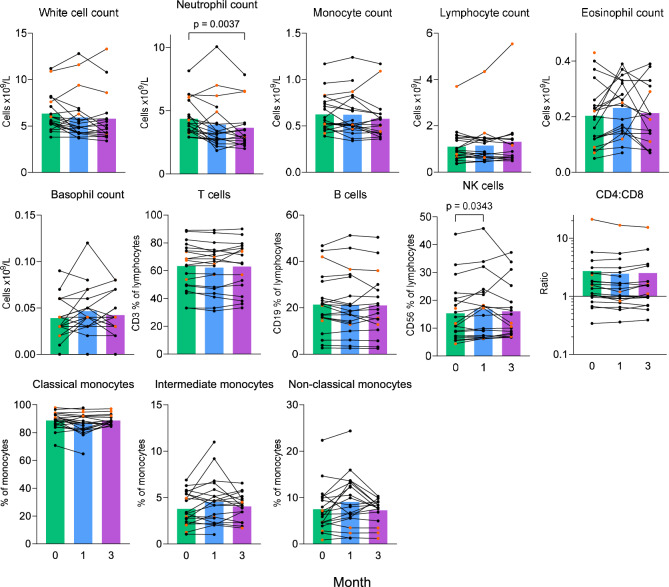
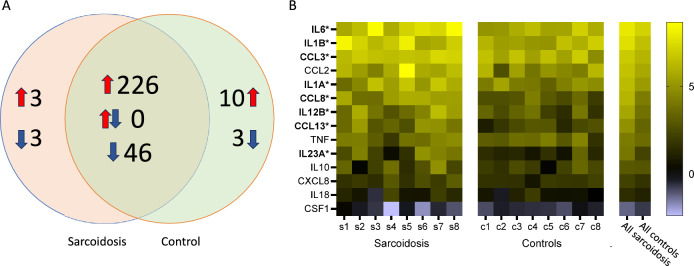
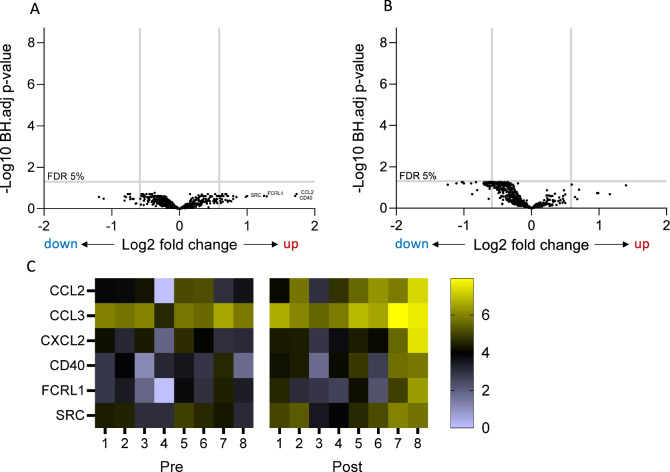
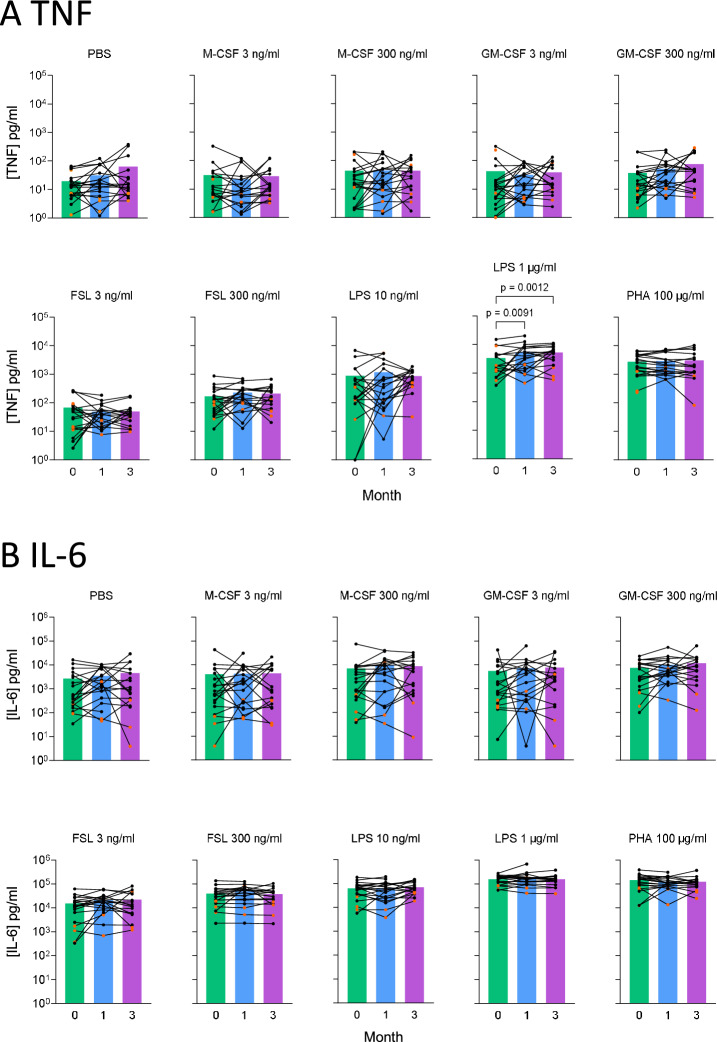
Differential gene expression analysis indicated a state of heightened myeloid cell activation in sarcoidosis. Compared with controls, sarcoidosis patients showed increased LPS responses for several cytokines and chemokines. Treatment with azithromycin had minimal effect on blood gene expression overall, but supervised clustering analysis identified several chemokine genes that were upregulated. At the protein level, azithromycin treatment increased LPS-stimulated TNF and unstimulated IL-8 production. No other cytokines showed significant changes following azithromycin. Blood neutrophil counts fell during azithromycin treatment whereas mononuclear cells remained stable. Azithromycin had no detectable effects on mTOR activity or activation markers.
Blood myeloid cells are activated in sarcoidosis, but azithromycin therapy did not suppress inflammatory gene expression or cytokine production in blood.
EudraCT 2019-000580-24 (17 May 2019).
在结节病肉芽肿中,单核细胞衍生的巨噬细胞被包括 TNF 和 IL-6 在内的促炎细胞因子激活。目前结节病的药物治疗旨在抑制炎症,但可能会产生不良的副作用。大环内酯类药物阿奇霉素可能具有抗炎作用。我们旨在确定阿奇霉素治疗是否会影响结节病患者的血液炎症基因表达和单核细胞功能。
从参加一项单臂、开放标签临床试验的慢性肺结节病患者中采集血液样本,这些患者每天口服阿奇霉素 250mg,持续 3 个月。使用 770-mRNA 面板测量有或没有 LPS 刺激时的全血炎症基因表达。通过生长因子和 TLR 配体刺激 24 小时后进行表型分析和细胞因子产生的流式细胞术和 ELISA 检测。通过测量磷酸化 S6RP 来评估 mTOR 活性。
差异基因表达分析表明,结节病中存在髓样细胞激活状态。与对照组相比,结节病患者的几种细胞因子和趋化因子对 LPS 的反应增加。与对照组相比,阿奇霉素治疗对整体血液基因表达的影响很小,但监督聚类分析确定了几个上调的趋化因子基因。在蛋白质水平上,阿奇霉素治疗增加了 LPS 刺激的 TNF 和未刺激的 IL-8 产生。阿奇霉素治疗后,没有其他细胞因子显示出显著变化。阿奇霉素治疗期间,血液中性粒细胞计数下降,而单核细胞保持稳定。阿奇霉素对 mTOR 活性或激活标志物没有可检测的影响。
结节病患者的血液髓样细胞被激活,但阿奇霉素治疗并未抑制血液中的炎症基因表达或细胞因子产生。
EudraCT 2019-000580-24(2019 年 5 月 17 日)。