Liu Xin, Wang Jing, Xiang Yaoxian, Wang Kangjie, Yan Dong, Tong Yingying
Department of Oncology, Beijing Luhe Hospital Affiliated to Capital Medical University, Beijing, 101149, China.
Cell Biosci. 2024 Sep 16;14(1):121. doi: 10.1186/s13578-024-01301-w.
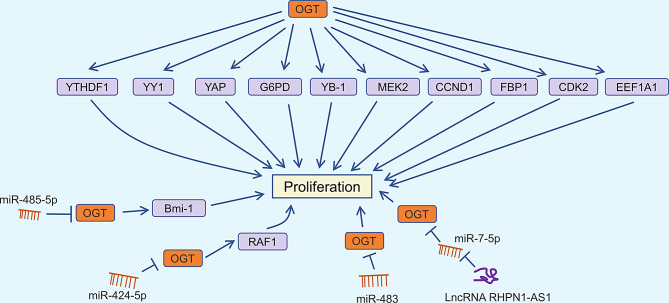
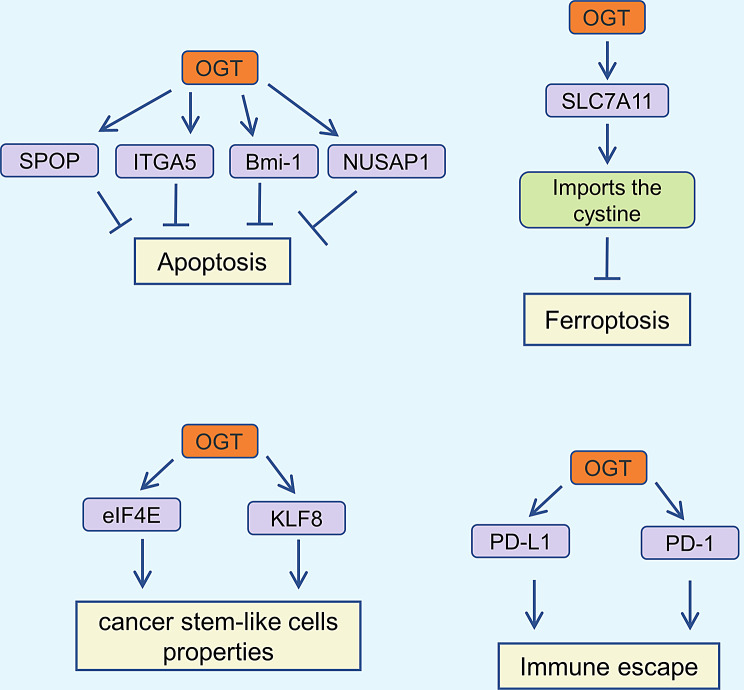
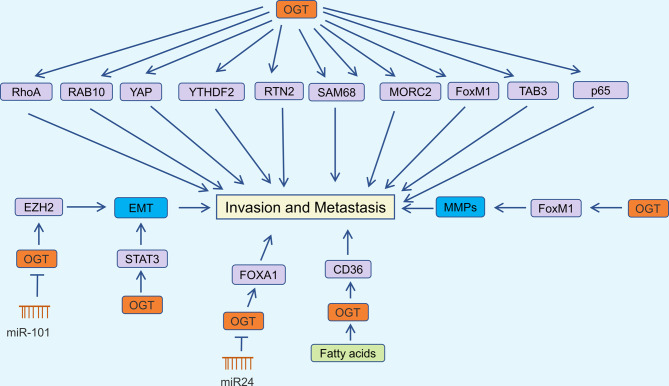
O-linked-N-acetylglucosaminylation (O-GlcNAcylation) is a common and important post-translational modification (PTM) linking O-linked β-N-acetylglucosamine (O-GlcNAc) to serine and threonine residues in proteins. Extensive research indicates its impact on target protein stability, activity, and interactions. O-linked N-acetylglucosamine transferase (OGT) is a critical enzyme that catalyzes O-GlcNAc modification, responsible for adding O-GlcNAc to proteins. OGT and O-GlcNAcylation are overexpressed in many tumors and closely associated with tumor growth, invasion, metabolism, drug resistance, and immune evasion. This review delineates the biochemical functions of OGT and summarizes its effects and mechanisms in tumors. Targeting OGT presents a promising novel approach for treating human malignancies.
O-连接的N-乙酰葡糖胺化修饰(O-GlcNAcylation)是一种常见且重要的翻译后修饰(PTM),它将O-连接的β-N-乙酰葡糖胺(O-GlcNAc)连接到蛋白质中的丝氨酸和苏氨酸残基上。大量研究表明其对靶蛋白的稳定性、活性及相互作用具有影响。O-连接的N-乙酰葡糖胺转移酶(OGT)是催化O-GlcNAc修饰的关键酶,负责将O-GlcNAc添加到蛋白质上。OGT和O-GlcNAcylation在许多肿瘤中过表达,且与肿瘤生长、侵袭、代谢、耐药性及免疫逃逸密切相关。本综述阐述了OGT的生化功能,并总结了其在肿瘤中的作用及机制。靶向OGT为治疗人类恶性肿瘤提供了一种有前景的新方法。