Department of Molecular Nanoscience and Organic Materials, Institut de Ciència de Materials de Barcelona (CSIC), Campus UAB, Bellaterra 08193, Spain.
Centro de Investigación Biomédica en Red de Bioingeniería, Biomateriales y Nanomedicina (CIBER-BBN), Madrid 28029, Spain.
ACS Appl Mater Interfaces. 2024 Sep 25;16(38):50139-50146. doi: 10.1021/acsami.4c06183. Epub 2024 Sep 16.
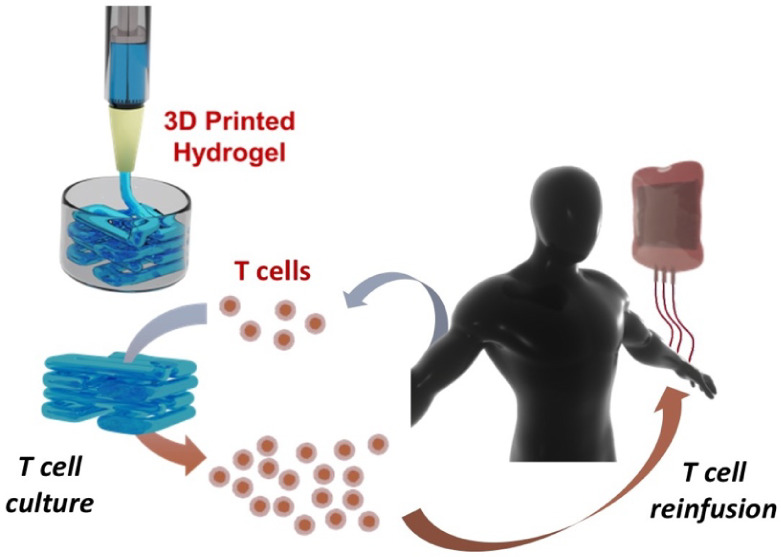
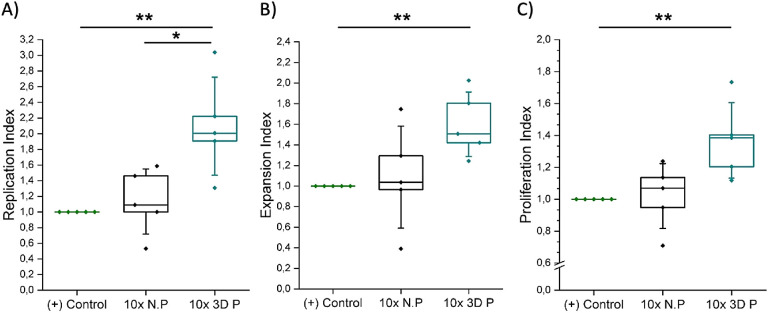
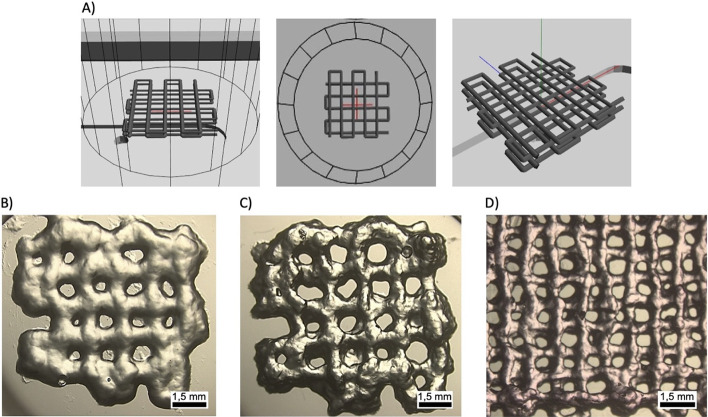
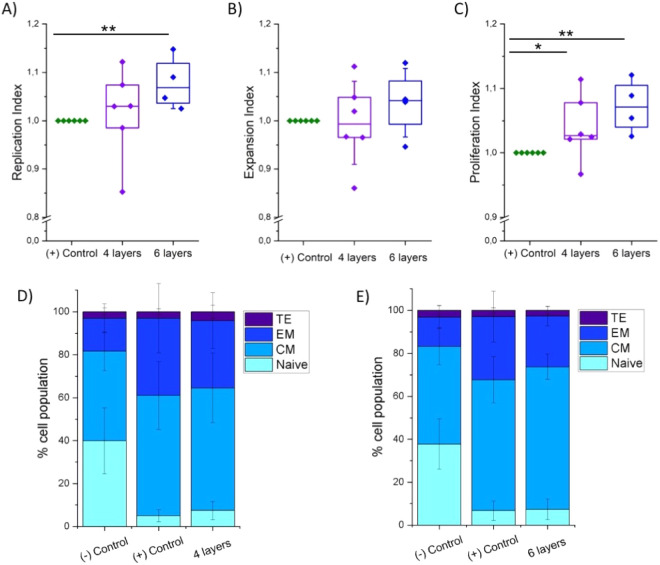
The emergence of cellular immunotherapy treatments is introducing more efficient strategies to combat cancer as well as autoimmune and infectious diseases. However, the cellular manufacturing procedures associated with these therapies remain costly and time-consuming, thus limiting their applicability. Recently, lymph-node-inspired PEG-heparin hydrogels have been demonstrated to improve primary human T cell culture at the laboratory scale. To go one step further in their clinical applicability, we assessed their scalability, which was successfully achieved by 3D printing. Thus, we were able to improve primary human T cell infiltration in the biohybrid PEG-heparin hydrogels, as well as increase nutrient, waste, and gas transport, resulting in higher primary human T cell proliferation rates while maintaining the phenotype. Thus, we moved one step further toward meeting the requirements needed to improve the manufacture of the cellular products used in cellular immunotherapies.
细胞免疫疗法的出现为癌症、自身免疫性疾病和传染病的治疗带来了更有效的策略。然而,这些疗法相关的细胞制造工艺仍然昂贵且耗时,因此限制了它们的适用性。最近,受淋巴结启发的 PEG-肝素水凝胶已被证明可以提高实验室规模下原代人 T 细胞的培养效率。为了进一步提高其临床适用性,我们评估了它们的可扩展性,并通过 3D 打印成功实现了这一目标。因此,我们能够提高原代人 T 细胞在生物混合 PEG-肝素水凝胶中的浸润程度,同时增加营养物质、废物和气体的传输,从而提高原代人 T 细胞的增殖速度,同时保持表型。因此,我们在满足提高细胞免疫疗法中细胞产品制造要求方面又迈进了一步。