Olender Dorota, Kujawski Jacek, Skóra Bartosz, Baranowska-Wójcik Ewa, Sowa-Kasprzak Katarzyna, Pawełczyk Anna, Zaprutko Lucjusz, Szwajgier Dominik, Szychowski Konrad A
Chair and Department of Organic Chemistry, Faculty of Pharmacy, Poznan University of Medical Sciences, Rokietnicka 3, 60-806, Poznań, Poland.
Department of Biotechnology and Cell Biology, Medical College, University of Information Technology and Management in Rzeszow, Sucharskiego 2, 35-225, Rzeszów, Poland.
Heliyon. 2024 Aug 30;10(17):e37147. doi: 10.1016/j.heliyon.2024.e37147. eCollection 2024 Sep 15.
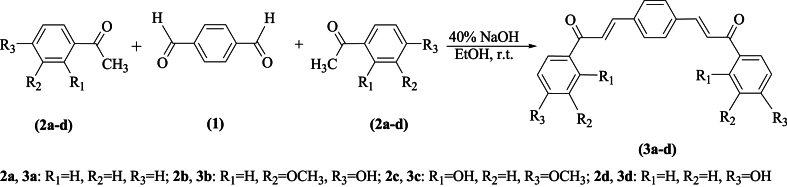
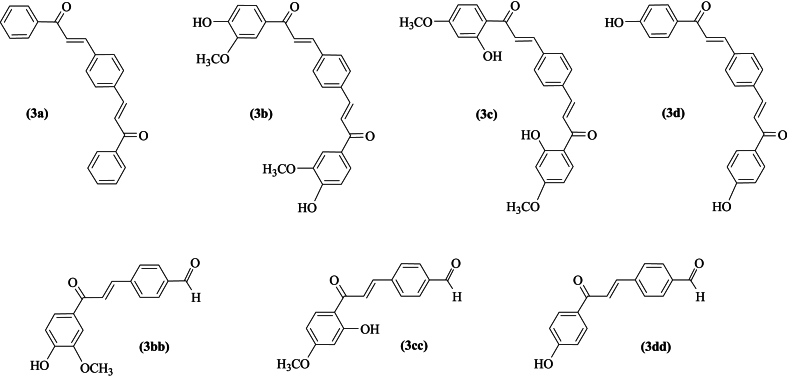
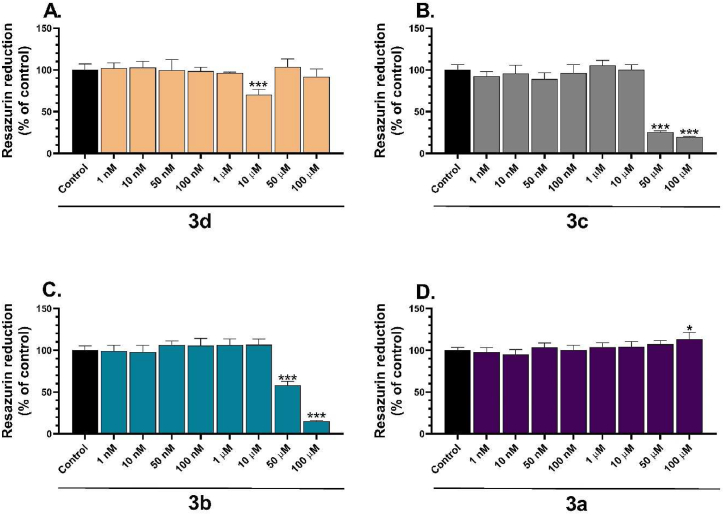
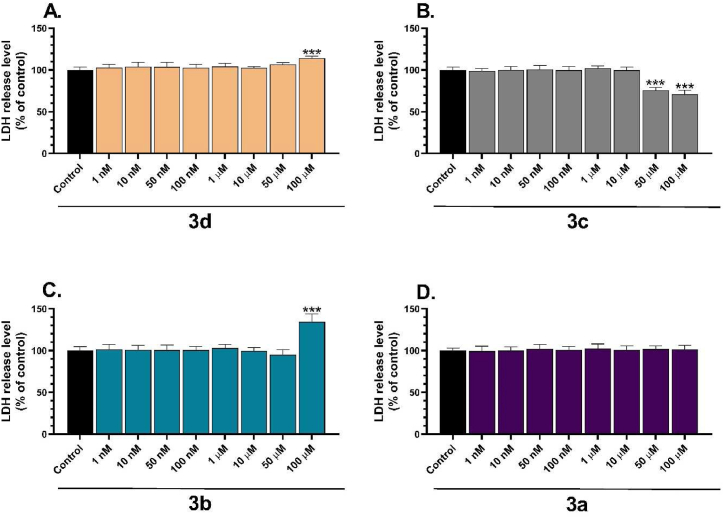
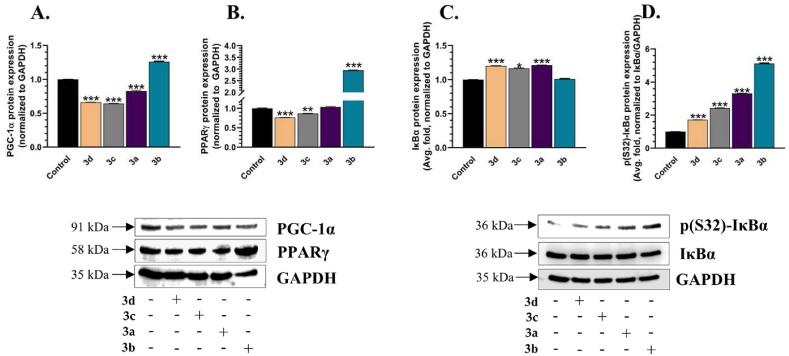
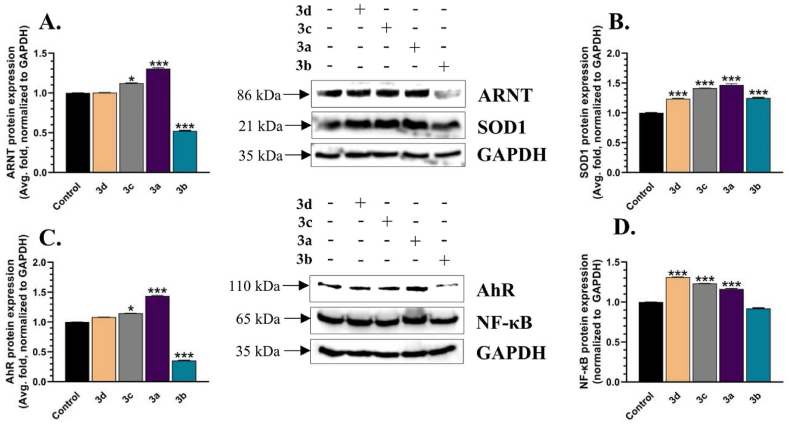
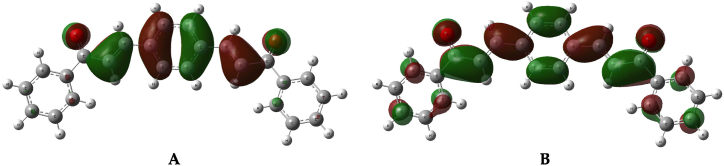
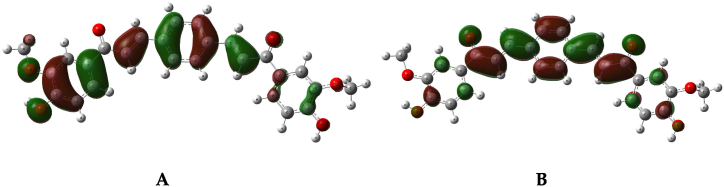
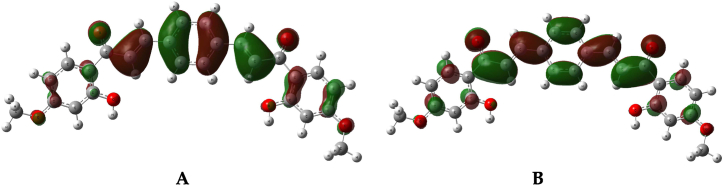
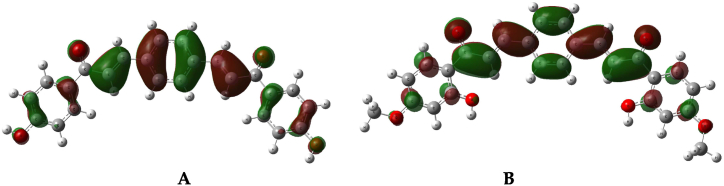
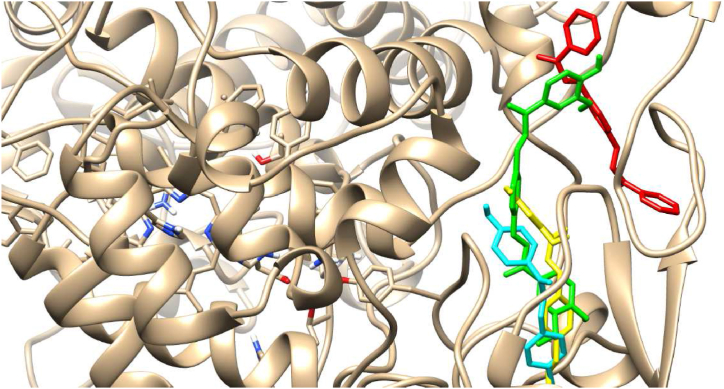
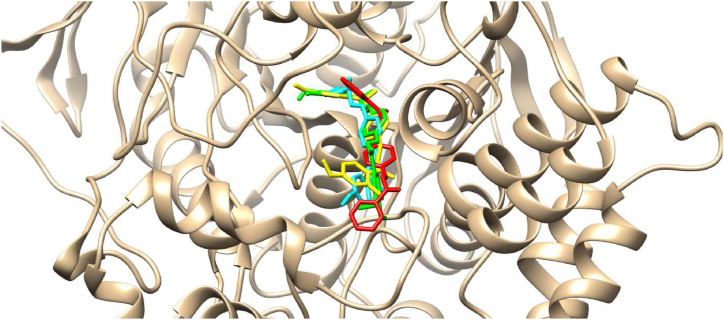
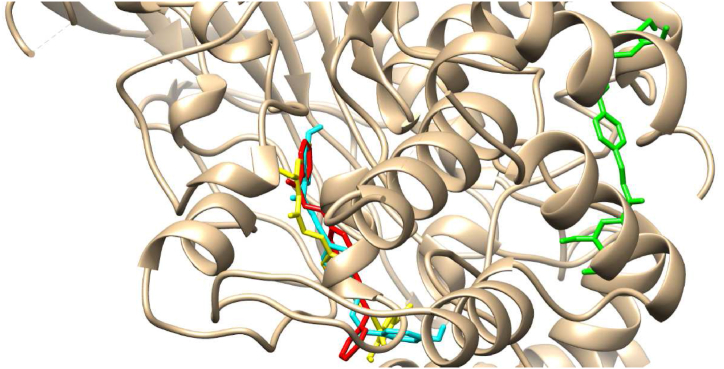
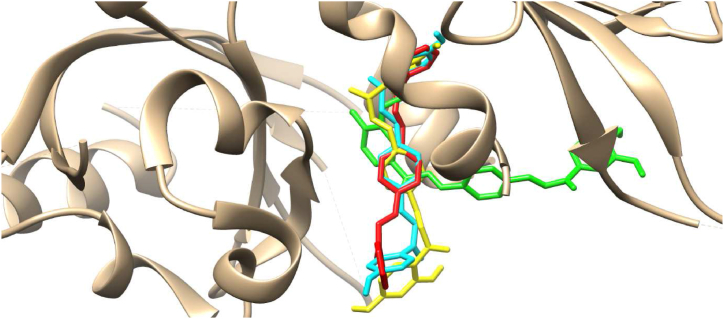
In the area of research on neurodegenerative diseases, the current challenge is to search for appropriate research methods that would detect these diseases at the earliest possible stage, but also new active structures that would reduce the rate of the disease progression and minimize the intensity of their symptoms experienced by the patient. The chalcones are considered in the context of candidates for new drugs dedicated to the fight against neurodegenerative diseases. The synthesis of -chalcone derivatives as aim molecules was performed. Their structures were established by applying H NMR, C NMR, MS, FT-IR and UV-Vis spectra. All -chalcones were synthesized from terephthalaldehyde and appropriate aromatic ketone as substrates in the Claisen-Schmidt condensation method and evaluated in the biological tests and analysis. Compounds exerted antioxidant activity using the HORAC method () and decreased the activities of GPx, COX-2 () GR () and CAT (. The high anti-neurodegenerative potential of all four chalcones was observed by inhibition of acetyl- (AChE) and butyrylcholinesterase (BChE) and a positive effect on the mouse hippocampal neuronal HT-22 cell line (LDH release and PGC-1α, PPARγ and GAPDH protein expression). TD-DFT method (computing a number of descriptors associated with HOMO-LUMO electron transition: electronegativity, chemical hardness and potential, first ionization potential, electron affinity) was employed to study the spectroscopic properties. This method showed that the first excited state of compounds was consistent with their maximum absorption in the computed UV-Vis spectra, which showed good agreement with the experimental spectrum using PBE1PBE functional. Using approach, interactions of -chalcones with selected targets (aryl hydrocarbon receptor (AhR) PAS-A Domain, ligand binding domain of human PPAR-γ, soman-aged human BChE-butyrylthiocholine complex, AChE:N-piperidinopropyl-galanthamine complex and the COX-2-celecoxib complex) were characterized. Results obtained in models were consistent with experiments.
在神经退行性疾病研究领域,当前的挑战是寻找合适的研究方法,以便在尽可能早的阶段检测出这些疾病,同时还要寻找新的活性结构,以降低疾病进展速度,并将患者所经历症状的强度降至最低。查耳酮被视为致力于对抗神经退行性疾病的新型药物候选物。以合成β-查耳酮衍生物作为目标分子。通过应用氢核磁共振(¹H NMR)、碳核磁共振(¹³C NMR)、质谱(MS)、傅里叶变换红外光谱(FT-IR)和紫外可见光谱(UV-Vis)确定了它们的结构。所有β-查耳酮均以对苯二甲醛和合适的芳香酮为底物,通过克莱森-施密特缩合方法合成,并在生物学测试和分析中进行评估。化合物使用HORAC方法表现出抗氧化活性(),并降低了谷胱甘肽过氧化物酶(GPx)、环氧化酶-2(COX-2)()、谷胱甘肽还原酶(GR)()和过氧化氢酶(CAT)()的活性。通过抑制乙酰胆碱酯酶(AChE)和丁酰胆碱酯酶(BChE)以及对小鼠海马神经元HT-22细胞系产生积极影响(乳酸脱氢酶释放以及过氧化物酶体增殖物激活受体γ共激活因子1α(PGC-1α)、过氧化物酶体增殖物激活受体γ(PPARγ)和甘油醛-3-磷酸脱氢酶(GAPDH)蛋白表达),观察到所有四种查耳酮具有较高的抗神经退行性潜力。采用含时密度泛函理论(TD-DFT)方法(计算与最高已占分子轨道-最低未占分子轨道(HOMO-LUMO)电子跃迁相关的多个描述符:电负性、化学硬度和势、第一电离势、电子亲和势)来研究光谱性质。该方法表明,化合物的第一激发态与其计算出的紫外可见光谱中的最大吸收一致,这与使用PBE1PBE泛函的实验光谱显示出良好的一致性。使用方法,对β-查耳酮与选定靶点(芳烃受体(AhR)PAS-A结构域、人过氧化物酶体增殖物激活受体γ(PPAR-γ)的配体结合结构域、梭曼老化的人丁酰胆碱酯酶-丁酰硫代胆碱复合物、乙酰胆碱酯酶:N-哌啶丙基-加兰他敏复合物以及环氧化酶-2-塞来昔布复合物)之间的相互作用进行了表征。在模型中获得的结果与实验结果一致。