Department of Laboratory Medicine, The First People's Hospital of Kashi, Kashi City, China.
The First People's Hospital of Kashi, Kashi City, China.
Medicine (Baltimore). 2024 Sep 13;103(37):e38746. doi: 10.1097/MD.0000000000038746.
To explore the abnormal metabolism-related genes that affect the prognosis of patients with lung adenocarcinoma (LUAD), and analyze the relationship with immune infiltration and competing endogenous RNA (ceRNA) network.
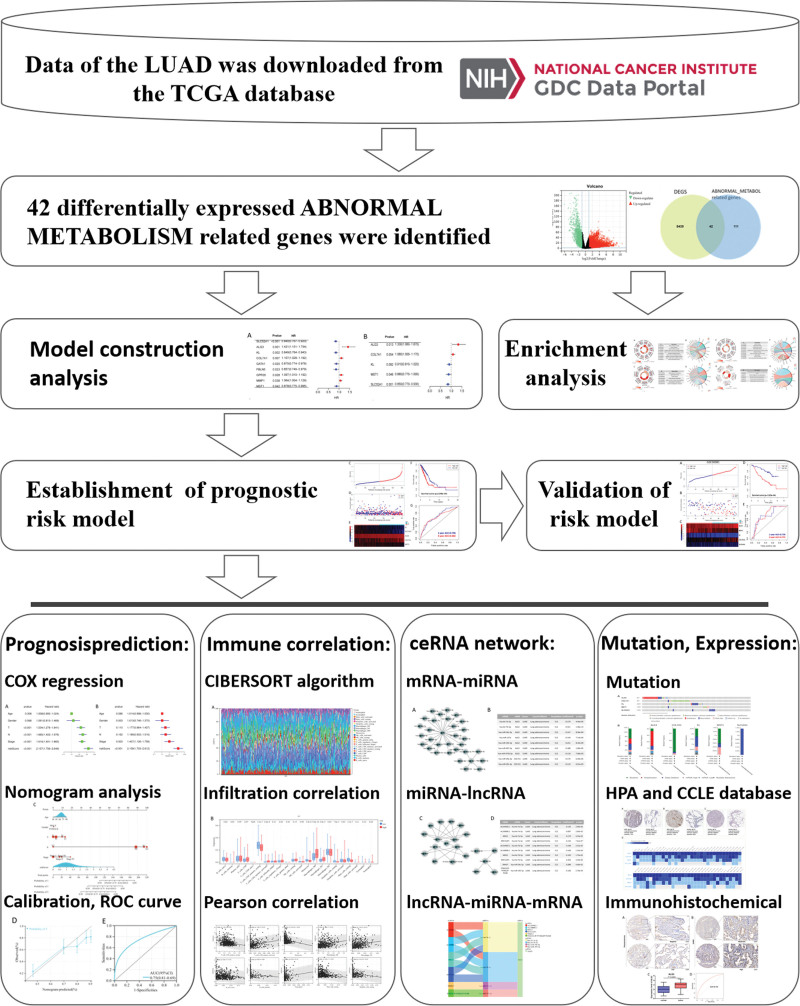
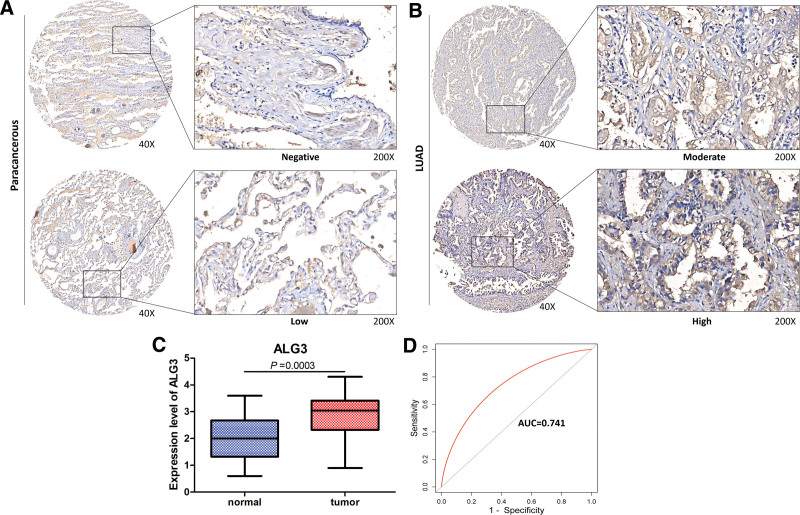
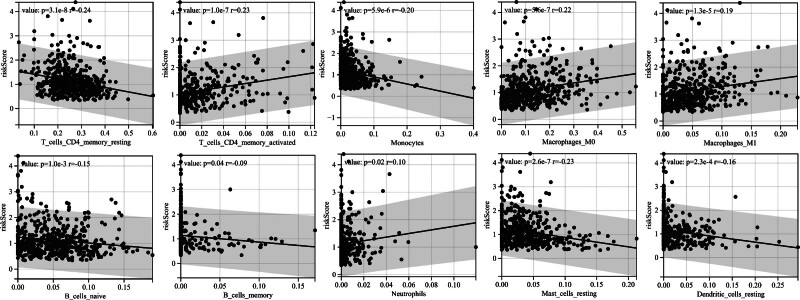
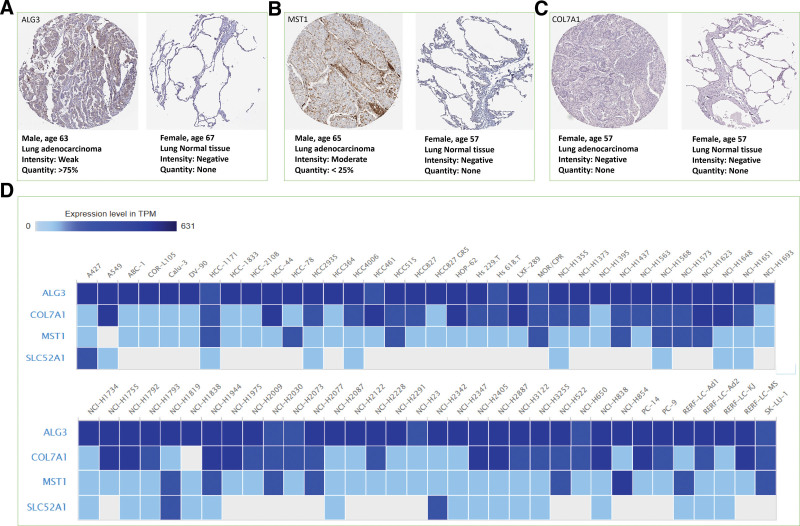
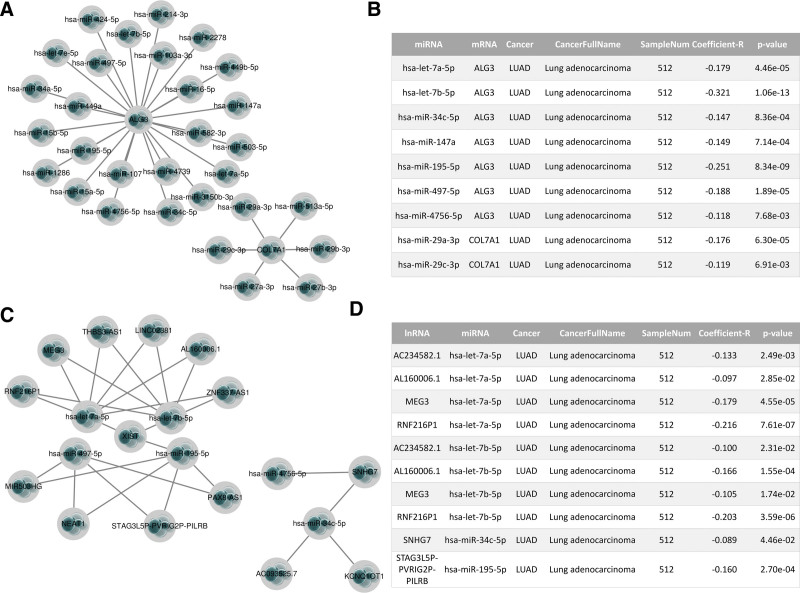
Transcriptome data of LUAD were downloaded from the Cancer Genome Atlas database. Abnormal metabolism-related differentially expressed genes in LUAD were screened by the R language. Cox analysis was used to construct LUAD prognostic risk model. Kaplan-Meier test, ROC curve and nomograms were used to evaluate the predictive ability of metabolic related gene prognostic model. CIBERSORT algorithm was used to analyze the relationship between risk score and immune infiltration. The starBase database constructed a regulatory network consistent with the ceRNA hypothesis. IHC experiments were performed to verify the differential expression of ALG3 in LUAD and paracancerous samples.
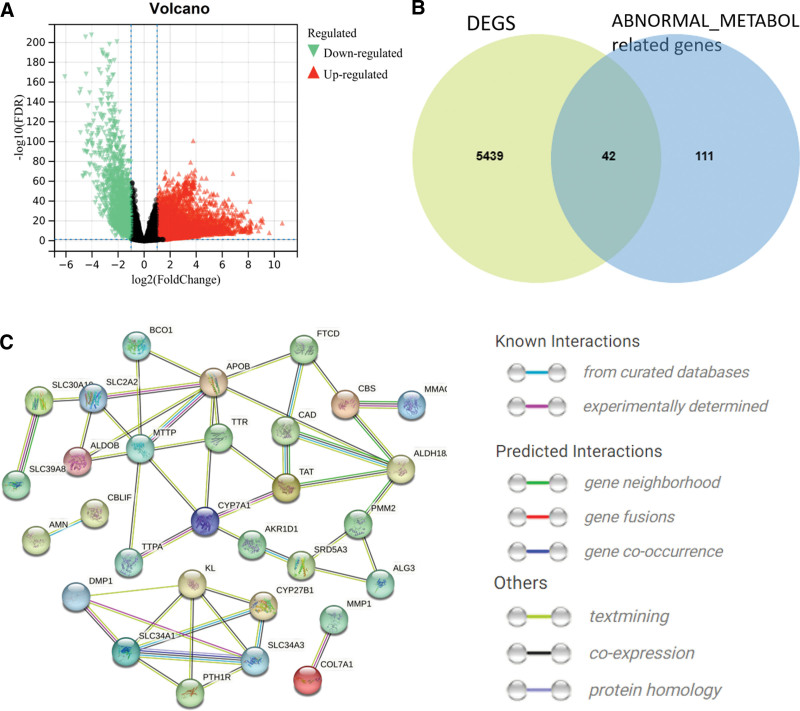
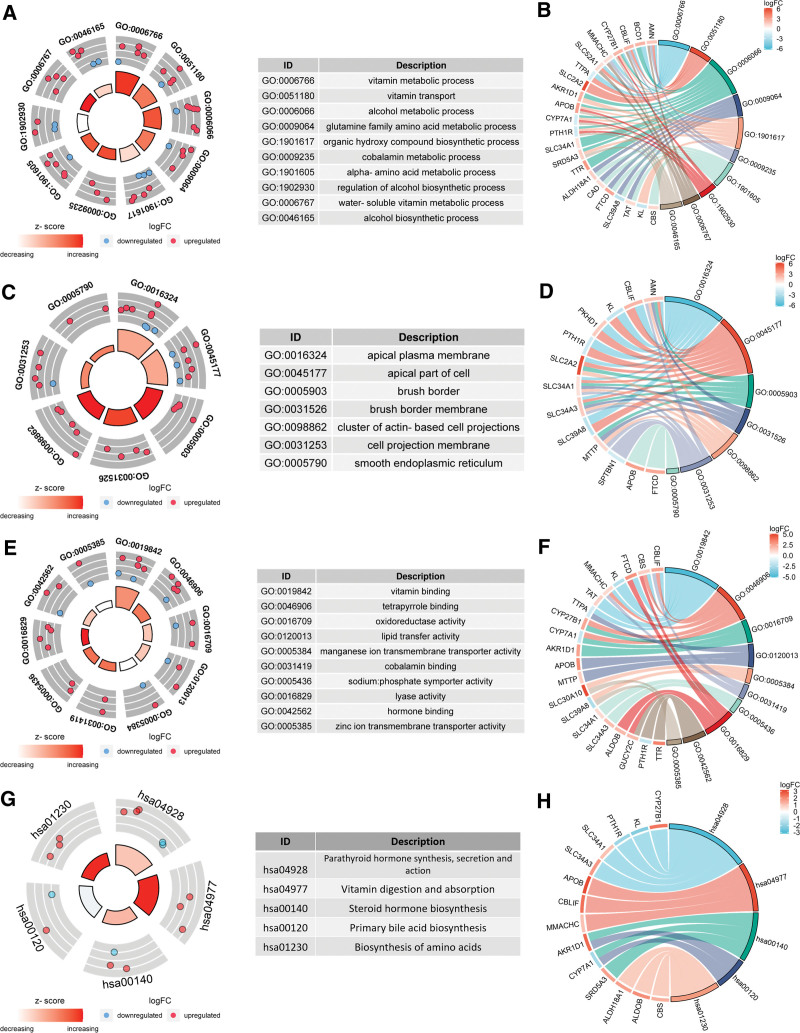
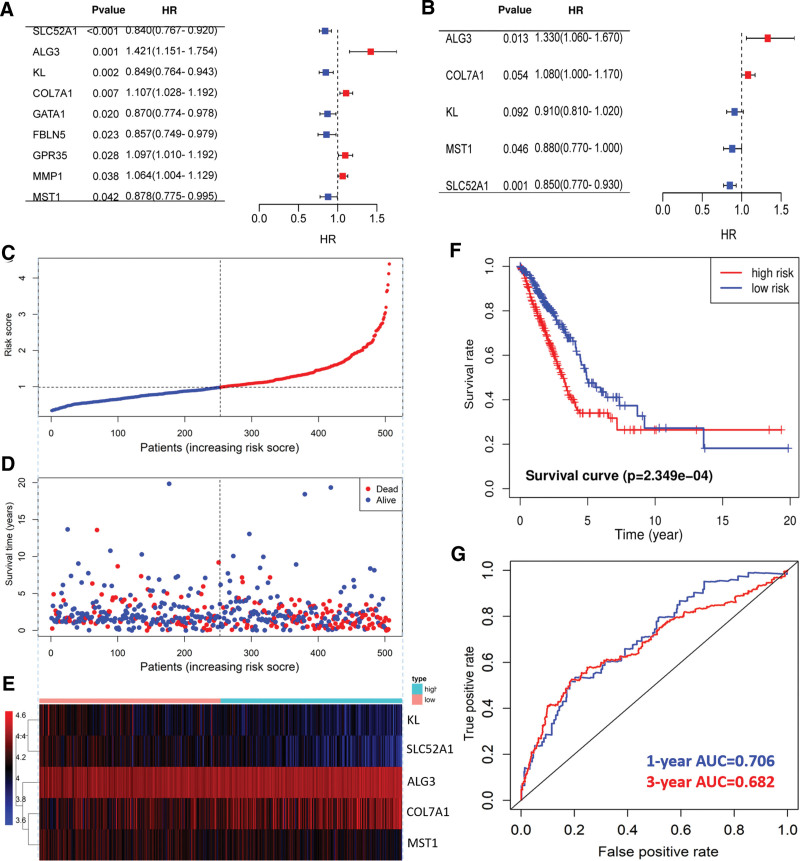
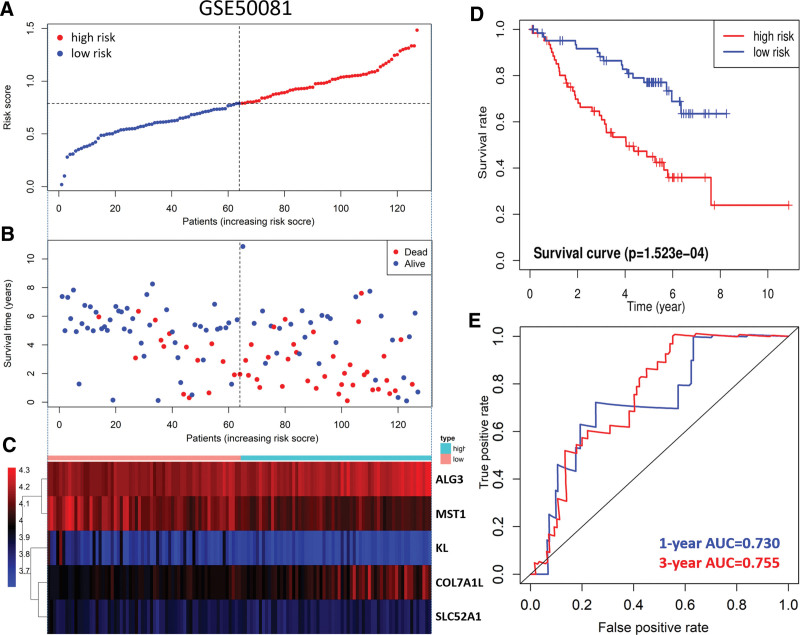
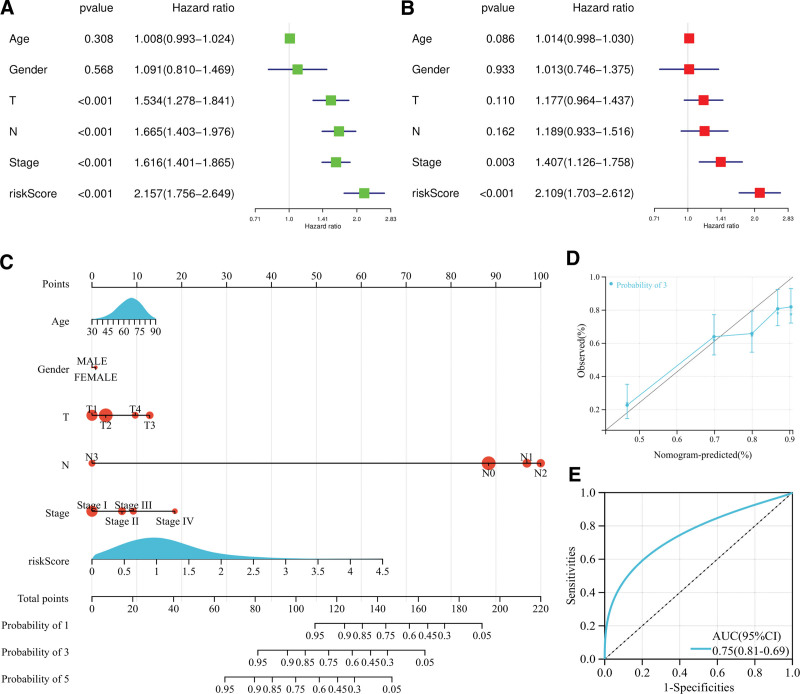
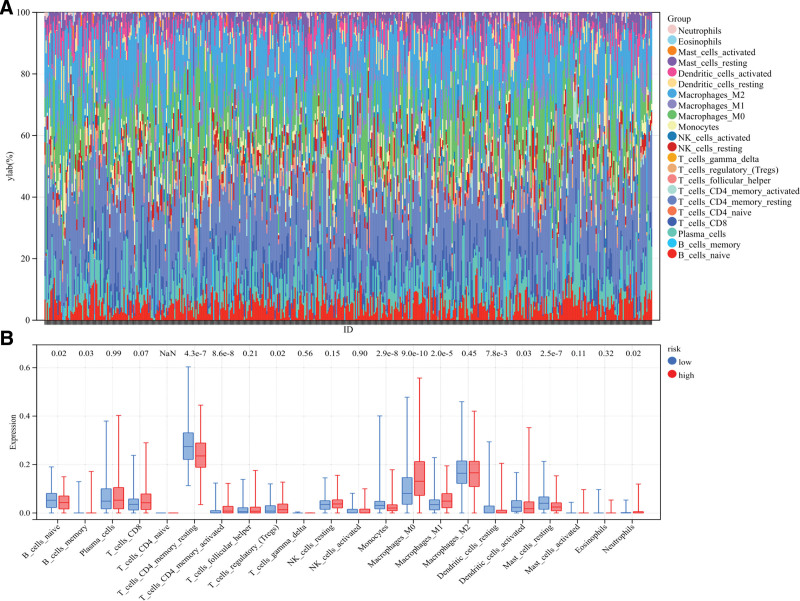
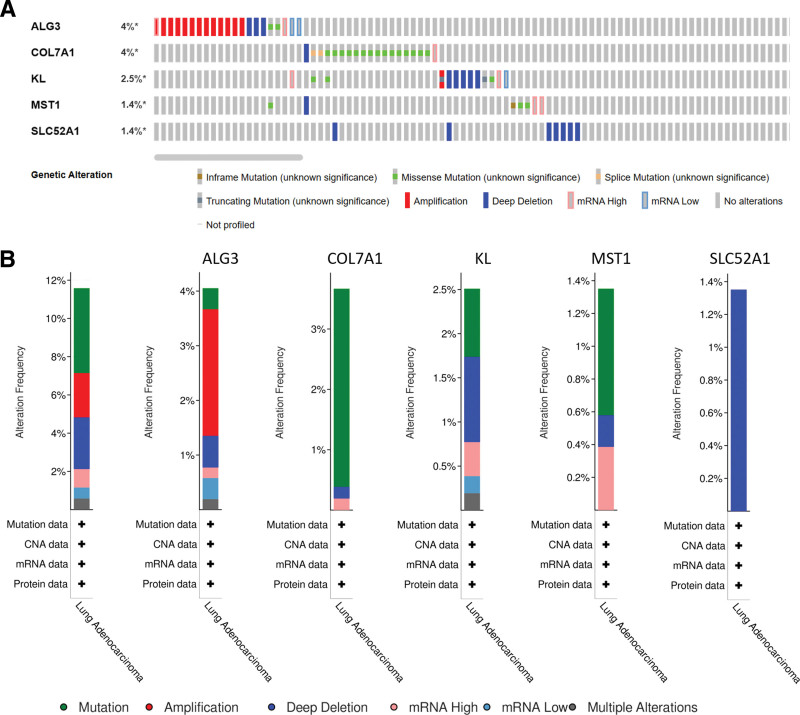
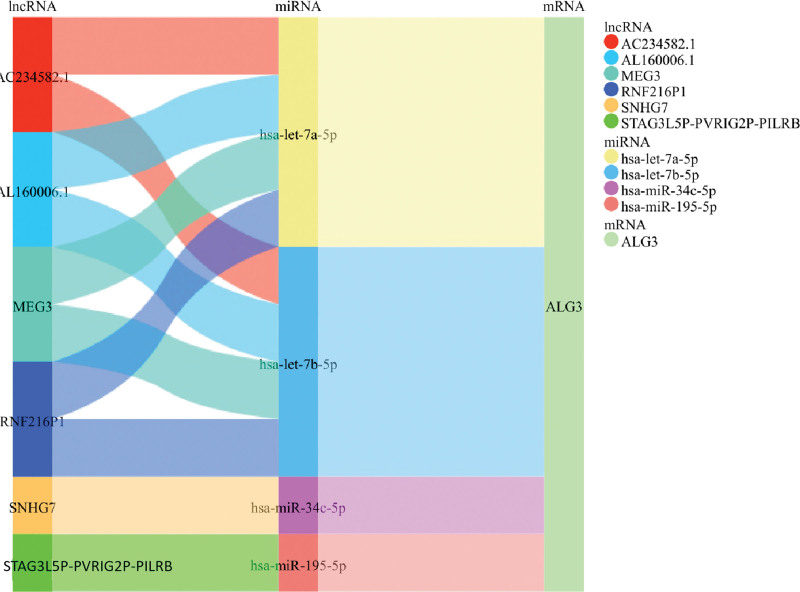
In this study, 42 abnormal metabolism-related differential genes were screened. After survival analysis, the final 5 metabolism-related genes were used as the construction of prognosis model, including ALG3, COL7A1, KL, MST1, and SLC52A1. In the model, the survival rate of LUAD patients in the high-risk subgroup was lower than that in the low-risk group. In addition, the risk score of the constructed LUAD prognostic model can be used as an independent prognostic factor for patients. According to the analysis of CIBERSORT algorithm, the risk score is related to the infiltration of multiple immune cells. The potential ceRNA network of model genes in LUAD was constructed through the starBase database. IHC experiments revealed that ALG3 expression was upregulated in LUAD.
The prognostic model of LUAD reveals the relationship between metabolism and prognosis of LUAD, and provides a novel perspective for diagnosis and research of LUAD.
探索影响肺腺癌(LUAD)患者预后的异常代谢相关基因,并分析其与免疫浸润和竞争内源性 RNA(ceRNA)网络的关系。
从癌症基因组图谱数据库下载 LUAD 的转录组数据。使用 R 语言筛选 LUAD 中异常代谢相关的差异表达基因。Cox 分析构建 LUAD 预后风险模型。Kaplan-Meier 检验、ROC 曲线和列线图用于评估代谢相关基因预后模型的预测能力。CIBERSORT 算法用于分析风险评分与免疫浸润的关系。starBase 数据库构建与 ceRNA 假说一致的调控网络。免疫组织化学实验验证 LUAD 和癌旁样本中 ALG3 的差异表达。
本研究筛选出 42 个异常代谢相关差异基因。经过生存分析,最终将 5 个代谢相关基因作为预后模型的构建,包括 ALG3、COL7A1、KL、MST1 和 SLC52A1。在模型中,高危亚组 LUAD 患者的生存率低于低危组。此外,构建的 LUAD 预后模型的风险评分可作为患者的独立预后因素。根据 CIBERSORT 算法分析,风险评分与多种免疫细胞的浸润有关。通过 starBase 数据库构建模型基因在 LUAD 中的潜在 ceRNA 网络。免疫组织化学实验显示 ALG3 在 LUAD 中表达上调。
LUAD 的预后模型揭示了代谢与 LUAD 预后的关系,为 LUAD 的诊断和研究提供了新的视角。