Vaccine and Infectious Disease Division, Fred Hutch Cancer Center, Seattle, WA, US.
Buck Institute for Research on Aging, Novato, CA, US.
Nat Commun. 2024 Sep 17;15(1):8161. doi: 10.1038/s41467-024-52395-2.
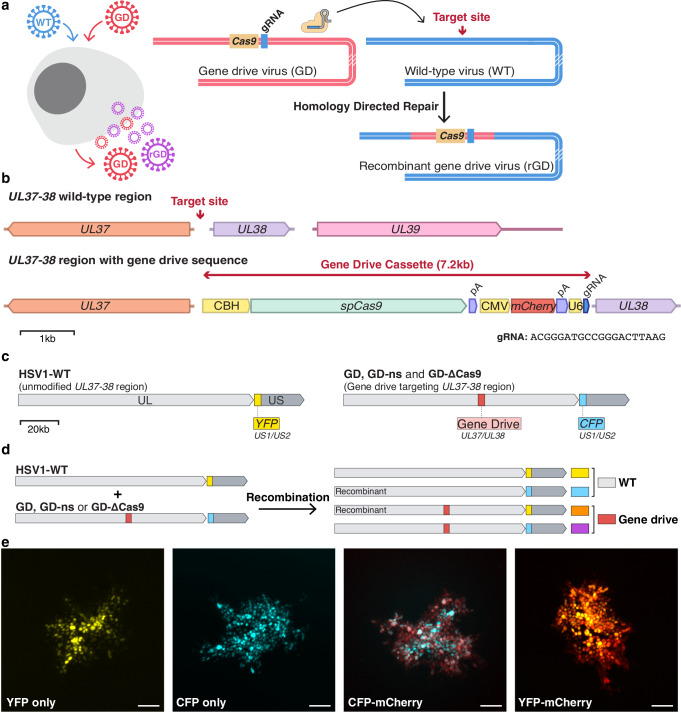
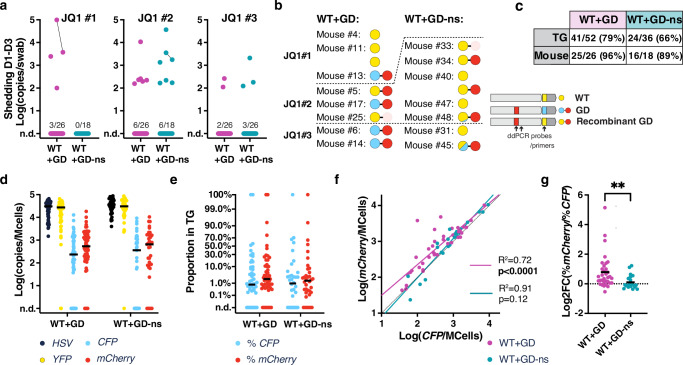
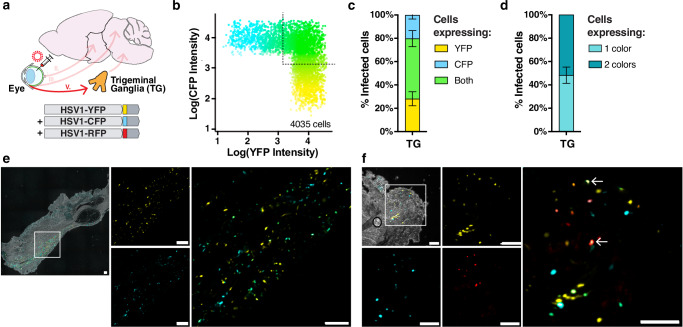
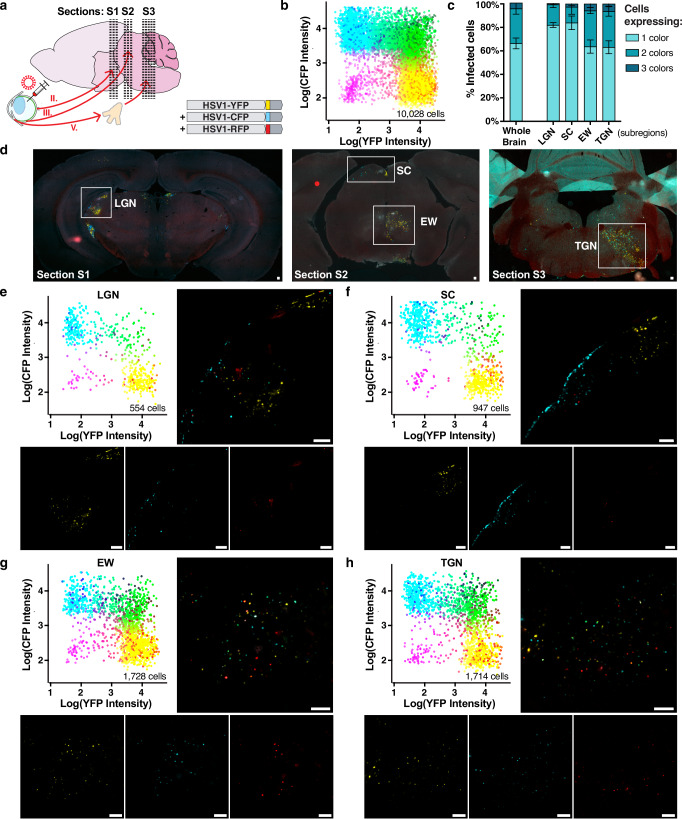
Gene drives are genetic modifications designed to propagate efficiently through a population. Most applications rely on homologous recombination during sexual reproduction in diploid organisms such as insects, but we recently developed a gene drive in herpesviruses that relies on co-infection of cells by wild-type and engineered viruses. Here, we report on a viral gene drive against human herpes simplex virus 1 (HSV-1) and show that it propagates efficiently in cell culture and during HSV-1 infection in mice. We describe high levels of co-infection and gene drive-mediated recombination in neuronal tissues during herpes encephalitis as the infection progresses from the site of inoculation to the peripheral and central nervous systems. In addition, we show evidence that a superinfecting gene drive virus could recombine with wild-type viruses during latent infection. These findings indicate that HSV-1 achieves high rates of co-infection and recombination during viral infection, a phenomenon that is currently underappreciated. Overall, this study shows that a viral gene drive could spread in vivo during HSV-1 infection, paving the way toward therapeutic applications.
基因驱动是一种经过设计的基因修饰,可以在种群中高效传播。大多数应用都依赖于二倍体生物(如昆虫)有性生殖过程中的同源重组,但我们最近开发了一种依赖于野生型和工程病毒共同感染细胞的疱疹病毒基因驱动。在这里,我们报告了一种针对人类单纯疱疹病毒 1(HSV-1)的病毒基因驱动,并表明它在细胞培养和 HSV-1 感染小鼠中能够高效传播。我们描述了在疱疹性脑炎感染过程中,随着感染从接种部位向周围和中枢神经系统扩散,神经元组织中存在高水平的共同感染和基因驱动介导的重组。此外,我们还证明了在潜伏感染期间,一种超感染的基因驱动病毒可以与野生型病毒发生重组。这些发现表明,HSV-1 在病毒感染过程中能够实现高比例的共同感染和重组,而这一现象目前还未得到充分认识。总的来说,这项研究表明,一种病毒基因驱动可以在 HSV-1 感染期间在体内传播,为治疗应用铺平了道路。