Department of Laboratory Medicine and Pathobiology, University of Toronto, Toronto, On, M5S 1A8, Canada.
Department of Immunology, University of Toronto, Toronto, ON, M5S 1A8, Canada.
Commun Biol. 2024 Sep 17;7(1):1164. doi: 10.1038/s42003-024-06882-3.
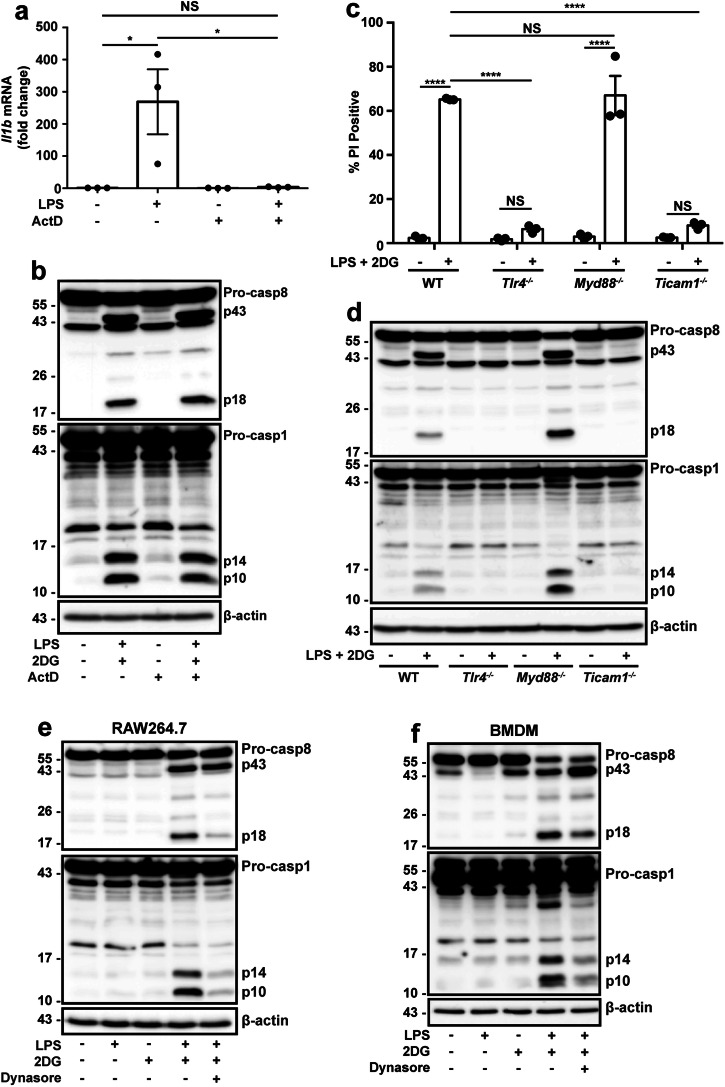
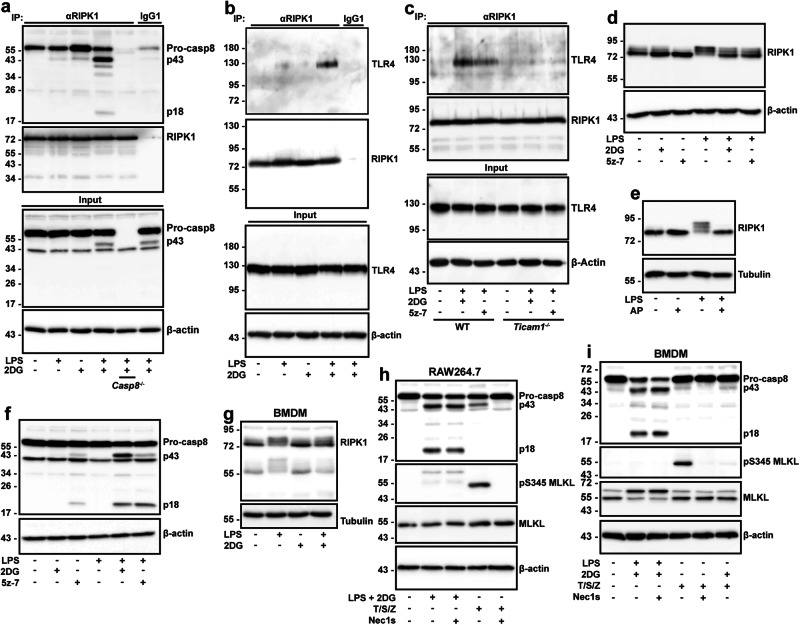
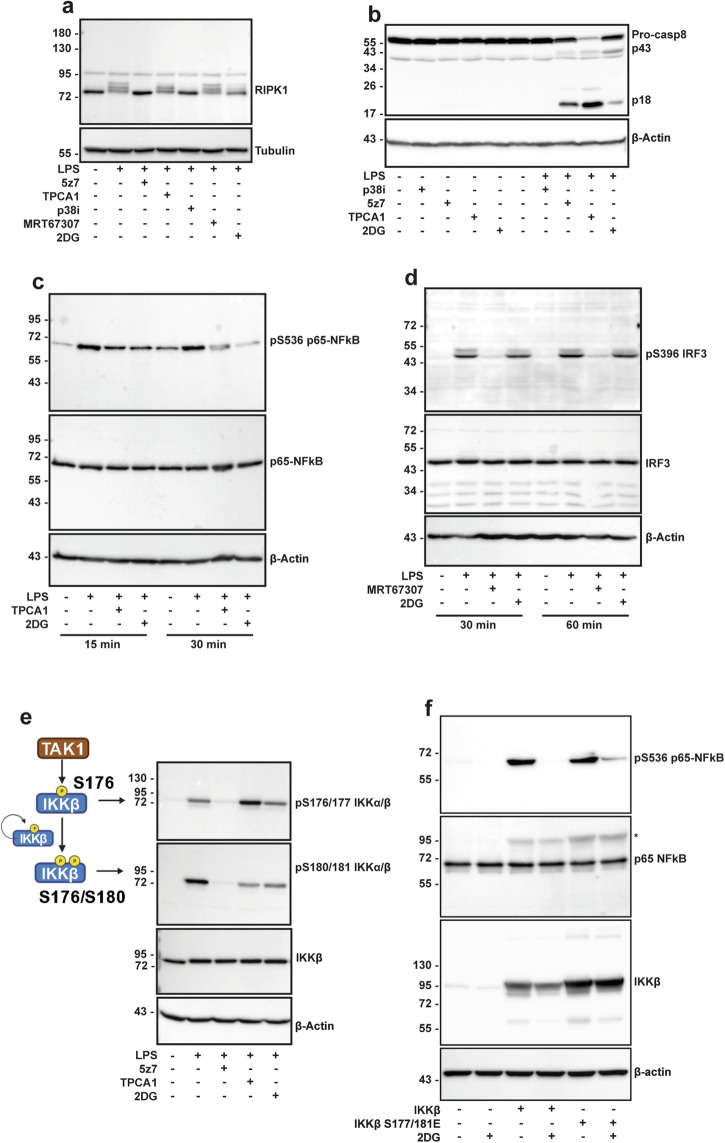
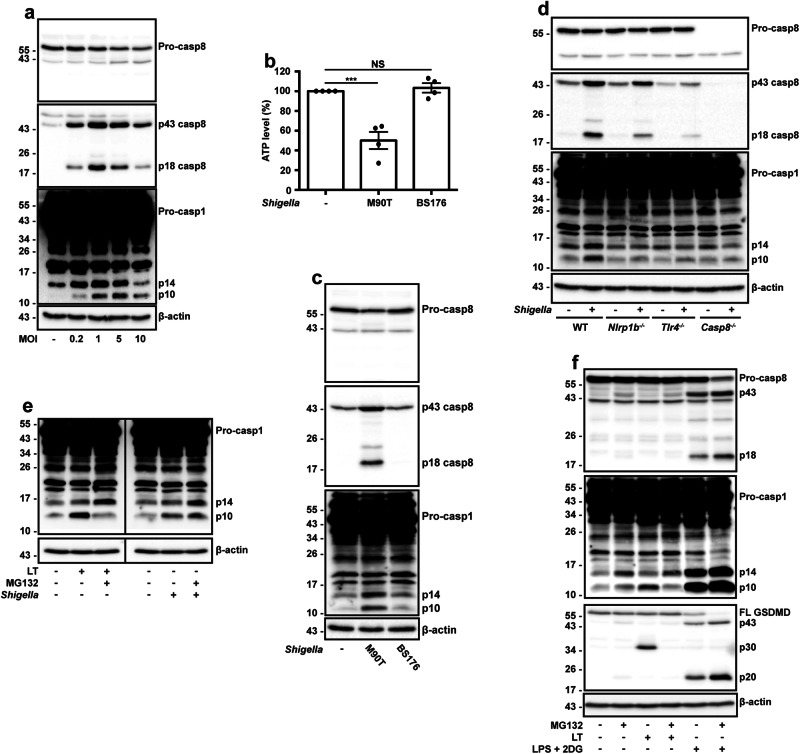
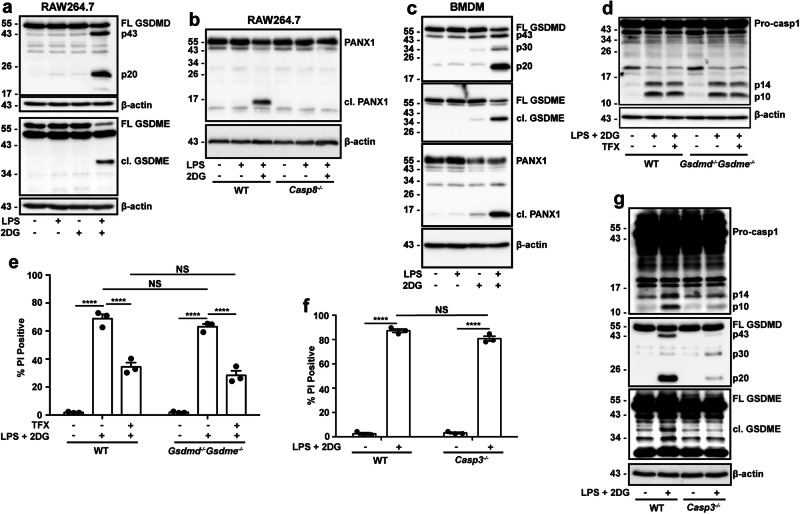
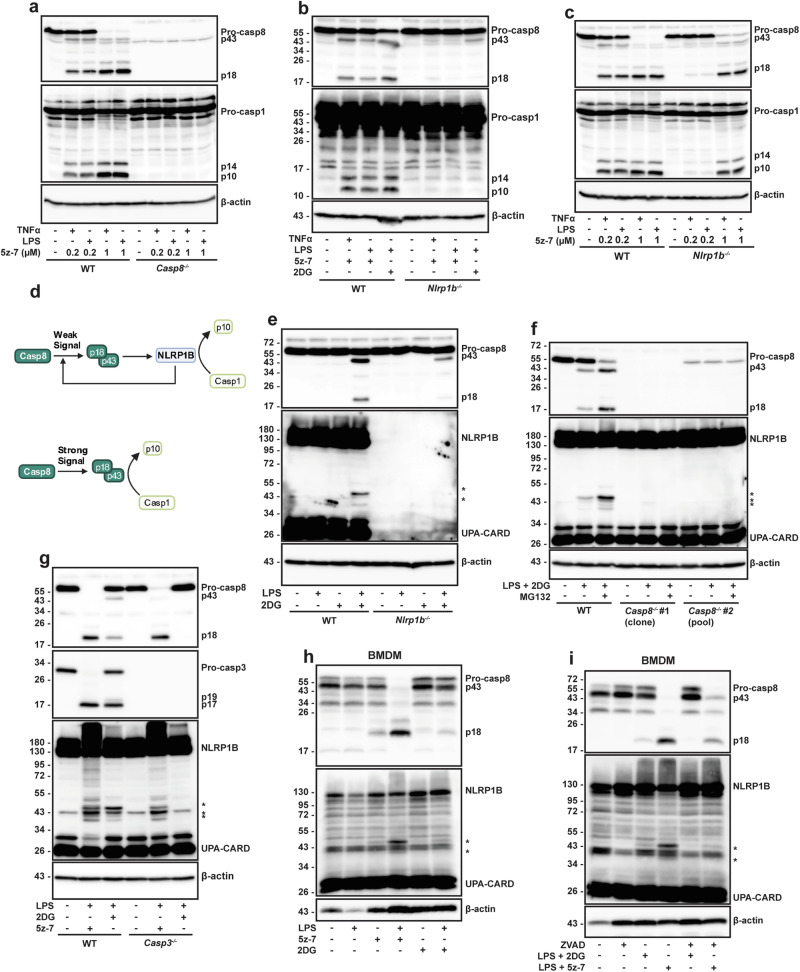
Cleavage of the innate immune receptor NLRP1B by various microbial proteases causes the proteasomal degradation of its N-terminal fragment and the subsequent release of a C-terminal fragment that forms an inflammasome. We reported previously that metabolic stress caused by intracellular bacteria triggers NLRP1B activation, but the mechanism by which this occurs was not elucidated. Here we demonstrate that TLR4 signaling in metabolically stressed macrophages promotes the formation of a TRIF/RIPK1/caspase-8 complex. Caspase-8 activity, induced downstream of this TLR4 pathway or through a distinct TNF receptor pathway, causes cleavage and activation of NLRP1B, which facilitates the maturation of both pro-caspase-1 and pro-caspase-8. Thus, our findings indicate that caspase-8 and NLRP1B generate a positive feedback loop that amplifies cell death processes and promotes a pro-inflammatory response through caspase-1. The ability of NLRP1B to detect caspase-8 activity suggests that this pattern recognition receptor may play a role in the defense against a variety of pathogens that induce apoptosis.
先天免疫受体 NLRP1B 可被多种微生物蛋白酶切割,导致其 N 端片段被蛋白酶体降解,随后释放出形成炎症小体的 C 端片段。我们之前曾报道过,胞内细菌引起的代谢应激会触发 NLRP1B 的激活,但这一过程的机制尚不清楚。在这里,我们证明代谢应激的巨噬细胞中的 TLR4 信号会促进 TRIF/RIPK1/胱天蛋白酶-8 复合物的形成。该 TLR4 途径或通过不同的 TNF 受体途径诱导的胱天蛋白酶-8 活性会导致 NLRP1B 的切割和激活,从而促进前胱天蛋白酶-1 和前胱天蛋白酶-8 的成熟。因此,我们的发现表明,胱天蛋白酶-8 和 NLRP1B 形成正反馈回路,放大细胞死亡过程,并通过胱天蛋白酶-1 促进促炎反应。NLRP1B 检测胱天蛋白酶-8 活性的能力表明,这种模式识别受体可能在防御诱导细胞凋亡的多种病原体中发挥作用。