Weiss Felix D, Alvarez Yubell, Shakeri Farhad, Sahu Anshupa, Leka Petro, Dernst Alesja, Rollheiser Jessika, Vasconcelos Matilde, Geraci Adriana, Duthie Fraser, Stahl Rainer, Lee Hye Eun, Gellner Anne-Kathrin, Buness Andreas, Latz Eicke, Meissner Felix
Institute of Innate Immunity, Department for Systems Immunology and Proteomics, Medical Faculty, University of Bonn, Bonn, Germany.
Institute for Medical Biometry, Informatics and Epidemiology, Medical Faculty, University Hospital Bonn, Bonn, Germany.
Cell Death Differ. 2024 Dec;31(12):1717-1729. doi: 10.1038/s41418-024-01379-2. Epub 2024 Sep 17.
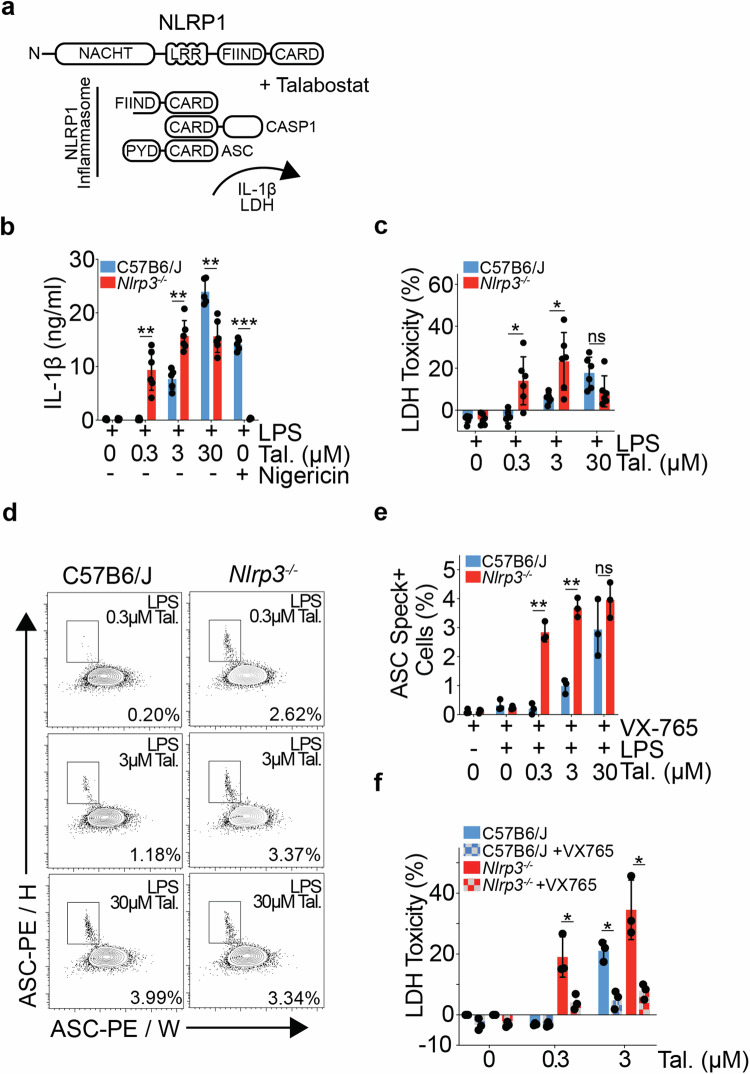
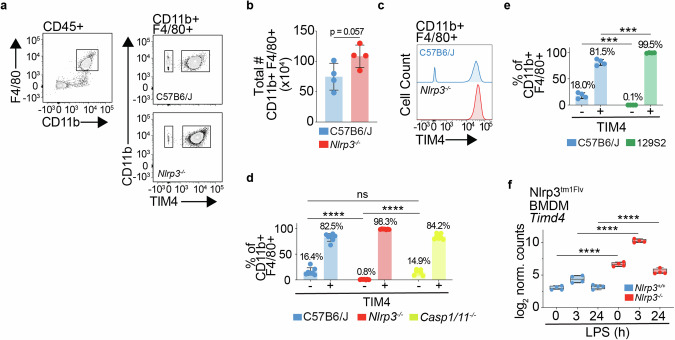
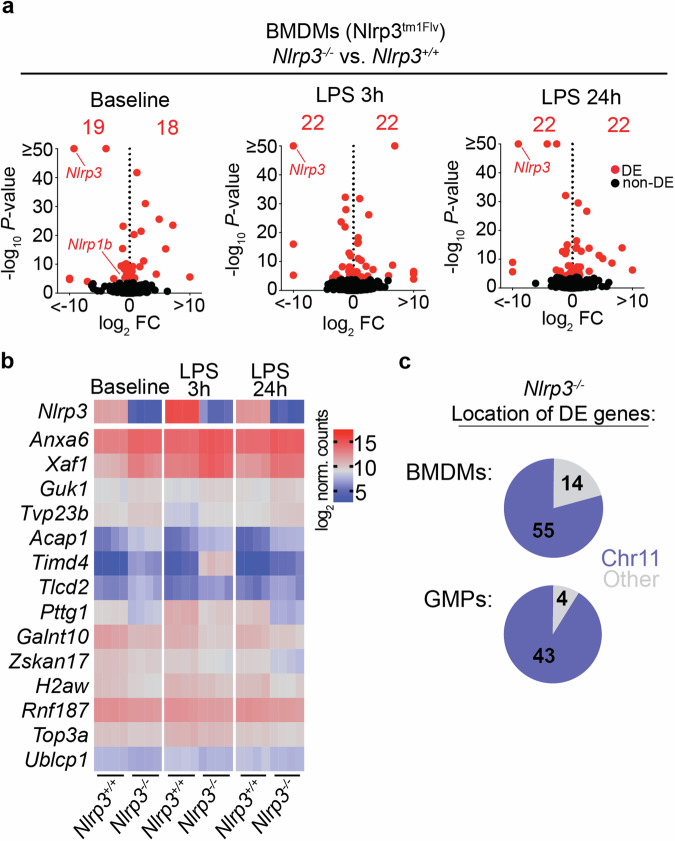
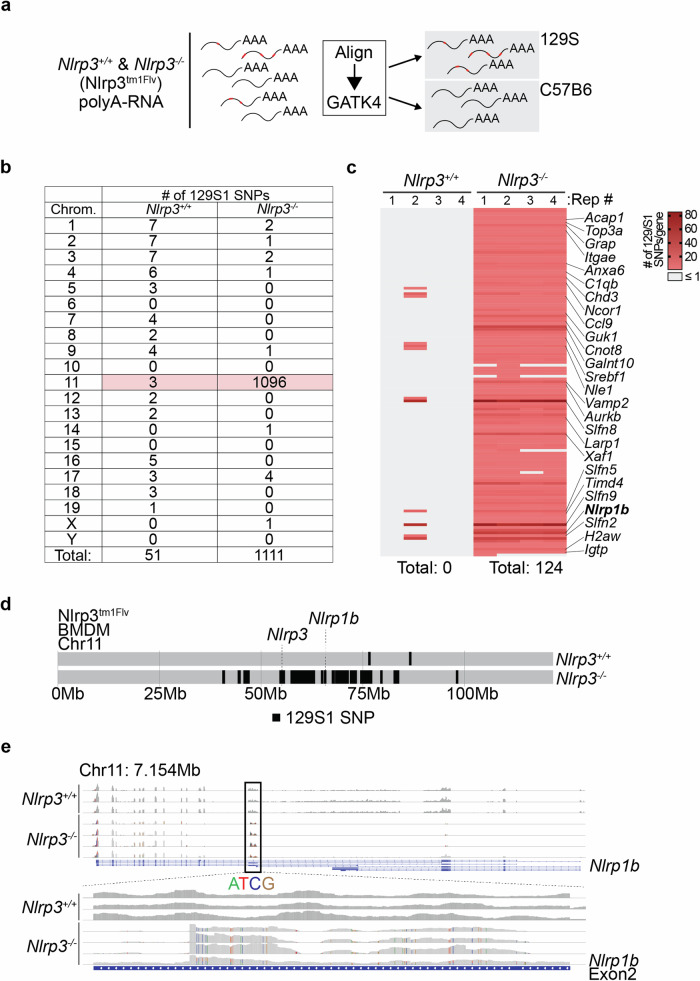
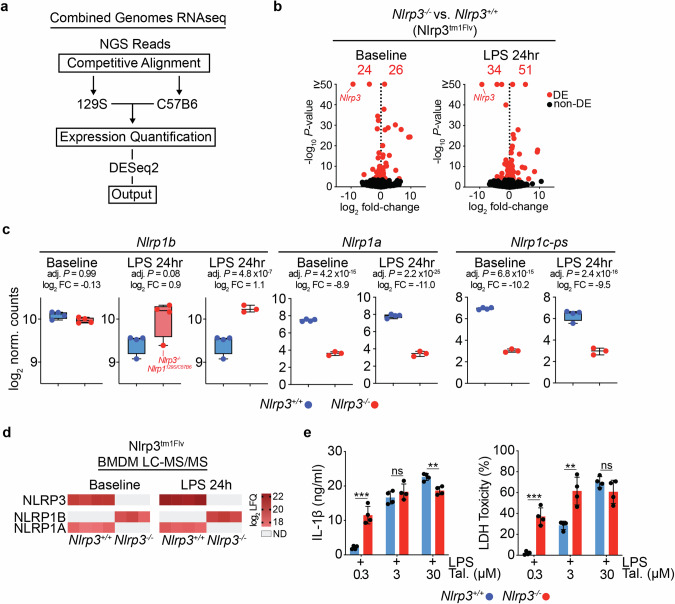
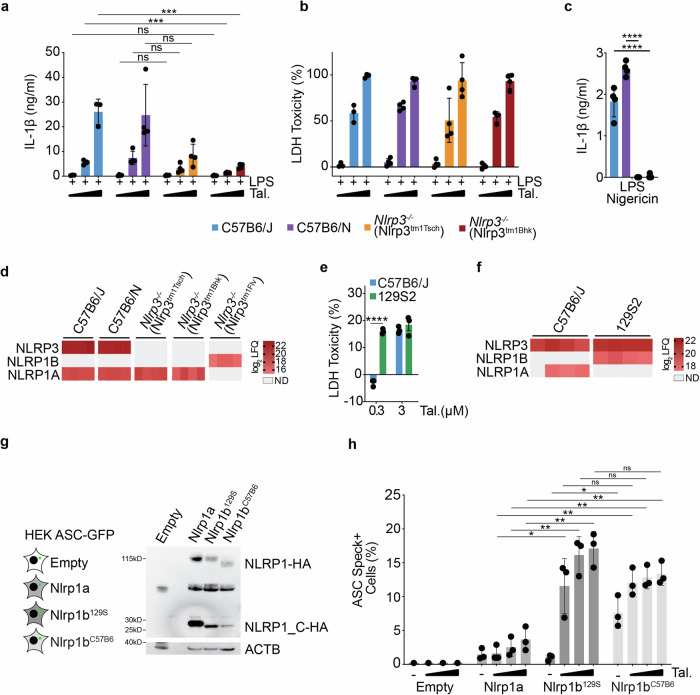
Immune response genes are highly polymorphic in humans and mice, with heterogeneity amongst loci driving strain-specific host defence responses. The inadvertent retention of polymorphic loci can introduce confounding phenotypes, leading to erroneous conclusions, and impeding scientific advancement. In this study, we employ a combination of RNAseq and variant calling analyses to identify a substantial region of 129S genome, including the highly polymorphic Nlrp1 locus, proximal to Nlrp3, in one of the most commonly used mouse models of NLRP3 deficiency (Nlrp3). We show that the presence of the Nlrp1 locus leads to an increase in NLRP1B protein expression, and a sensitising of Nlrp3 macrophages to NLRP1 inflammasome activation, independent of NLRP3 deficiency. Retention of 129S genome further leads to protein sequence differences and altered gene regulation across multiple cell types, including of the key tissue-resident macrophage marker, TIM4. Using alternative models of NLRP3 deficiency, including a previously undescribed conditional Nlrp3 allele enabling precise temporal and cell-type specific control over Nlrp3 deletion, we further show that NLRP3 contributes to Talabostat-driven IL-1β release. Our study also establishes a generic framework to identify functionally relevant SNPs and assess genomic contamination in transgenic mice using RNAseq data. This allows for unambiguous attribution of phenotypes to the target gene and advances the precision and reliability of research in the field of host defence responses.
免疫反应基因在人类和小鼠中具有高度多态性,基因座间的异质性驱动了品系特异性的宿主防御反应。多态性基因座的意外保留会引入混杂的表型,导致错误的结论,并阻碍科学进步。在本研究中,我们结合RNA测序和变异检测分析,在最常用的NLRP3缺陷小鼠模型(Nlrp3)之一中,鉴定出129S基因组的一个大片段区域,包括靠近Nlrp3的高度多态性Nlrp1基因座。我们发现,Nlrp1基因座的存在导致NLRP1B蛋白表达增加,并且使Nlrp3巨噬细胞对NLRP1炎性小体激活敏感,这与NLRP3缺陷无关。保留129S基因组还会导致多种细胞类型的蛋白质序列差异和基因调控改变,包括关键的组织驻留巨噬细胞标志物TIM4。使用NLRP3缺陷的替代模型,包括一个先前未描述的条件性Nlrp3等位基因,可对Nlrp3缺失进行精确的时间和细胞类型特异性控制,我们进一步表明NLRP3有助于他拉泊司他驱动的IL-1β释放。我们的研究还建立了一个通用框架,用于使用RNA测序数据识别功能相关的单核苷酸多态性(SNP)并评估转基因小鼠中的基因组污染。这使得能够将表型明确归因于靶基因,并提高宿主防御反应领域研究的精确性和可靠性。