Tao Yanlin, Li Zikang, Yuan Jinfeng, Wu Hui, Shi Hailian, Wu Xiaojun, Huang Fei
Shanghai Key Laboratory of Compound Chinese Medicines, The Ministry of Education (MOE) Key Laboratory for Standardization of Chinese Medicines, The MOE Innovation Centre for Basic Medicine Research on Qi-Blood TCM Theories, Institute of Chinese Materia Medica, Shanghai University of Traditional Chinese Medicine, Shanghai, China.
Institute of Cardiovascular Disease of Integrated Traditional Chinese and Western Medicine, Shuguang Hospital Affiliated to Shanghai University of Traditional Chinese Medicine, Shanghai, 201203, China.
Brain Behav Immun Health. 2024 Sep 4;41:100856. doi: 10.1016/j.bbih.2024.100856. eCollection 2024 Nov.
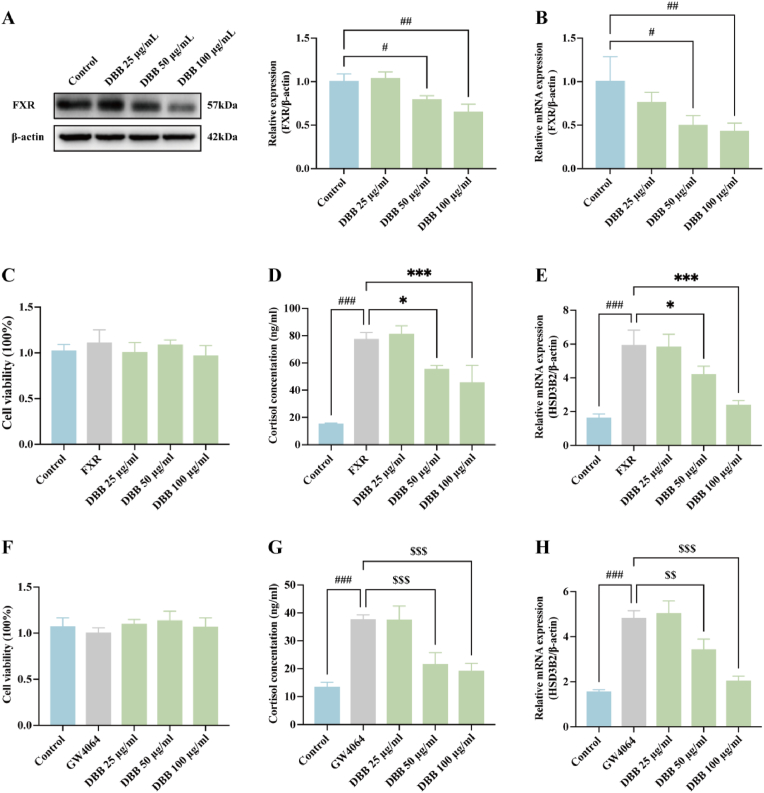
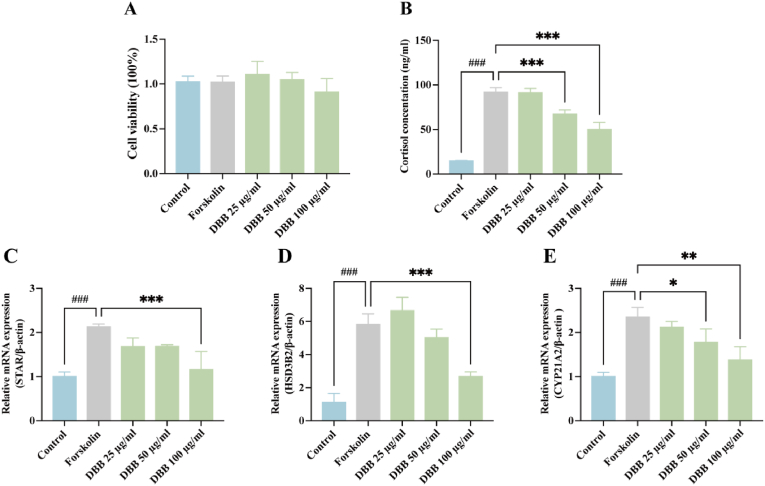
Depression is a psychological disorder associated with prolonged stress, which involves abnormal activation of the hypothalamic-pituitary-adrenal (HPA) axis, leading to elevated levels of glucocorticoids (GC). Excessive GC can cause damage to the structure and function of the hippocampus, thereby triggering depressive symptoms. Studies suggest that the bile acid receptor farnesoid X receptor (FXR) may play a role in adrenal GC synthesis. This study aimed to explore the potential therapeutic effects of dried bear bile (DBB) on depression and its mechanism. We used the chronic unpredictable mild stress (CUMS) mouse model and FXR agonist GW4064 stimulated mice, as well as H295R human adrenal cortical carcinoma cells, employing behavioral tests, biochemical analysis, and gene expression analysis to assess the effects of DBB treatment on depressive behavior, serum corticosterone (CORT) levels, and adrenal FXR and steroid biosynthesis-related gene expression. The results showed that in both CUMS and GW4064-stimulated mice, DBB treatment significantly improved depressive-like behaviors and reversed serum CORT levels. Additionally, DBB suppressed the expression of steroidogenic regulatory genes in the adrenal glands of CUMS mice. In H295R cells, DBB treatment effectively reduced cortisol secretion induced by Forskolin, inhibited the expression of steroid biosynthesis-related genes, and suppressed cortisol production and HSD3B2 expression under conditions of FXR overexpression and FXR activation. Our findings suggest that DBB regulates adrenal FXR to modulate glucocorticoid synthesis and exerts antidepressant effects. DBB may serve as a potential therapeutic agent for depression by regulating GC levels and steroidogenesis pathway. Further research is underway to test the antidepressant effects of each DBB component to understand their specific contribution.
抑郁症是一种与长期压力相关的心理障碍,它涉及下丘脑-垂体-肾上腺(HPA)轴的异常激活,导致糖皮质激素(GC)水平升高。过量的GC会对海马体的结构和功能造成损害,从而引发抑郁症状。研究表明,胆汁酸受体法尼醇X受体(FXR)可能在肾上腺GC合成中发挥作用。本研究旨在探讨熊胆粉(DBB)对抑郁症的潜在治疗作用及其机制。我们使用慢性不可预测温和应激(CUMS)小鼠模型和FXR激动剂GW4064刺激的小鼠,以及H295R人肾上腺皮质癌细胞,通过行为测试、生化分析和基因表达分析来评估DBB治疗对抑郁行为、血清皮质酮(CORT)水平以及肾上腺FXR和类固醇生物合成相关基因表达的影响。结果表明,在CUMS和GW4064刺激的小鼠中,DBB治疗均显著改善了抑郁样行为并逆转了血清CORT水平。此外,DBB抑制了CUMS小鼠肾上腺中类固醇生成调节基因的表达。在H295R细胞中,DBB治疗有效降低了福司可林诱导的皮质醇分泌,抑制了类固醇生物合成相关基因的表达,并在FXR过表达和FXR激活的条件下抑制了皮质醇产生和HSD3B2表达。我们的研究结果表明,DBB通过调节肾上腺FXR来调节糖皮质激素合成并发挥抗抑郁作用。DBB可能通过调节GC水平和类固醇生成途径成为抑郁症的潜在治疗药物。目前正在进行进一步的研究,以测试DBB各成分的抗抑郁作用,了解它们的具体贡献。