Ouédraogo Dakis-Yaoba, Lafitte Alix, Sordello Romain, Pozzi Florie, Mikajlo Irina, Araujo José Hilario Rocha, Reyjol Yorick, Lerch Thomas Z
PatriNat (OFB-MNHN-CNRS-IRD), 75005, Paris, France.
ECT, 77230, Villeneuve Sous Dammartin, France.
Environ Evid. 2024 Apr 8;13(1):9. doi: 10.1186/s13750-024-00332-7.
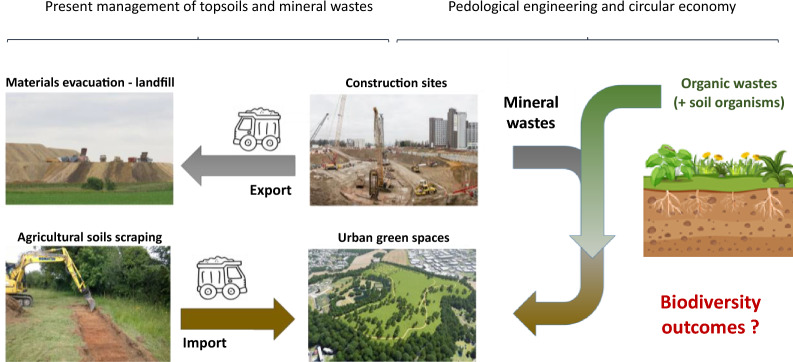
The development of cities and transport infrastructure produces a large volume of mineral waste (e.g. excavated earth material). At the same time, cities are increasingly trying to develop green infrastructures, given the ecosystem services they provide to people, but this comes with considerable economic and environmental costs associated with the transfer of fertile soil from rural areas to cities. In a circular economy approach, the reuse of mineral waste to build fertile soil is a substantial opportunity to reduce the economic and environmental costs of both mineral waste management and green infrastructure development. Soils constructed from these materials (constructed Technosols) must be able to support vegetation growth and become a suitable living environment for soil organisms. This requires ecological engineering to maximise the potential of constructed soils for biodiversity, both from a taxonomic and functional perspective. In this context, we systematically mapped the evidence related to the ability of soils constructed from mineral wastes to support biodiversity.
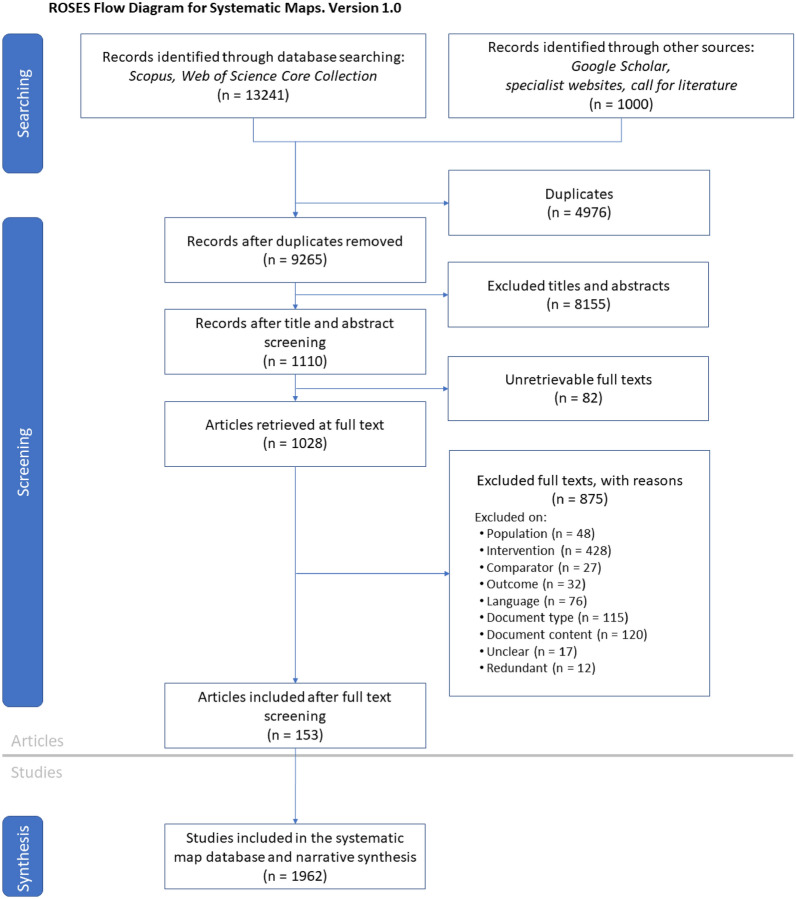
We gathered published and grey literature through searches in two publications databases (Scopus and Web of Science Core Collection), one search engine (Google Scholar), nine organisational websites and through a call for literature. Titles, abstracts, and full-texts were successively screened using eligibility criteria. All included studies were described with coded variables and a database was produced. The extent of evidence was assessed and knowledge clusters and gaps were identified.
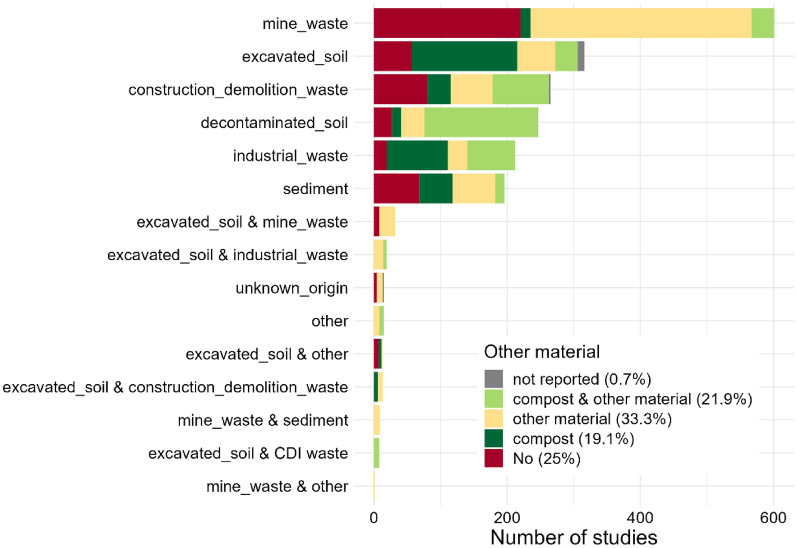
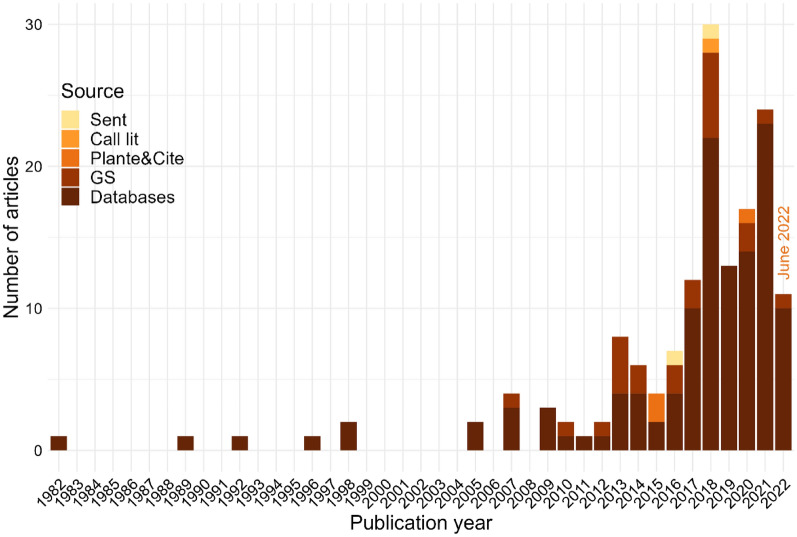
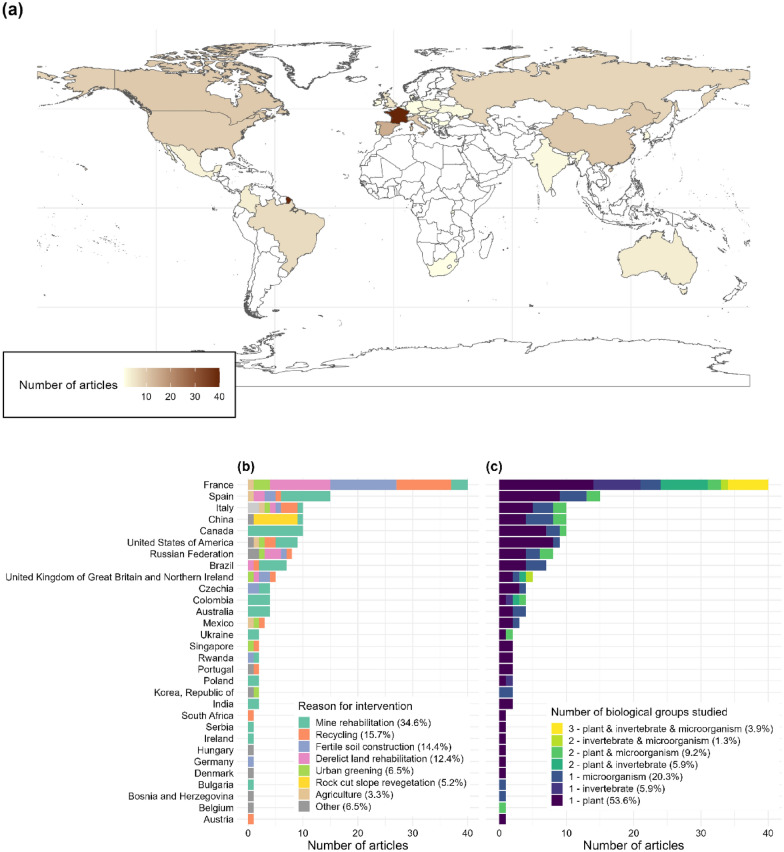
The searches yielded 9265 articles, and 153 articles were retained after the screening process. More than half of these articles were from European countries, with France leading the field with 40 articles, followed by Spain (15 articles) and Italy (10 articles). Most of the articles (75%) were produced after 2015. The main reasons for constructing soils from mineral waste were for mine rehabilitation (35%), waste recycling (16%) and experimental purpose (15%). The 153 articles were divided into 1962 studies, a study being a combination of a taxon, an intervention (i.e. soil construction) and a measured outcome. Among these studies, the most studied biological group is plants (69% of studies) and especially herbaceous species (32%), followed by microorganisms (17%) and invertebrates (14%). The most used type of mineral waste is mine waste (31% of studies) followed by excavated soil (16%) and demolition waste (14%). Finally, the most frequently measured outcome is plant growth (42% of studies), followed by organism abundance (16%) and diversity (10%).
Three main knowledge clusters were identified which could be addressed in the future for full synthesis of the results: (1) How well do plants grow in soils constructed from mineral wastes? (2) What is the potential of soils constructed from mineral wastes to support biodiversity? and (3) How do microbial communities develop in soils constructed from mineral wastes? There is a lack of studies investigating several biological groups at the same time: only 6 articles out of 153 investigated the response of both plants, invertebrates and microorganisms to soil construction. More research is therefore needed on the ability to support a diversity of organisms.
城市和交通基础设施的发展产生了大量的矿物废物(如挖掘出的土方材料)。与此同时,鉴于绿色基础设施为人们提供的生态系统服务,城市越来越努力发展绿色基础设施,但这伴随着将肥沃土壤从农村地区转移到城市所带来的巨大经济和环境成本。在循环经济模式下,将矿物废物再利用以构建肥沃土壤是降低矿物废物管理和绿色基础设施发展的经济和环境成本的重要契机。用这些材料构建的土壤(人造技术土壤)必须能够支持植被生长,并成为土壤生物适宜的生存环境。这需要生态工程从分类学和功能角度最大限度地发挥人造土壤促进生物多样性的潜力。在此背景下,我们系统地梳理了与矿物废物构建的土壤支持生物多样性能力相关的证据。
我们通过在两个出版物数据库(Scopus和科学网核心合集)、一个搜索引擎(谷歌学术)、九个组织网站上搜索以及征集文献的方式收集已发表和灰色文献。使用入选标准对标题、摘要和全文进行逐次筛选。所有纳入研究都用编码变量进行描述,并建立了一个数据库。评估了证据的范围,识别了知识集群和空白。
搜索共得到9265篇文章,筛选后保留了153篇文章。其中一半以上的文章来自欧洲国家,法国以40篇文章领先,其次是西班牙(15篇文章)和意大利(10篇文章)。大多数文章(75%)是2015年以后发表的。用矿物废物构建土壤的主要原因是矿山修复(35%)、废物回收利用(16%)和实验目的(15%)。153篇文章被分为1962项研究,一项研究是一个分类单元、一种干预(即土壤构建)和一个测量结果的组合。在这些研究中,研究最多的生物类群是植物(占研究的69%),尤其是草本物种(32%),其次是微生物(17%)和无脊椎动物(14%)。最常用的矿物废物类型是矿山废料(占研究的31%),其次是挖掘出的土壤(16%)和拆除废物(14%)。最后,最常测量的结果是植物生长(占研究的42%),其次是生物丰度(16%)和多样性(10%)。
确定了三个主要的知识集群,未来可针对这些集群全面综合研究结果:(1)植物在由矿物废物构建的土壤中生长情况如何?(2)由矿物废物构建的土壤支持生物多样性的潜力有多大?(3)微生物群落在由矿物废物构建的土壤中如何发展?同时研究多个生物类群的研究较少:153篇文章中只有6篇研究了植物、无脊椎动物和微生物对土壤构建的反应。因此,需要更多关于支持多种生物能力的研究。