Smith Christine N, Eisenschenk Stephan, Wang Yue
Department of Neurology, University of Florida, 1149 Newell Dr, L3-100, Gainesville, FL 32611, United States.
Department of Neurology, Malcom Randall Veterans Affairs Medical Center, 1601 SW Archer Rd, Gainesville, FL 32608, United States.
Epilepsy Behav Rep. 2024 Sep 2;28:100709. doi: 10.1016/j.ebr.2024.100709. eCollection 2024.
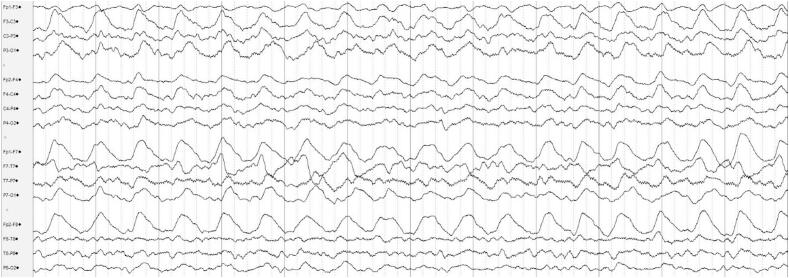
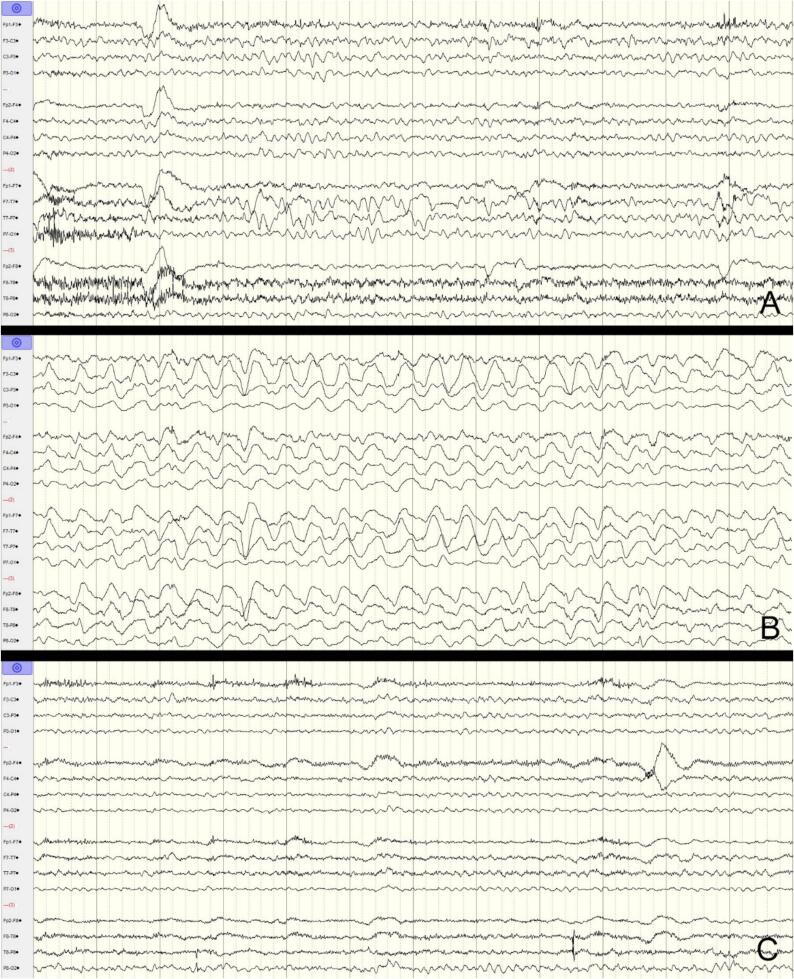
Tiagabine has been associated with reports of status epilepticus as well as encephalopathy, even when used within therapeutic doses. Vagus nerve stimulation (VNS) has been used successfully to reduce seizure frequency in the outpatient setting as well as in the acute setting of status epilepticus. It is also theorized to reduce cortical synchronization. We present a case of a patient on adjunctive tiagabine therapy who developed sudden onset encephalopathy and rhythmic delta activity soon after vagus nerve stimulation was turned off in preparation for magnetic resonance imaging. The bilateral rhythmic delta activity significantly reduced in burden after VNS was turned back on and encephalopathy also gradually improved to baseline. We hypothesize that vagus nerve stimulation successfully interrupted diffuse hypersynchrony, in the form of bilateral rhythmic delta activity, caused by tiagabine. To our knowledge, this is the first report of such a phenomenon.
即使在治疗剂量范围内使用,也有报告称替加宾与癫痫持续状态以及脑病有关。迷走神经刺激(VNS)已成功用于在门诊环境以及癫痫持续状态的急性情况下降低癫痫发作频率。理论上它还能减少皮质同步化。我们报告一例患者,该患者在接受替加宾辅助治疗,在为磁共振成像准备而关闭迷走神经刺激后不久出现突发脑病和节律性δ活动。在重新开启VNS后,双侧节律性δ活动的负荷显著降低,脑病也逐渐改善至基线水平。我们推测迷走神经刺激成功中断了由替加宾引起的以双侧节律性δ活动形式存在的弥漫性高同步化。据我们所知,这是此类现象的首例报告。