
肝癌的免疫治疗:克服耐受的肝微环境。
Immunotherapy in liver cancer: overcoming the tolerogenic liver microenvironment.
机构信息
Department of Infectious Diseases, Weifang People's Hospital, Weifang, Shandong, China.
School of Basic Medicine, Fourth Military Medical University, Xi'an, China.
出版信息
Front Immunol. 2024 Sep 3;15:1460282. doi: 10.3389/fimmu.2024.1460282. eCollection 2024.
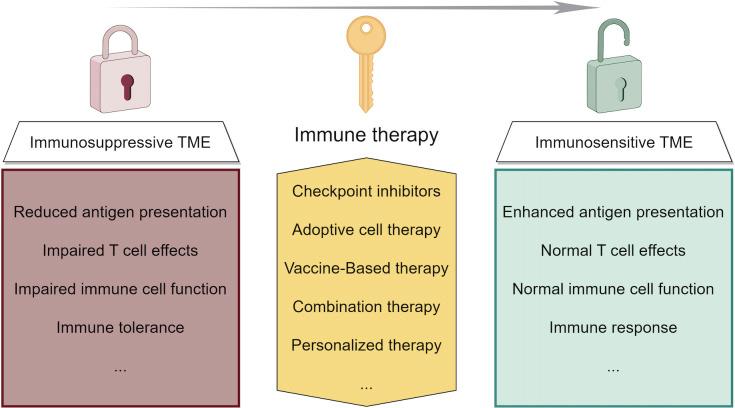
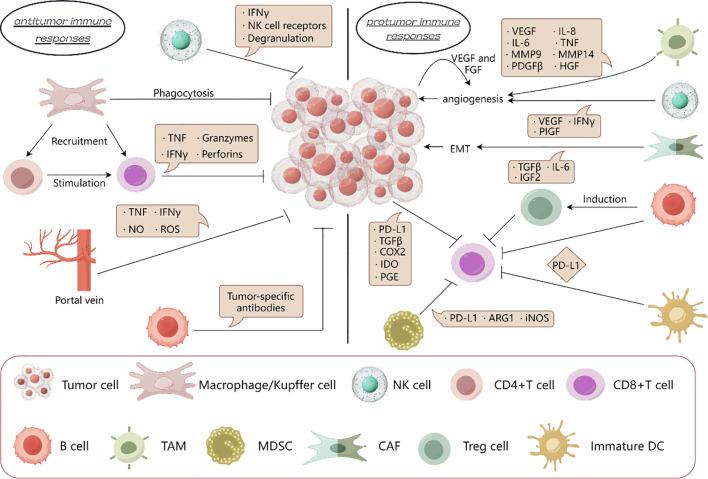
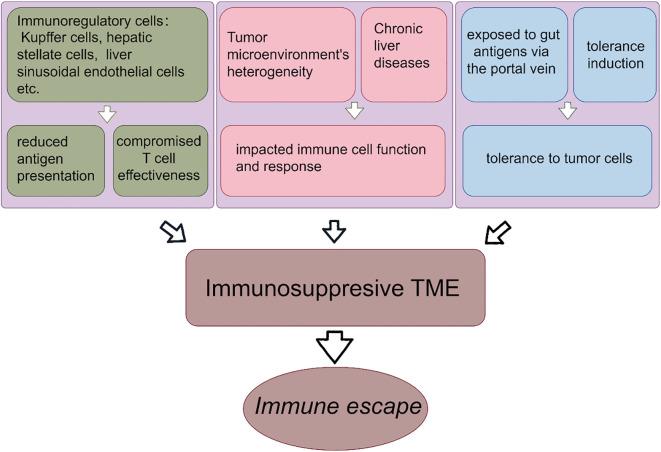
Liver cancer is a major global health concern, ranking among the top causes of cancer-related deaths worldwide. Despite advances in medical research, the prognosis for liver cancer remains poor, largely due to the inherent limitations of current therapies. Traditional treatments like surgery, radiation, and chemotherapy often fail to provide long-term remission and are associated with significant side effects. Immunotherapy has emerged as a promising avenue for cancer treatment, leveraging the body's immune system to target and destroy cancer cells. However, its application in liver cancer has been limited. One of the primary challenges is the liver's unique immune microenvironment, which can inhibit the effectiveness of immunotherapeutic agents. This immune microenvironment creates a barrier, leading to drug resistance and reducing the overall efficacy of treatment. Recent studies have focused on understanding the immunological landscape of liver cancer to develop strategies that can overcome these obstacles. By identifying the specific factors within the liver that contribute to immune suppression and drug resistance, researchers aim to enhance the effectiveness of immunotherapy. Prospective strategies include combining immunotherapy with other treatments, using targeted therapies to modulate the immune microenvironment, and developing new agents that can bypass or counteract the inhibitory mechanisms in the liver. These advancements hold promise for improving outcomes in liver cancer treatment.
肝癌是一个全球性的健康问题,是全球癌症相关死亡的主要原因之一。尽管医学研究取得了进展,但肝癌的预后仍然很差,这主要是由于目前治疗方法的固有局限性。传统的治疗方法,如手术、放疗和化疗,往往无法提供长期缓解,并且伴随着显著的副作用。免疫疗法已成为癌症治疗的一个有前途的途径,利用人体的免疫系统来靶向和破坏癌细胞。然而,它在肝癌中的应用受到限制。其中一个主要挑战是肝脏独特的免疫微环境,它可以抑制免疫治疗药物的有效性。这种免疫微环境形成了一道屏障,导致耐药性,并降低了治疗的整体效果。最近的研究集中在了解肝癌的免疫学特征,以开发克服这些障碍的策略。通过确定肝脏内导致免疫抑制和耐药性的特定因素,研究人员旨在提高免疫疗法的效果。有前景的策略包括将免疫疗法与其他治疗方法相结合,使用靶向疗法来调节免疫微环境,以及开发新的药物来绕过或对抗肝脏中的抑制机制。这些进展有望改善肝癌治疗的结果。
 Zotero 插件