Rathnasinghe Raveen, Chang Lauren A, Pearl Rebecca, Jangra Sonia, Aspelund Amy, Hoag Alaura, Yildiz Soner, Mena Ignacio, Sun Weina, Loganathan Madhumathi, Crossland Nicholas Alexander, Gertje Hans P, Tseng Anna Elise, Aslam Sadaf, Albrecht Randy A, Palese Peter, Krammer Florian, Schotsaert Michael, Muster Thomas, García-Sastre Adolfo
Department of Microbiology, Icahn School of Medicine at Mount Sinai, New York, NY, 10029, USA.
Graduate School of Biomedical Sciences, Icahn School of Medicine at Mount Sinai, New York, NY, 10029, USA.
NPJ Vaccines. 2024 Sep 16;9(1):169. doi: 10.1038/s41541-024-00952-7.
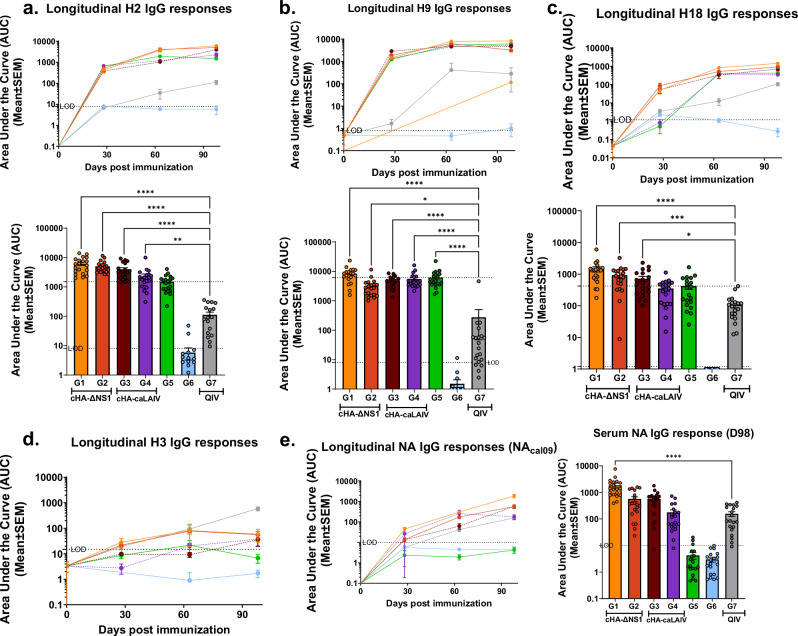
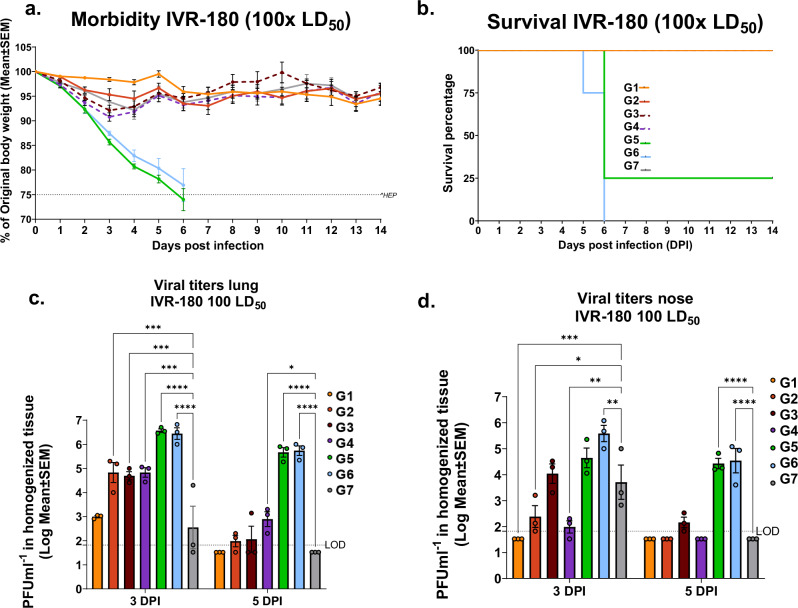
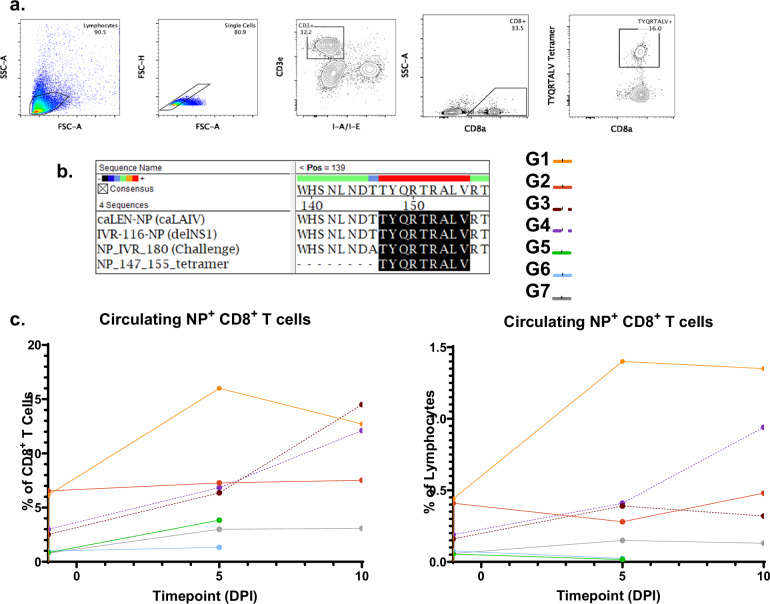
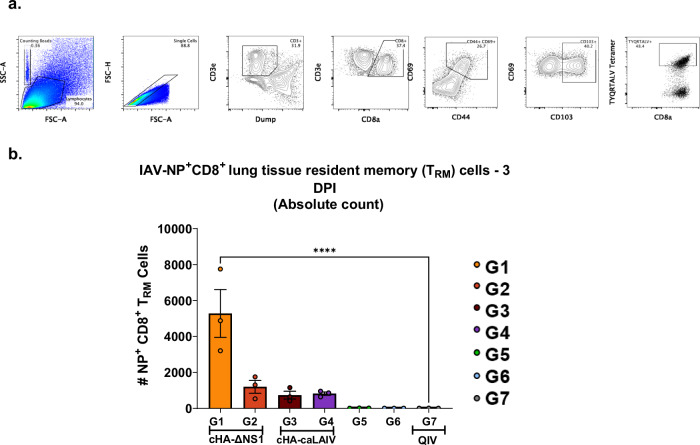
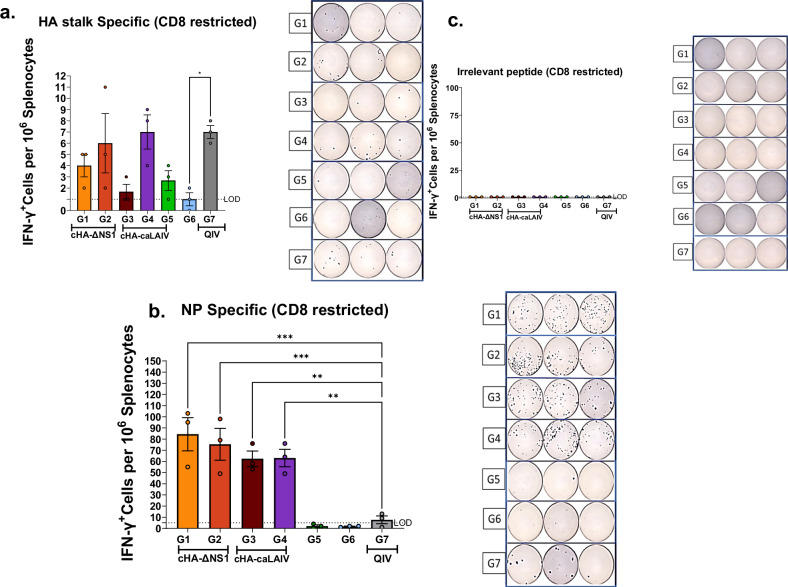
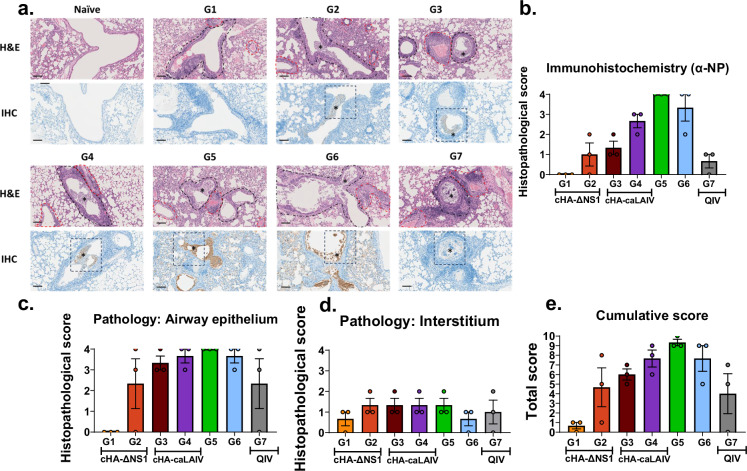
Influenza viruses pose a threat to public health as evidenced by severe morbidity and mortality in humans on a yearly basis. Given the constant changes in the viral glycoproteins owing to antigenic drift, seasonal influenza vaccines need to be updated periodically and effectiveness often drops due to mismatches between vaccine and circulating strains. In addition, seasonal influenza vaccines are not protective against antigenically shifted influenza viruses with pandemic potential. Here, we have developed a highly immunogenic vaccination regimen based on live-attenuated influenza vaccines (LAIVs) comprised of an attenuated virus backbone lacking non-structural protein 1 (ΔNS1), the primary host interferon antagonist of influenza viruses, with chimeric hemagglutinins (cHA) composed of exotic avian head domains with a highly conserved stalk domain, to redirect the humoral response towards the HA stalk. In this study, we showed that cHA-LAIV vaccines induce robust serum and mucosal responses against group 1 stalk and confer antibody-dependent cell cytotoxicity activity. Mice that intranasally received cH8/1-ΔNS1 followed by a cH11/1-ΔNS1 heterologous booster had robust humoral responses for influenza A virus group 1 HAs and were protected from seasonal H1N1 influenza virus and heterologous highly pathogenic avian H5N1 lethal challenges. When compared with mice immunized with the standard of care or cold-adapted cHA-LAIV, cHA-ΔNS1 immunized mice had robust antigen-specific CD8 T-cell responses which also correlated with markedly reduced lung pathology post-challenge. These observations support the development of a trivalent universal influenza vaccine for the protection against group 1 and group 2 influenza A viruses and influenza B viruses.
流感病毒对公众健康构成威胁,每年人类的严重发病和死亡情况就是明证。由于抗原漂移导致病毒糖蛋白不断变化,季节性流感疫苗需要定期更新,且由于疫苗与流行毒株不匹配,其效力常常下降。此外,季节性流感疫苗对具有大流行潜力的抗原性转变流感病毒没有保护作用。在此,我们基于减毒活流感疫苗(LAIV)开发了一种高免疫原性的疫苗接种方案,该疫苗由缺乏非结构蛋白1(ΔNS1)的减毒病毒主干组成,ΔNS1是流感病毒的主要宿主干扰素拮抗剂,同时含有嵌合血凝素(cHA),其由具有高度保守茎区的外来禽源头部结构域组成,以将体液免疫反应重定向至血凝素(HA)茎部。在本研究中,我们表明cHA-LAIV疫苗可诱导针对第1组茎部的强大血清和黏膜反应,并赋予抗体依赖性细胞毒性活性。经鼻内接种cH8/1-ΔNS1随后用cH11/1-ΔNS1进行异源加强免疫的小鼠,对甲型流感病毒第1组HA具有强大的体液免疫反应,并能抵御季节性H1N1流感病毒和异源高致病性禽H5N1致死性攻击。与用标准治疗方法或冷适应cHA-LAIV免疫的小鼠相比,用cHA-ΔNS1免疫的小鼠具有强大的抗原特异性CD8 T细胞反应,这也与攻击后肺部病理明显减轻相关。这些观察结果支持开发一种三价通用流感疫苗,以预防第1组和第2组甲型流感病毒以及乙型流感病毒。