• 文献检索
  • 文档翻译
  • 深度研究
  • 学术资讯
  • Suppr Zotero 插件Zotero 插件
  • 邀请有礼
  • 套餐&价格
  • 历史记录
应用&插件
Suppr Zotero 插件Zotero 插件浏览器插件Mac 客户端Windows 客户端微信小程序
定价
高级版会员购买积分包购买API积分包
服务
文献检索文档翻译深度研究API 文档MCP 服务
关于我们
关于 Suppr公司介绍联系我们用户协议隐私条款
关注我们

Suppr 超能文献

核心技术专利:CN118964589B侵权必究
粤ICP备2023148730 号-1Suppr @ 2026

文献检索

告别复杂PubMed语法,用中文像聊天一样搜索,搜遍4000万医学文献。AI智能推荐,让科研检索更轻松。

立即免费搜索

文件翻译

保留排版,准确专业,支持PDF/Word/PPT等文件格式,支持 12+语言互译。

免费翻译文档

深度研究

AI帮你快速写综述,25分钟生成高质量综述,智能提取关键信息,辅助科研写作。

立即免费体验

在儿童严重发热性疾病期间,中性粒细胞和 T 细胞功能障碍伴随着明显的干扰素特征。

Shared neutrophil and T cell dysfunction is accompanied by a distinct interferon signature during severe febrile illnesses in children.

机构信息

Section of Infectious Diseases, Department of Medicine, St Mary's Hospital Campus, Imperial College London, Praed Street, London, UK.

Department of Women and Children's Health, School of Life Course and Population Sciences, King's College London, St Thomas' Hospital, Westminster Bridge Road, London, UK.

出版信息

Nat Commun. 2024 Sep 19;15(1):8224. doi: 10.1038/s41467-024-52246-0.

DOI:10.1038/s41467-024-52246-0
PMID:39300098
原文链接:https://pmc.ncbi.nlm.nih.gov/articles/PMC11413185/
Abstract

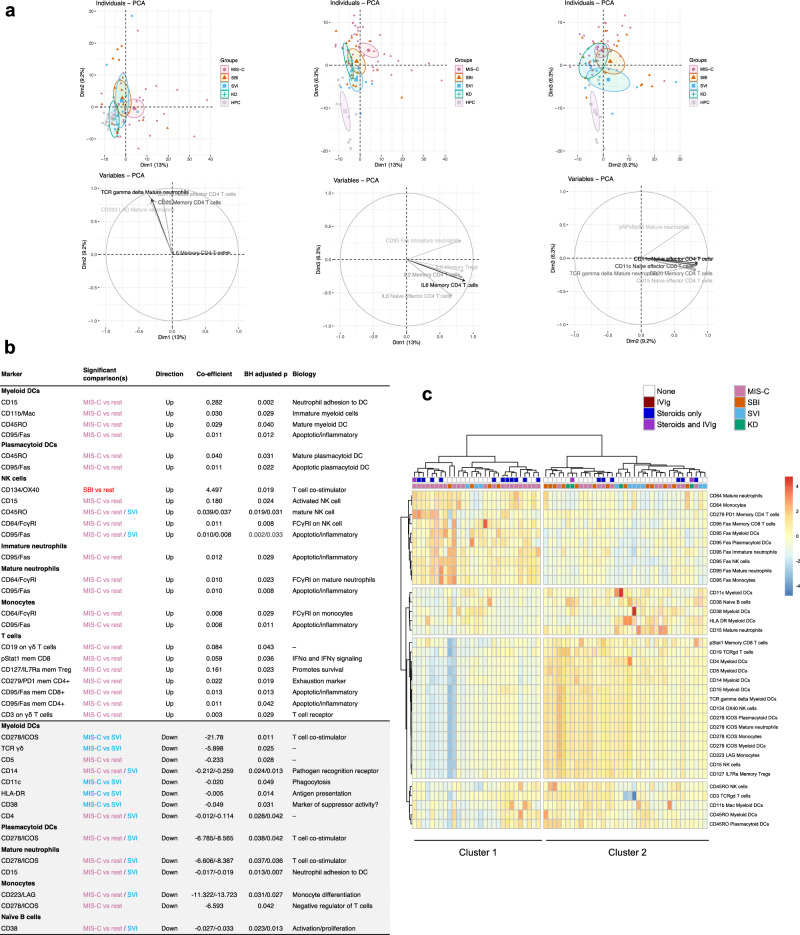
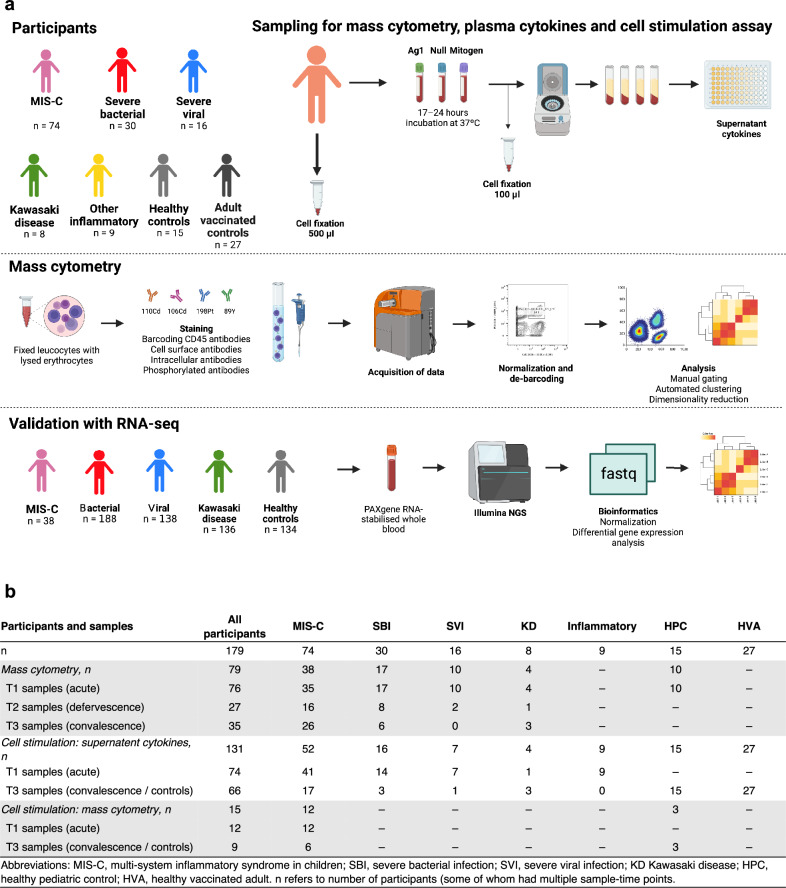
Severe febrile illnesses in children encompass life-threatening organ dysfunction caused by diverse pathogens and other severe inflammatory syndromes. A comparative approach to these illnesses may identify shared and distinct features of host immune dysfunction amenable to immunomodulation. Here, using immunophenotyping with mass cytometry and cell stimulation experiments, we illustrate trajectories of immune dysfunction in 74 children with multi-system inflammatory syndrome in children (MIS-C) associated with SARS-CoV-2, 30 with bacterial infection, 16 with viral infection, 8 with Kawasaki disease, and 42 controls. We explore these findings in a secondary cohort of 500 children with these illnesses and 134 controls. We show that neutrophil activation and apoptosis are prominent in multi-system inflammatory syndrome, and that this is partially shared with bacterial infection. We show that memory T cells from patients with multi-system inflammatory syndrome and bacterial infection are exhausted. In contrast, we show viral infection to be characterized by a distinct signature of decreased interferon signaling and lower interferon receptor gene expression. Improved understanding of immune dysfunction may improve approaches to immunomodulator therapy in severe febrile illnesses in children.

摘要

儿童严重热性疾病包括由多种病原体引起的危及生命的器官功能障碍和其他严重炎症综合征。对这些疾病进行比较性研究,可能有助于发现宿主免疫功能障碍的共同和独特特征,并对其进行免疫调节。在这里,我们使用质谱流式细胞术免疫表型分析和细胞刺激实验,对 74 名与 SARS-CoV-2 相关的儿童多系统炎症综合征(MIS-C)患儿、30 名细菌感染患儿、16 名病毒感染患儿、8 名川崎病患儿和 42 名对照患儿的免疫功能障碍轨迹进行了研究。我们在一个由 500 名患有这些疾病和 134 名对照患儿组成的二级队列中对这些发现进行了探索。我们发现中性粒细胞的活化和凋亡在多系统炎症综合征中很突出,部分与细菌感染有关。我们发现,来自多系统炎症综合征和细菌感染患者的记忆 T 细胞衰竭。相比之下,我们发现病毒感染的特征是干扰素信号降低和干扰素受体基因表达降低。更好地了解免疫功能障碍可能有助于改善儿童严重热性疾病的免疫调节剂治疗方法。
https://cdn.ncbi.nlm.nih.gov/pmc/blobs/243c/11413185/278dc53d96fe/41467_2024_52246_Fig5_HTML.jpg
https://cdn.ncbi.nlm.nih.gov/pmc/blobs/243c/11413185/fdf3772a8982/41467_2024_52246_Fig1_HTML.jpg
https://cdn.ncbi.nlm.nih.gov/pmc/blobs/243c/11413185/d2be9cc85a3d/41467_2024_52246_Fig2_HTML.jpg
https://cdn.ncbi.nlm.nih.gov/pmc/blobs/243c/11413185/05283e98f902/41467_2024_52246_Fig3_HTML.jpg
https://cdn.ncbi.nlm.nih.gov/pmc/blobs/243c/11413185/4aa16e863b54/41467_2024_52246_Fig4_HTML.jpg
https://cdn.ncbi.nlm.nih.gov/pmc/blobs/243c/11413185/278dc53d96fe/41467_2024_52246_Fig5_HTML.jpg
https://cdn.ncbi.nlm.nih.gov/pmc/blobs/243c/11413185/fdf3772a8982/41467_2024_52246_Fig1_HTML.jpg
https://cdn.ncbi.nlm.nih.gov/pmc/blobs/243c/11413185/d2be9cc85a3d/41467_2024_52246_Fig2_HTML.jpg
https://cdn.ncbi.nlm.nih.gov/pmc/blobs/243c/11413185/05283e98f902/41467_2024_52246_Fig3_HTML.jpg
https://cdn.ncbi.nlm.nih.gov/pmc/blobs/243c/11413185/4aa16e863b54/41467_2024_52246_Fig4_HTML.jpg
https://cdn.ncbi.nlm.nih.gov/pmc/blobs/243c/11413185/278dc53d96fe/41467_2024_52246_Fig5_HTML.jpg

相似文献

1
Shared neutrophil and T cell dysfunction is accompanied by a distinct interferon signature during severe febrile illnesses in children.在儿童严重发热性疾病期间,中性粒细胞和 T 细胞功能障碍伴随着明显的干扰素特征。
Nat Commun. 2024 Sep 19;15(1):8224. doi: 10.1038/s41467-024-52246-0.
2
Phenotype, Susceptibility, Autoimmunity, and Immunotherapy Between Kawasaki Disease and Coronavirus Disease-19 Associated Multisystem Inflammatory Syndrome in Children.川崎病与儿童新型冠状病毒病相关的多系统炎症综合征之间的表型、易感性、自身免疫和免疫治疗。
Front Immunol. 2021 Feb 26;12:632890. doi: 10.3389/fimmu.2021.632890. eCollection 2021.
3
Upregulation of type 1 conventional dendritic cells implicates antigen cross-presentation in multisystem inflammatory syndrome.1 型传统树突状细胞的上调提示抗原交叉呈递在多系统炎症综合征中的作用。
J Allergy Clin Immunol. 2022 Mar;149(3):912-922. doi: 10.1016/j.jaci.2021.10.015. Epub 2021 Oct 22.
4
Immune response to intravenous immunoglobulin in patients with Kawasaki disease and MIS-C.川崎病和 MIS-C 患者静脉注射免疫球蛋白的免疫反应。
J Clin Invest. 2021 Oct 15;131(20). doi: 10.1172/JCI147076.
5
Characterization of SARS-CoV-2 and common cold coronavirus-specific T-cell responses in MIS-C and Kawasaki disease children.川崎病和 MIS-C 患儿中 SARS-CoV-2 和普通感冒冠状病毒特异性 T 细胞反应的特征。
Eur J Immunol. 2022 Jan;52(1):123-137. doi: 10.1002/eji.202149556. Epub 2021 Oct 27.
6
Quantitative SARS-CoV-2 Serology in Children With Multisystem Inflammatory Syndrome (MIS-C).儿童多系统炎症综合征(MIS-C)中 SARS-CoV-2 血清学的定量分析。
Pediatrics. 2020 Dec;146(6). doi: 10.1542/peds.2020-018242. Epub 2020 Sep 2.
7
Similarities and differences between the immunopathogenesis of COVID-19-related pediatric multisystem inflammatory syndrome and Kawasaki disease.COVID-19 相关儿童多系统炎症综合征与川崎病的免疫发病机制异同。
J Clin Invest. 2021 Mar 15;131(6). doi: 10.1172/JCI144554.
8
Current Understanding of Multisystem Inflammatory Syndrome (MIS-C) Following COVID-19 and Its Distinction from Kawasaki Disease.当前对 COVID-19 后多系统炎症综合征(MIS-C)的认识及其与川崎病的区别。
Curr Rheumatol Rep. 2021 Jul 3;23(8):58. doi: 10.1007/s11926-021-01028-4.
9
Peripheral immunophenotypes in children with multisystem inflammatory syndrome associated with SARS-CoV-2 infection.与 SARS-CoV-2 感染相关的儿童多系统炎症综合征的外周免疫表型。
Nat Med. 2020 Nov;26(11):1701-1707. doi: 10.1038/s41591-020-1054-6. Epub 2020 Aug 18.
10
The autoimmune signature of hyperinflammatory multisystem inflammatory syndrome in children.儿童超高炎症性多系统炎症综合征的自身免疫特征。
J Clin Invest. 2021 Oct 15;131(20). doi: 10.1172/JCI151520.

引用本文的文献

1
Neutrophil heterogeneity in Kawasaki disease and multisystem inflammatory syndrome in children.川崎病和儿童多系统炎症综合征中的中性粒细胞异质性
Pediatr Res. 2025 Jun 19. doi: 10.1038/s41390-025-04200-z.

本文引用的文献

1
International Consensus Criteria for Pediatric Sepsis and Septic Shock.国际儿童脓毒症和脓毒性休克共识标准。
JAMA. 2024 Feb 27;331(8):665-674. doi: 10.1001/jama.2024.0179.
2
Diagnosis of Multisystem Inflammatory Syndrome in Children by a Whole-Blood Transcriptional Signature.通过全血转录谱诊断儿童多系统炎症综合征。
J Pediatric Infect Dis Soc. 2023 Jun 30;12(6):322-331. doi: 10.1093/jpids/piad035.
3
Immunoglobulin, glucocorticoid, or combination therapy for multisystem inflammatory syndrome in children: a propensity-weighted cohort study.
免疫球蛋白、糖皮质激素或联合治疗儿童多系统炎症综合征:一项倾向加权队列研究。
Lancet Rheumatol. 2023 Apr;5(4):e184-e199. doi: 10.1016/S2665-9913(23)00029-2. Epub 2023 Feb 14.
4
Methylprednisolone versus intravenous immunoglobulins in children with paediatric inflammatory multisystem syndrome temporally associated with SARS-CoV-2 (PIMS-TS): an open-label, multicentre, randomised trial.甲泼尼龙与静脉注射用免疫球蛋白治疗与 SARS-CoV-2 相关的儿童多系统炎症综合征(PIMS-TS):一项开放标签、多中心、随机试验。
Lancet Child Adolesc Health. 2023 Apr;7(4):238-248. doi: 10.1016/S2352-4642(23)00020-2. Epub 2023 Feb 3.
5
Neutrophil profiles of pediatric COVID-19 and multisystem inflammatory syndrome in children.儿童 COVID-19 和儿童多系统炎症综合征的中性粒细胞谱。
Cell Rep Med. 2022 Dec 20;3(12):100848. doi: 10.1016/j.xcrm.2022.100848. Epub 2022 Nov 21.
6
Redefining critical illness.重新定义危重症。
Nat Med. 2022 Jun;28(6):1141-1148. doi: 10.1038/s41591-022-01843-x. Epub 2022 Jun 17.
7
Inflammation induces pro-NETotic neutrophils via TNFR2 signaling.炎症通过 TNFR2 信号诱导前 NET 形成中性粒细胞。
Cell Rep. 2022 Apr 19;39(3):110710. doi: 10.1016/j.celrep.2022.110710.
8
Immunopathological signatures in multisystem inflammatory syndrome in children and pediatric COVID-19.儿童多系统炎症综合征和儿童 COVID-19 的免疫病理特征。
Nat Med. 2022 May;28(5):1050-1062. doi: 10.1038/s41591-022-01724-3. Epub 2022 Feb 17.
9
The immunology of sepsis.脓毒症的免疫学。
Immunity. 2021 Nov 9;54(11):2450-2464. doi: 10.1016/j.immuni.2021.10.012.
10
A Novel Framework for Phenotyping Children With Suspected or Confirmed Infection for Future Biomarker Studies.一种用于对疑似或确诊感染儿童进行表型分析以开展未来生物标志物研究的新型框架。
Front Pediatr. 2021 Jul 28;9:688272. doi: 10.3389/fped.2021.688272. eCollection 2021.