Department of Orthopaedic Surgery, Graduate School of Medical Sciences, Kyushu University, Fukuoka, Japan; Department of Anatomic Pathology, Graduate School of Medical Sciences, Kyushu University, Fukuoka, Japan.
Department of Orthopaedic Surgery, Graduate School of Medical Sciences, Kyushu University, Fukuoka, Japan.
ESMO Open. 2024 Oct;9(10):103726. doi: 10.1016/j.esmoop.2024.103726. Epub 2024 Sep 20.
Limited epidemiological research has focused on translocations in soft tissue sarcomas, with no studies on bone sarcomas. This study aimed to clarify the epidemiology, prognosis, and genetic information of translocation-related sarcoma (TRS) and non-TRS patients.
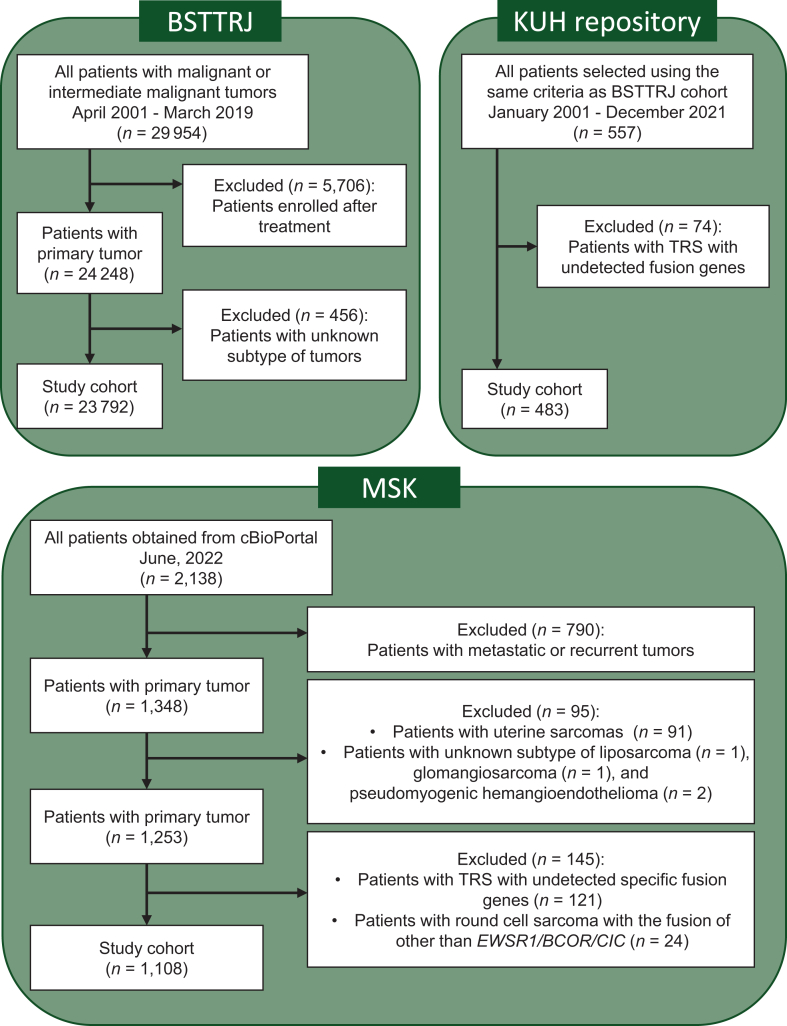
This retrospective cohort study used data from the Bone and Soft Tissue Tumor Registry in Japan (BSTTRJ) (2001-2019), the Kyushu University Hospital (KUH) repository (2001-2021), and a publicly available online dataset (MSK). The patients were categorized into TRS and non-TRS groups, and epidemiological, prognostic, and mutational diversity were compared.
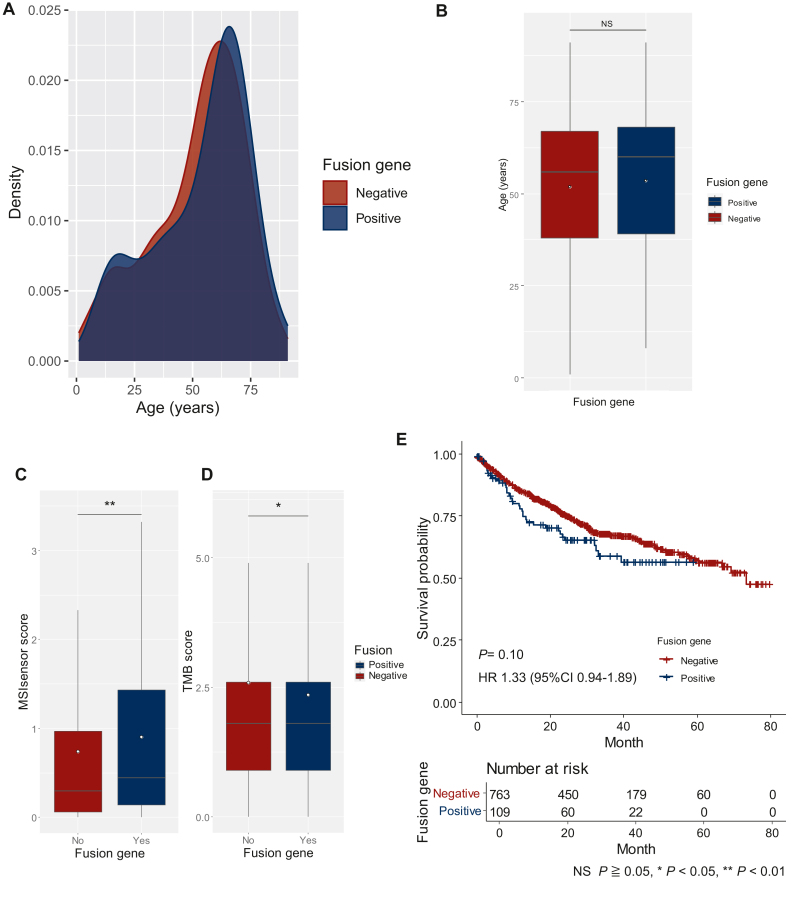
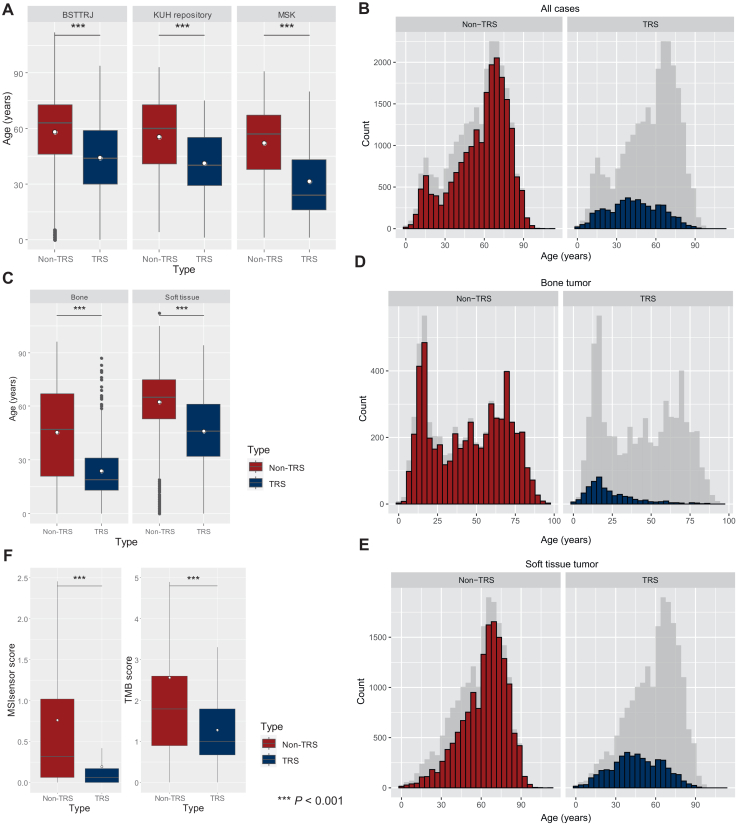
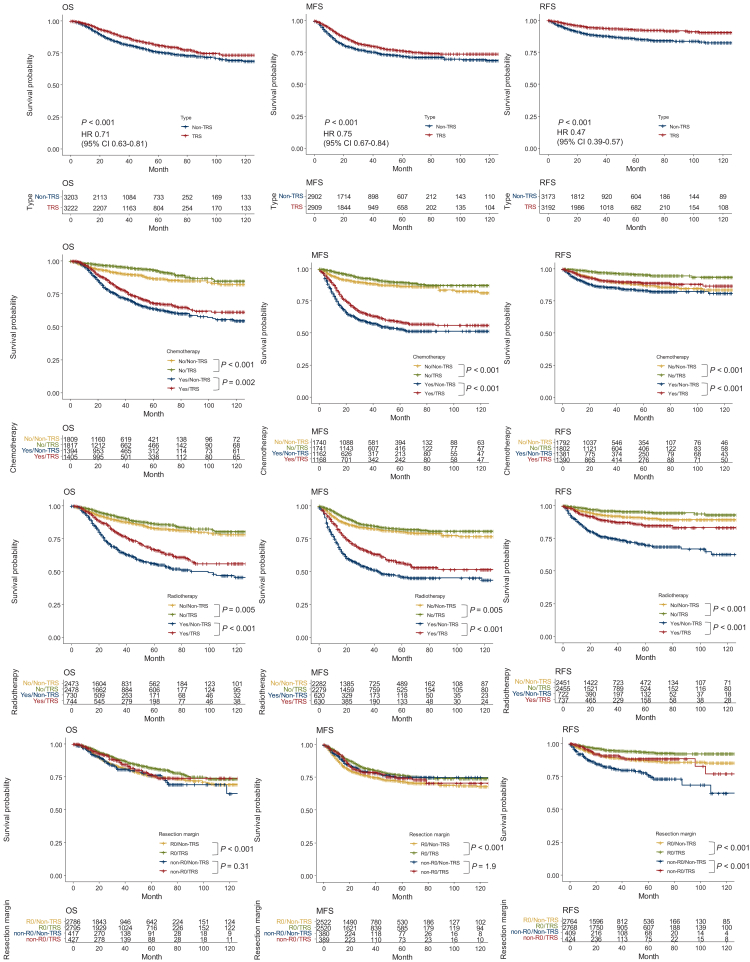
This study included 25 383 participants, of whom 4864 (19.2%) were TRS and 20 519 (80.8%) were non-TRS patients. TRS patients had significantly younger onset ages (median: 43 years, interquartile range: 29-59 years) than non-TRS patients (median: 63 years, interquartile range: 46-73 years). In the MSK cohort, microsatellite instability and tumor mutation burden scores in non-TRS were higher than in TRS, although they were rather low compared with the pan-cancer analysis. In the BSTTRJ cohort, survival analyses with the propensity score matching revealed that patients with TRS had better overall [hazard ratio (HR): 0.71, 95% confidence interval (CI) 0.63-0.81], metastasis-free (HR: 0.75, 95% CI 0.67-0.84), and recurrence-free (HR: 0.47, 95% CI 0.39-0.57) survival.
This study highlights differences in the epidemiology and genetic rearrangements of sarcoma.
有限的流行病学研究集中在软组织肉瘤的易位上,而骨肉瘤则没有研究。本研究旨在阐明易位相关肉瘤(TRS)和非 TRS 患者的流行病学、预后和遗传信息。
本回顾性队列研究使用了日本骨与软组织肿瘤登记处(BSTTRJ)(2001-2019 年)、九州大学医院(KUH)存储库(2001-2021 年)和公开可用的在线数据集(MSK)的数据。患者分为 TRS 和非 TRS 组,比较了流行病学、预后和突变多样性。
本研究纳入了 25383 名参与者,其中 4864 名(19.2%)为 TRS,20519 名(80.8%)为非 TRS 患者。TRS 患者的发病年龄明显较年轻(中位数:43 岁,四分位距:29-59 岁),而非 TRS 患者的发病年龄较大(中位数:63 岁,四分位距:46-73 岁)。在 MSK 队列中,非 TRS 的微卫星不稳定性和肿瘤突变负荷评分高于 TRS,尽管与泛癌分析相比,这些评分仍然较低。在 BSTTRJ 队列中,通过倾向评分匹配的生存分析显示,TRS 患者的总体生存(风险比[HR]:0.71,95%置信区间[CI]:0.63-0.81)、无转移生存(HR:0.75,95% CI:0.67-0.84)和无复发生存(HR:0.47,95% CI:0.39-0.57)更好。
本研究强调了肉瘤的流行病学和遗传重排的差异。