Li Fan, Xu Jun, Xie Min, Fei Dan, Zhou Yaomin, Li Xiong, Guang Yelan, Gong Lihui, Hu Lizhen, Feng Fan
Institute of Animal Husbandry and Veterinary Science, Jiangxi Academy of Agricultural Sciences, Nanchang, China.
Jiangxi Province Key Laboratory of Animal Green and Healthy Breeding, Nanchang, China.
Front Physiol. 2024 Sep 6;15:1460414. doi: 10.3389/fphys.2024.1460414. eCollection 2024.
Long-term heat stress (HS) severely restricts the growth performance of beef cattle and causes various health problems. The gut microbiota plays a crucial role in HS-associated inflammation and immune stress involving lymphocyte function. This study investigated the effects of dietary tea polysaccharide (TPS), a natural acidic glycoprotein, on HS-induced anorexia, inflammation, and gut microbiota dysbiosis in Simmental beef cattle.
The cattle were divided into two groups, receiving either normal chow or normal chow plus TPS (8 g/kg, 0.8%). Transcriptome sequencing analysis was used to analysis the differential signaling pathway of liver tissue. 16S rDNA sequencing was performed to analysis gut microbiota of beef cattle. Serum metabolite components were detected by untargeted metabolomics analysis.
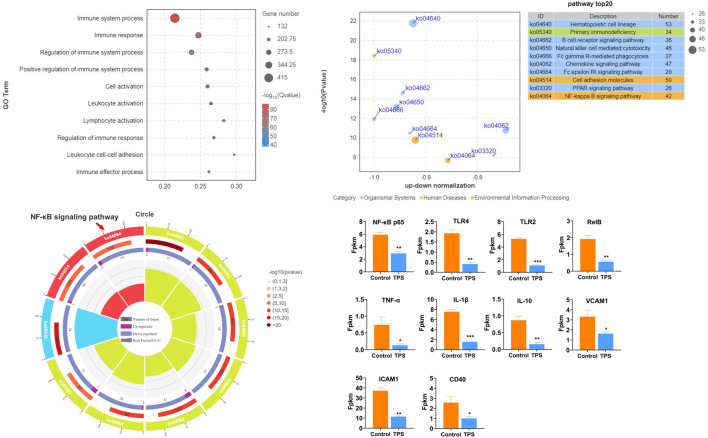
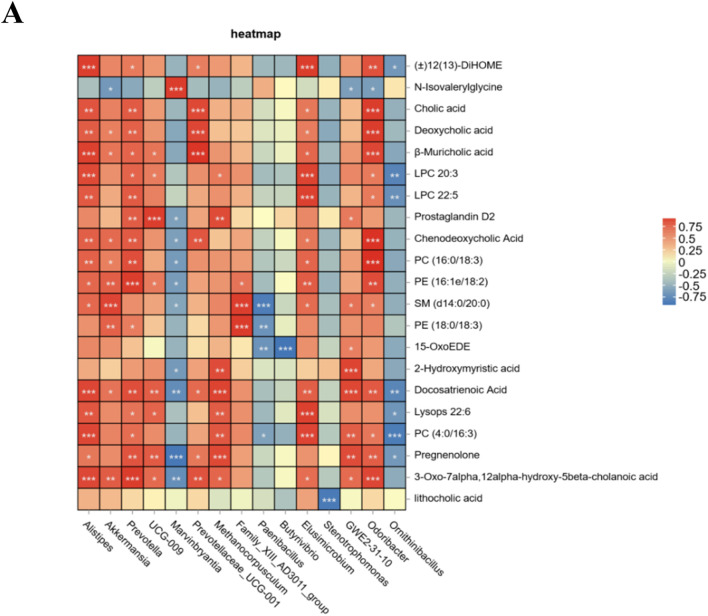
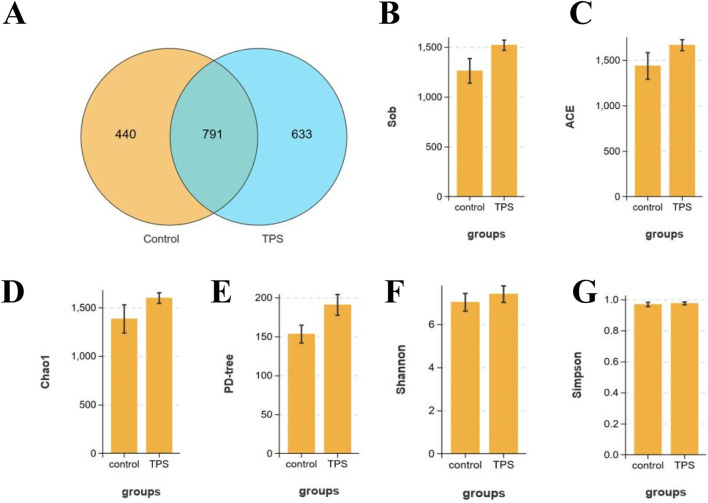
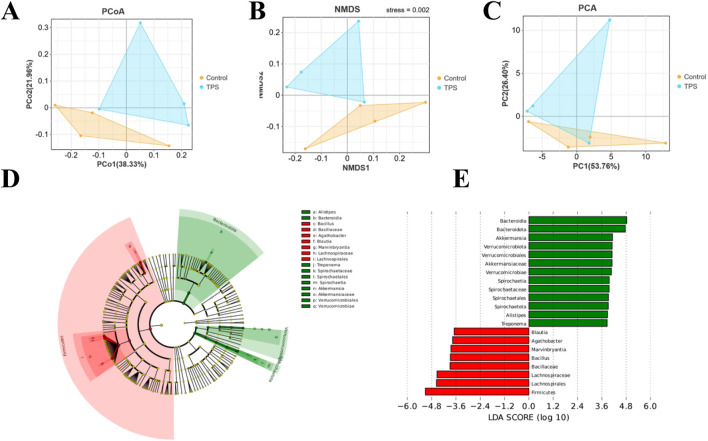
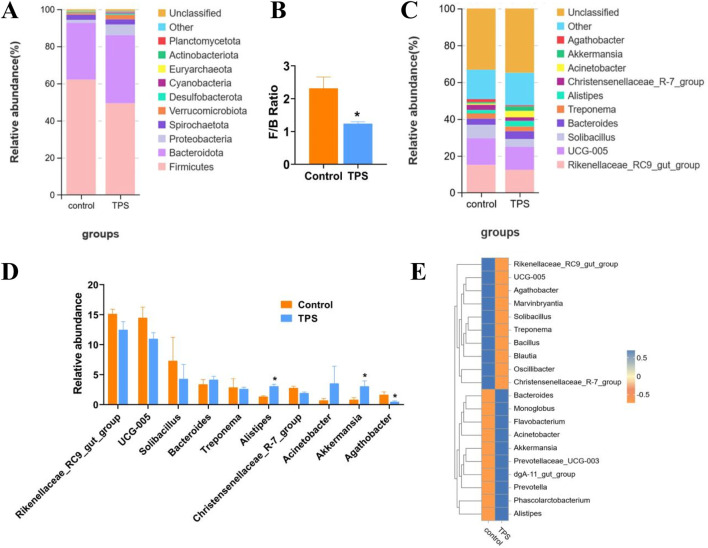
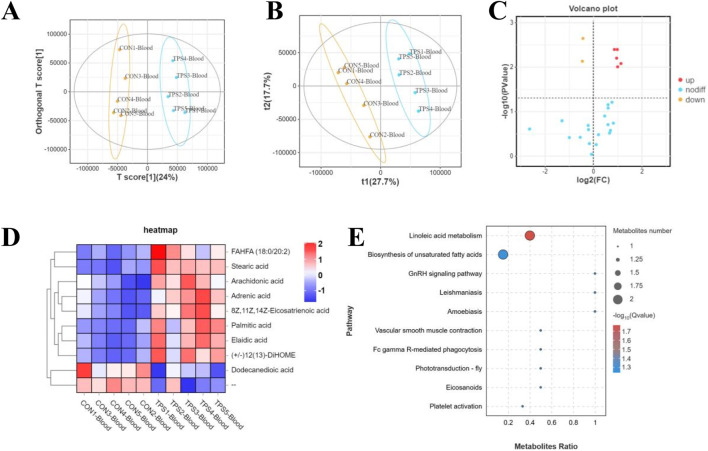
Hepatic transcriptomics analysis revealed that differentially expressed genes in TPS-fed cattle were primarily enriched in immune processes and lymphocyte activation. TPS administration significantly reduced the expression of the TLR4/NF-κB inflammatory signaling pathway, alleviating HS-induced hepatic inflammation. Gut microbiota analysis revealed that TPS improved intestinal homeostasis in HS-affected cattle by increasing bacterial diversity and increasing the relative abundances of and while decreasing the -to- ratio and the abundance of . Liquid chromatography-tandem mass spectrometry (LC‒MS/MS) analysis indicated that TPS significantly increased the levels of long-chain fatty acids, including stearic acid, linolenic acid, arachidonic acid, and adrenic acid, in the serum of cattle.
These findings suggest that long-term consumption of tea polysaccharides can ameliorate heat stress-induced hepatic inflammation and gut microbiota dysbiosis in beef cattle, suggesting a possible liver-gut axis mechanism to mitigate heat stress.
长期热应激(HS)严重限制肉牛的生长性能,并引发各种健康问题。肠道微生物群在与热应激相关的炎症和涉及淋巴细胞功能的免疫应激中起关键作用。本研究调查了天然酸性糖蛋白——膳食茶多糖(TPS)对西门塔尔肉牛热应激诱导的厌食、炎症和肠道微生物群失调的影响。
将牛分为两组,分别给予普通饲料或普通饲料加TPS(8 g/kg,0.8%)。采用转录组测序分析来分析肝脏组织的差异信号通路。进行16S rDNA测序以分析肉牛的肠道微生物群。通过非靶向代谢组学分析检测血清代谢物成分。
肝脏转录组学分析表明,喂食TPS的牛中差异表达基因主要富集于免疫过程和淋巴细胞激活。给予TPS显著降低了TLR4/NF-κB炎症信号通路的表达,减轻了热应激诱导的肝脏炎症。肠道微生物群分析表明,TPS通过增加细菌多样性、增加 和 的相对丰度,同时降低 与 的比率以及 的丰度,改善了受热应激影响的牛的肠道稳态。液相色谱-串联质谱(LC‒MS/MS)分析表明,TPS显著提高了牛血清中长链脂肪酸的水平,包括硬脂酸、亚麻酸、花生四烯酸和肾上腺酸。
这些发现表明,长期食用茶多糖可以改善肉牛热应激诱导的肝脏炎症和肠道微生物群失调,提示一种可能的肝-肠轴机制来减轻热应激。