Nocella Elisa, Fassio Giulia, Zuccon Dario, Puillandre Nicolas, Modica Maria Vittoria, Oliverio Marco
Department of Biology and Biotechnologies "Charles Darwin", Sapienza University of Rome, Rome, Italy.
Department of Biology and Evolution of Marine Organisms, Stazione Zoologica Anton Dohrn, Naples, Italy.
Coral Reefs. 2024;43(5):1285-1302. doi: 10.1007/s00338-024-02537-1. Epub 2024 Aug 12.
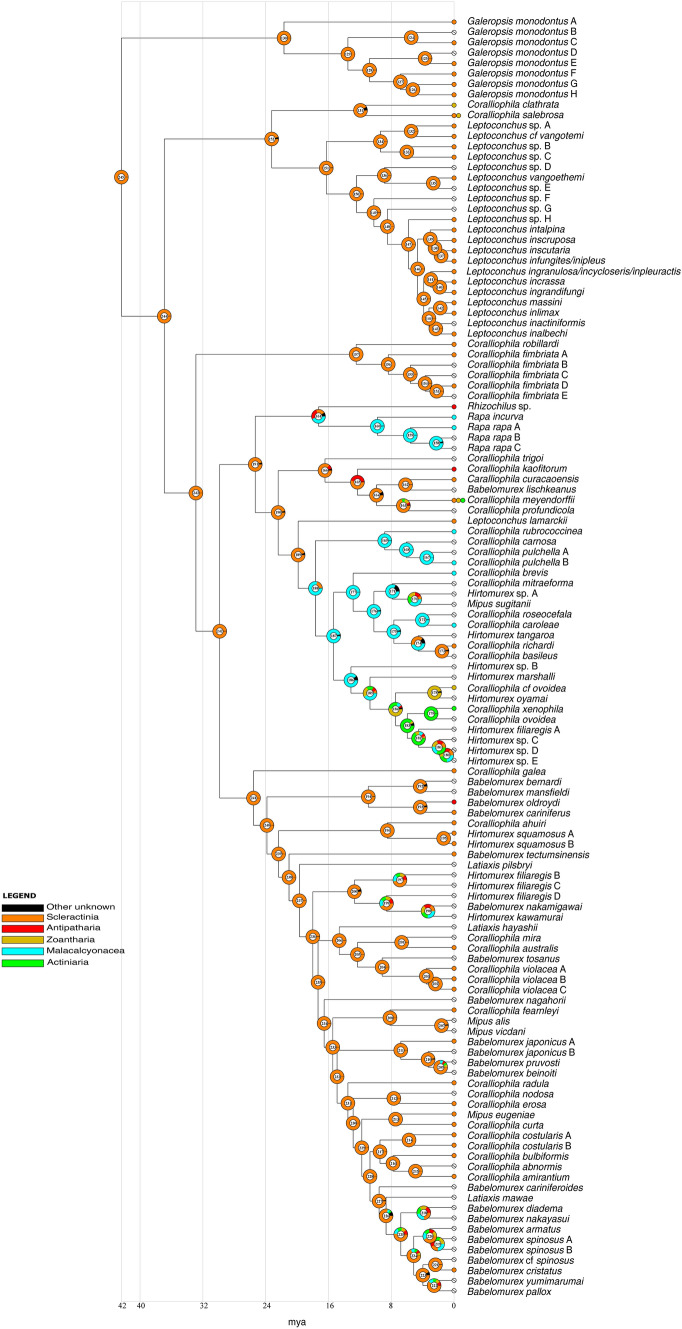
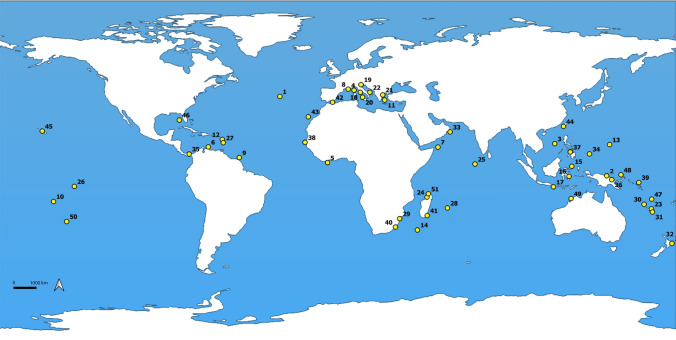
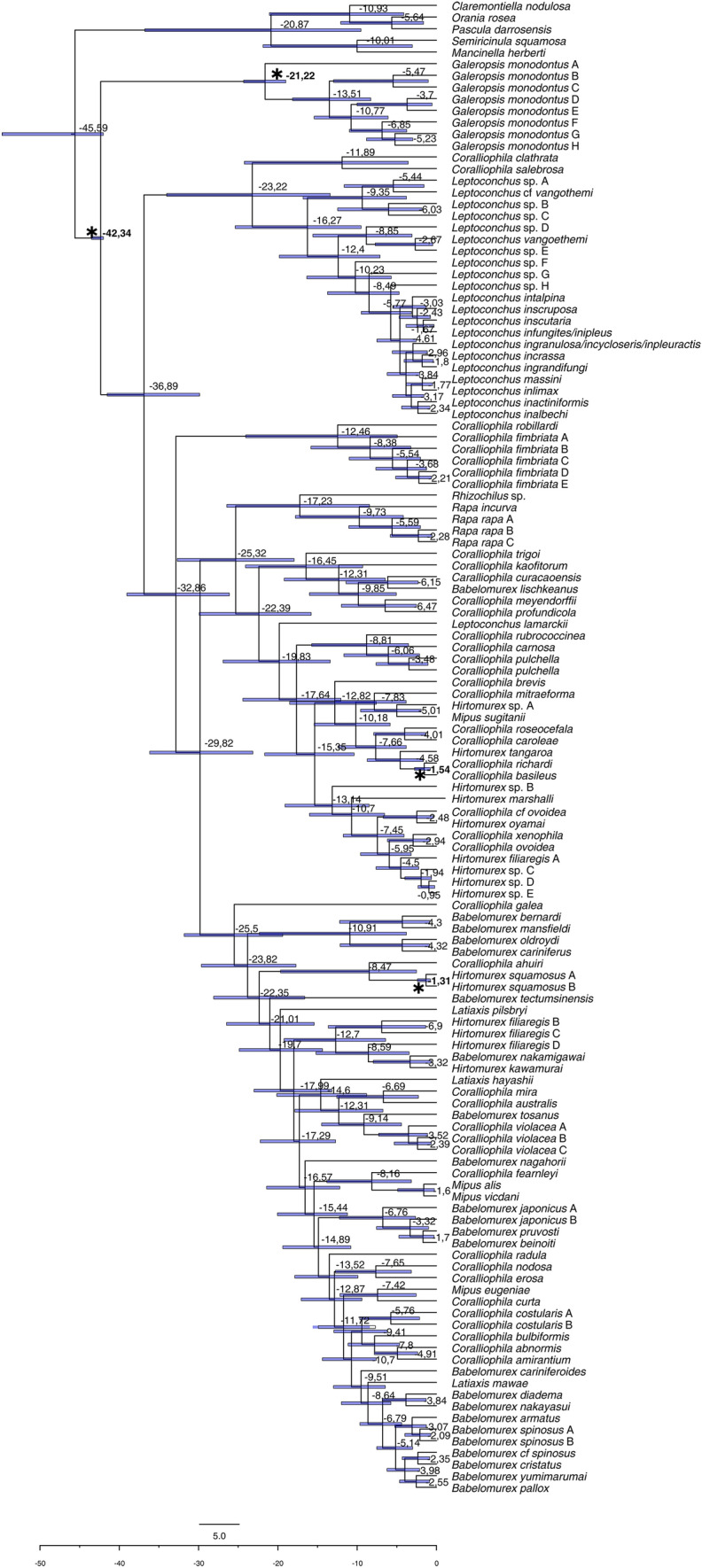
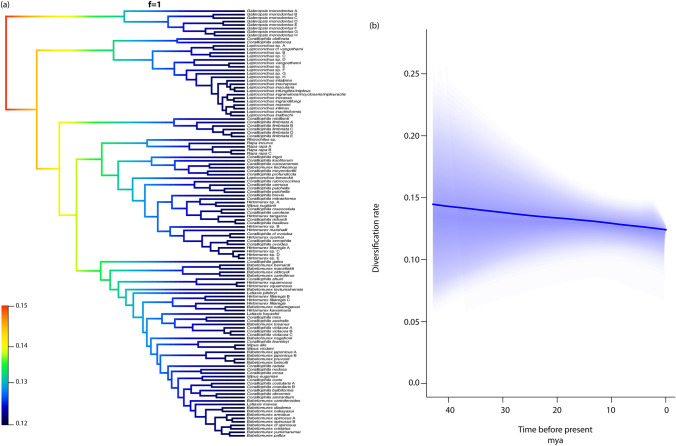
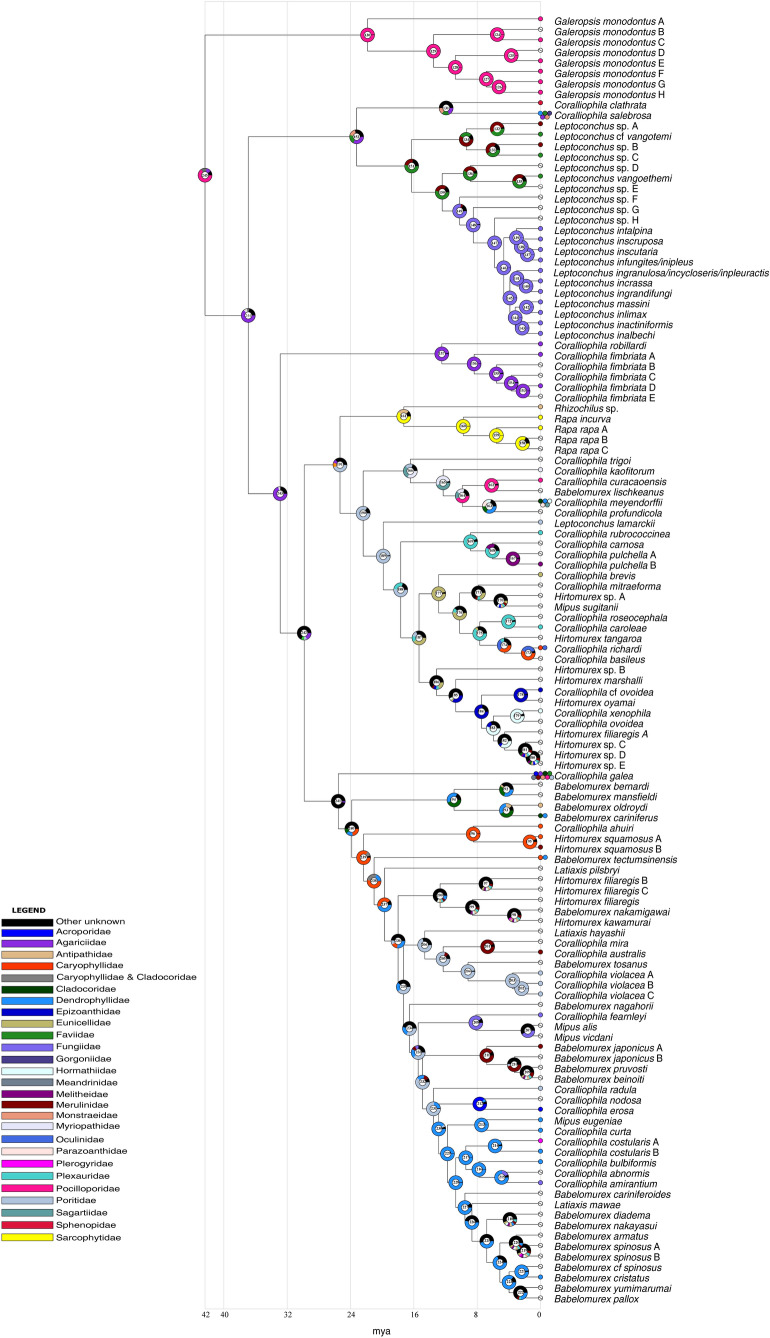
In this study, we delved into the interaction between corallivorous marine gastropods, the muricid Coralliophilinae Chenu, 1859, and their cnidarian food targets. Coralliophilinae is a subfamily of specialised corallivorous caenogastropods that feed by browsing on octocorals or hexacorals. Only sparse information is available on the phylogenetic relationships and the degree of specificity of the trophic relationships within this corallivorous lineage. To address these gaps, we generated the largest molecular dataset to date, comprising two mitochondrial ( and rDNA) and one nuclear gene ( rDNA) from 586 specimens collected worldwide. The coral hosts of coralliophilines were identified through an integrative approach, combining literature data with new records, employing morphological and/or molecular markers, and incorporating data from DNA barcoding of the snail stomach content. Our comprehensive approach unveiled the existence of numerous cryptic species in Coralliophilinae, while the phylogeny showed that most of the currently accepted genera are not monophyletic. The molecular dating confirmed the origin of the Coralliophilinae in Middle Eocene, with diversification of most lineages during the Miocene. Our results indicate that the subfamily's ancestor evolved in shallow waters in association with Scleractinia. Through the evolutionary history of Coralliophilinae, multiple host shifts to other cnidarian orders were observed, not correlated with changes in the depth range. The results of diversification analyses within the subfamily further suggest that the association with the host has influenced the evolutionary patterns of Coralliophilinae, but not vice versa.
The online version contains supplementary material available at 10.1007/s00338-024-02537-1.
在本研究中,我们深入探究了食珊瑚海洋腹足类动物,即1859年的Muricidae科珊瑚螺亚科(Coralliophilinae Chenu)与其刺胞动物食物目标之间的相互作用。珊瑚螺亚科是一类特化的食珊瑚新腹足类动物,通过啃食八放珊瑚或六放珊瑚来获取食物。关于这个食珊瑚谱系内的系统发育关系和营养关系的特异性程度,目前仅有稀少的信息。为了填补这些空白,我们生成了迄今为止最大的分子数据集,该数据集包含来自全球收集的586个标本的两个线粒体基因(和核糖体DNA)和一个核基因(核糖体DNA)。通过综合方法确定了珊瑚螺的珊瑚宿主,该方法将文献数据与新记录相结合,采用形态学和/或分子标记,并纳入蜗牛胃内容物的DNA条形码数据。我们的综合方法揭示了珊瑚螺亚科中存在众多隐存物种,而系统发育显示,目前大多数被认可的属并非单系的。分子定年证实了珊瑚螺亚科起源于始新世中期,大多数谱系在中新世期间发生了分化。我们的结果表明,该亚科的祖先在浅水区与石珊瑚目动物共同进化。在珊瑚螺亚科的进化历史中,观察到多次宿主转移到其他刺胞动物目,这与深度范围的变化无关。该亚科内的分化分析结果进一步表明,与宿主的关联影响了珊瑚螺亚科的进化模式,但反之则不然。
在线版本包含可在10.1007/s00338 - 024 - 02537 - 1获取的补充材料。