Tu Yanye, Gao Hui, Zhao Rongqing, Yan Jiliang, Wu Diyu
Clinical Laboratory of Ningbo Medical Centre Lihuili Hospital, Ningbo University, Ningbo, Zhejiang Province, People's Republic of China.
School of Laboratory Medicine and Life Science, Wenzhou Medical University, Wenzhou, People's Republic of China.
Infect Drug Resist. 2024 Sep 16;17:4011-4022. doi: 10.2147/IDR.S478156. eCollection 2024.
This study aims to investigate the association between antimicrobial resistance genes and virulence factors in ST11 and non-ST11 types of CR-KP in bloodstream infections in the intensive care unit, providing a theoretical basis for infection control and clinical diagnosis and treatment.
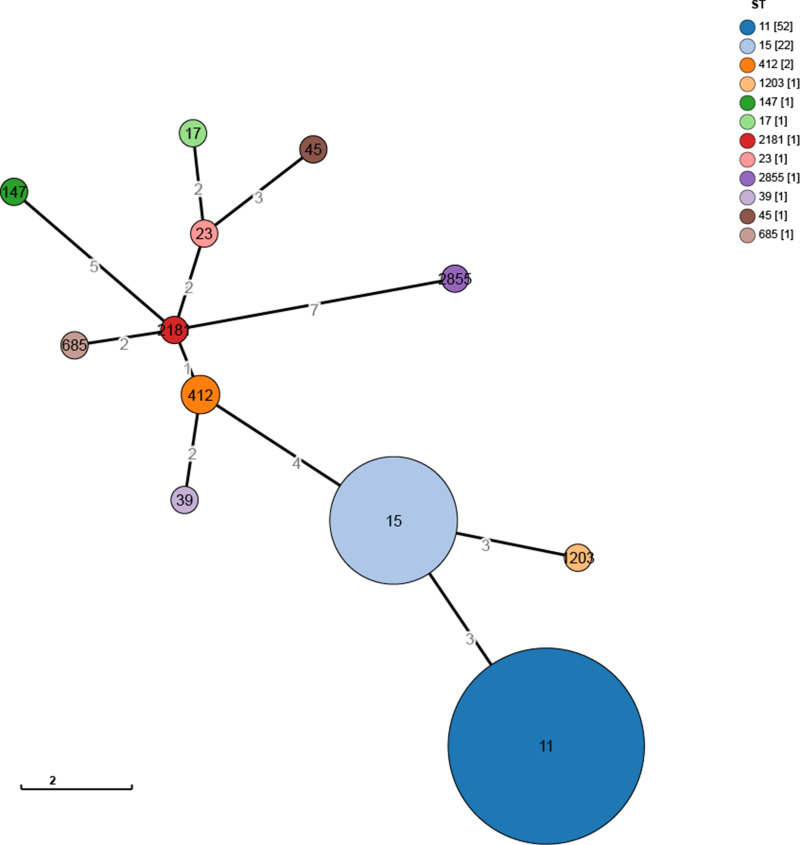
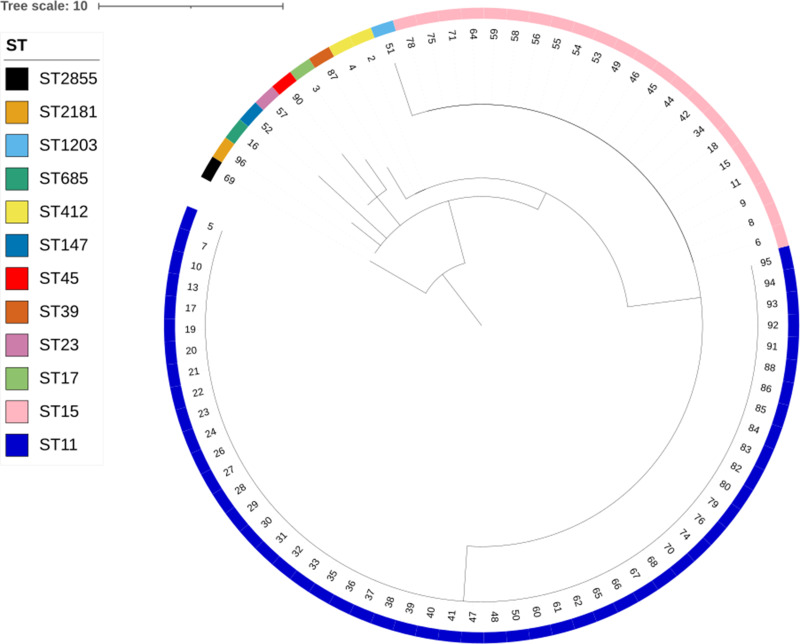
From January 2021 to June 2023, samples of from bloodstream infections were collected at our hospital, focusing on those resistant to carbapenems. The resistance genes, housekeeping genes, and virulence genes were identified through PCR and analyzed using the GrapeTree software to perform MLST-based minimum spanning tree typing.
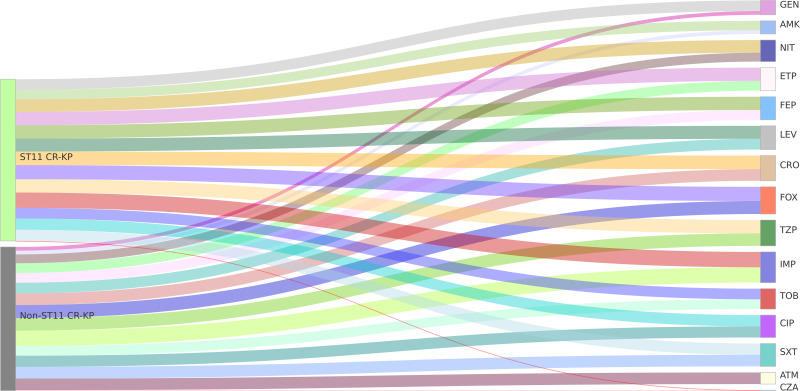
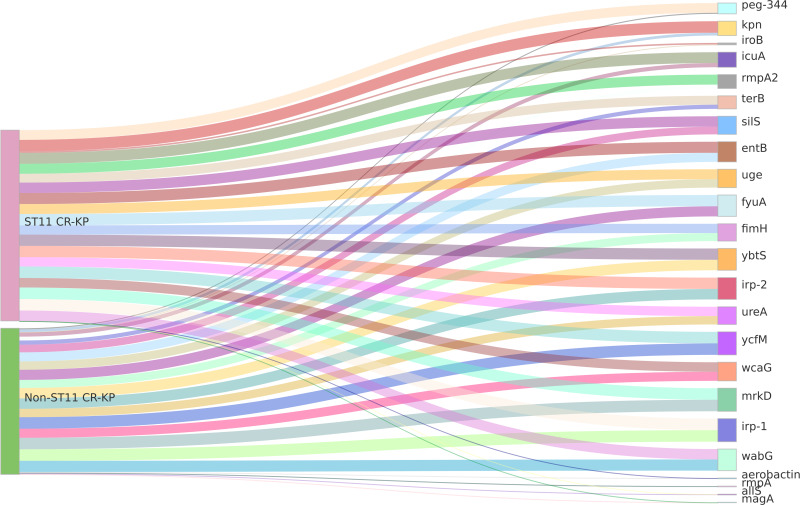
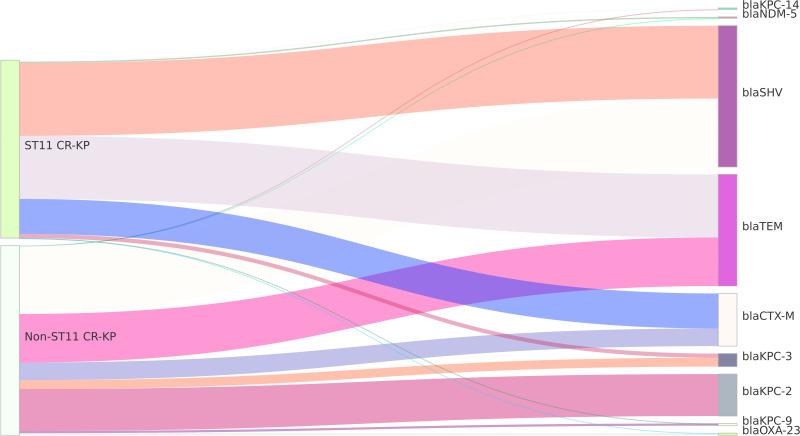
Among the 85 CR-KP cases, 61.18% were of the ST11 type, predominantly of the KL64 capsular type; non-ST11 types were mainly ST15, accounting for 25.88%, predominantly of the KL5 capsular type. The carriage rates of virulence genes such as , and were significantly higher in the ST11 group than in the non-ST11 group. The primary carbapenemase identified was class A enzyme , with a higher carriage rate in the ST11 group. Drug susceptibility tests showed that the resistance rates for cefepime, ertapenem, nitrofurantoin, amikacin, and gentamicin were also higher in the ST11 group, consistent with the resistance genotype findings.
The study reveals that ST11 type CR-KP in intensive care unit bloodstream infections exhibits stronger resistance and higher virulence compared to non-ST11 types, posing significant challenges to clinical treatment. Thus, strict control over the use of carbapenem antibiotics is essential to prevent the spread of resistant plasmids.
本研究旨在调查重症监护病房血流感染中ST11型和非ST11型碳青霉烯类耐药肺炎克雷伯菌(CR-KP)的抗菌药物耐药基因与毒力因子之间的关联,为感染控制及临床诊断和治疗提供理论依据。
2021年1月至2023年6月,在我院收集血流感染样本,重点关注对碳青霉烯类耐药的样本。通过聚合酶链反应(PCR)鉴定耐药基因、管家基因和毒力基因,并使用葡萄树软件进行分析,以进行基于多位点序列分型(MLST)的最小生成树分型。
在85例CR-KP病例中,61.18%为ST11型,主要为KL64荚膜型;非ST11型主要为ST15型,占25.88%,主要为KL5荚膜型。ST11组中、等毒力基因的携带率显著高于非ST11组。鉴定出的主要碳青霉烯酶为A类酶,ST11组的携带率更高。药敏试验显示,ST11组中头孢吡肟、厄他培南、呋喃妥因、阿米卡星和庆大霉素的耐药率也更高,与耐药基因型结果一致。
该研究表明,重症监护病房血流感染中的ST11型CR-KP与非ST11型相比,表现出更强的耐药性和更高的毒力,给临床治疗带来重大挑战。因此,严格控制碳青霉烯类抗生素的使用对于防止耐药质粒的传播至关重要。