Chan Chris Chun-Yiu, Guo Qian, Chan Jasper Fuk-Woo, Tang Kaiming, Cai Jian-Piao, Chik Kenn Ka-Heng, Huang Yixin, Dai Mei, Qin Bo, Ong Chon Phin, Chu Allen Wing-Ho, Chan Wan-Mui, Ip Jonathan Daniel, Wen Lei, Tsang Jessica Oi-Ling, Wang Tong-Yun, Xie Yubin, Qin Zhenzhi, Cao Jianli, Ye Zi-Wei, Chu Hin, To Kelvin Kai-Wang, Ge Xing-Yi, Ni Tao, Jin Dong-Yan, Cui Sheng, Yuen Kwok-Yung, Yuan Shuofeng
State Key Laboratory of Emerging Infectious Diseases, Carol Yu Centre for Infection, Department of Microbiology, School of Clinical Medicine, Li Ka Shing Faculty of Medicine, the University of Hong Kong, Pokfulam, Hong Kong SAR 999077, China.
Department of Infectious Diseases and Microbiology, the University of Hong Kong-Shenzhen Hospital, Shenzhen 518000, China.
Acta Pharm Sin B. 2024 Sep;14(9):4028-4044. doi: 10.1016/j.apsb.2024.05.026. Epub 2024 May 31.
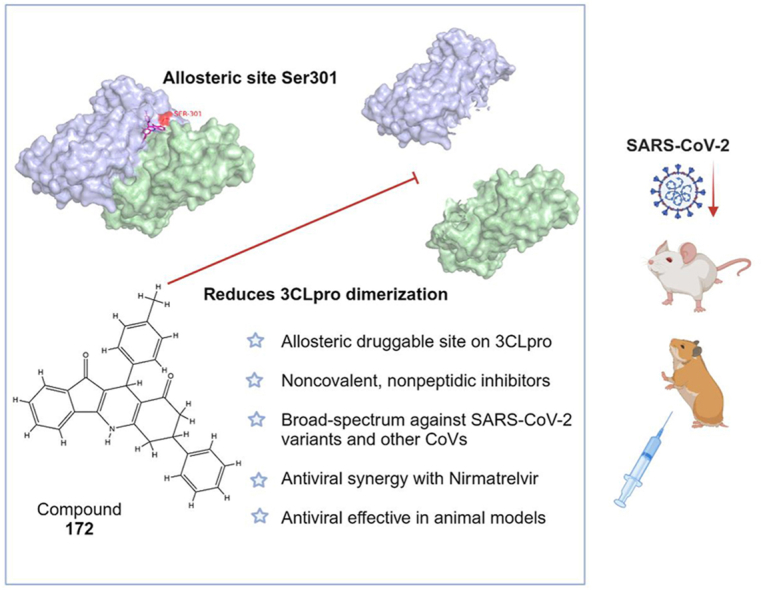
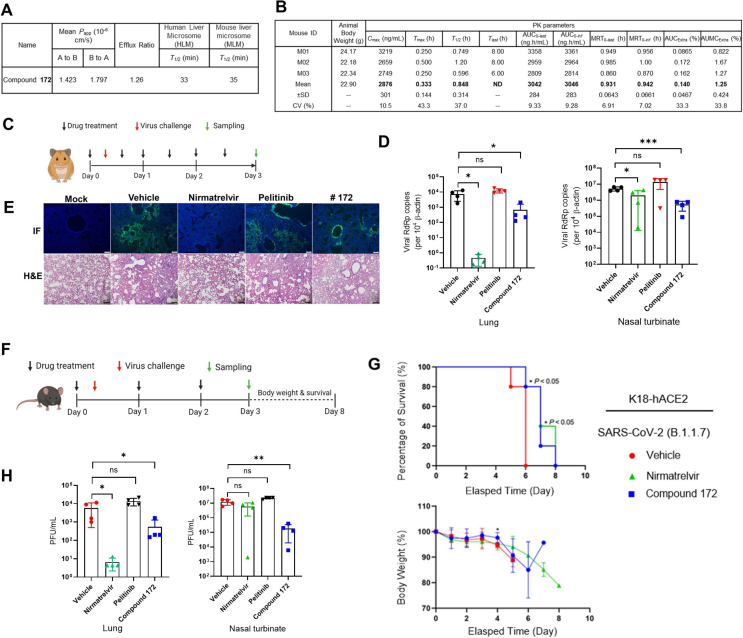
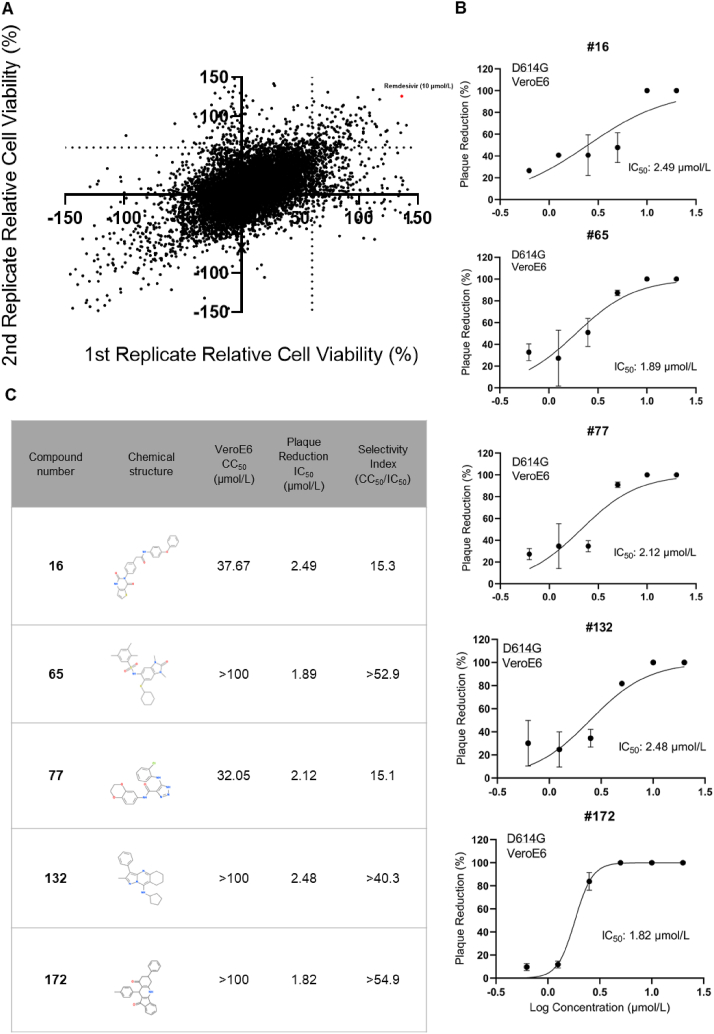
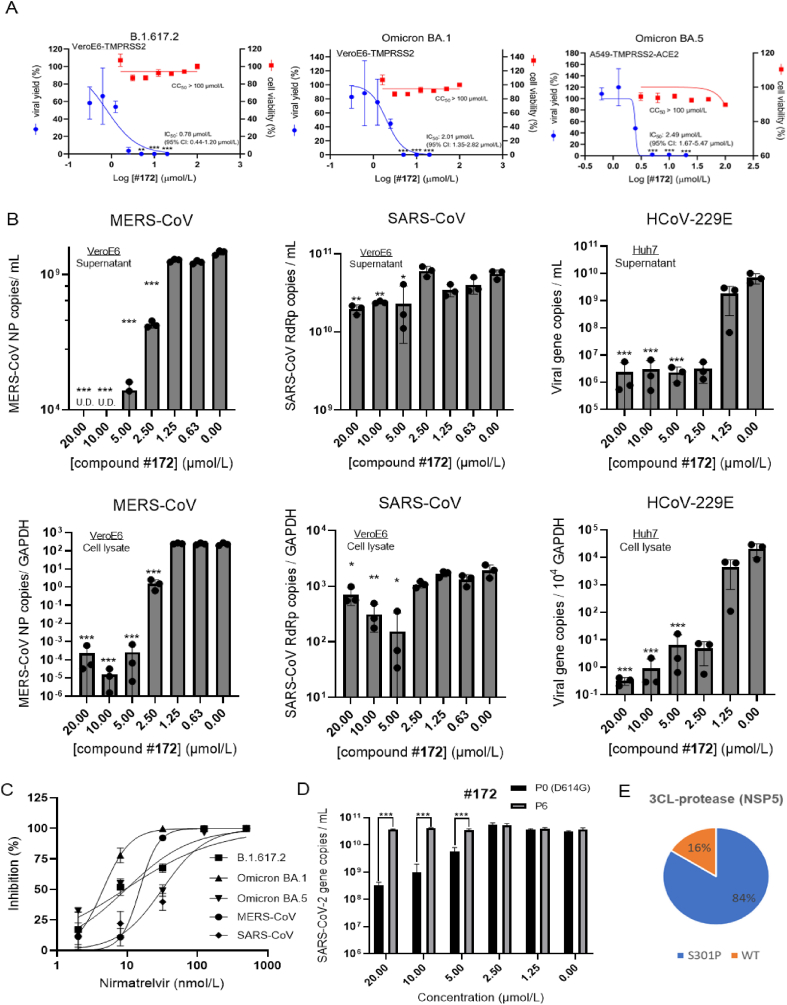
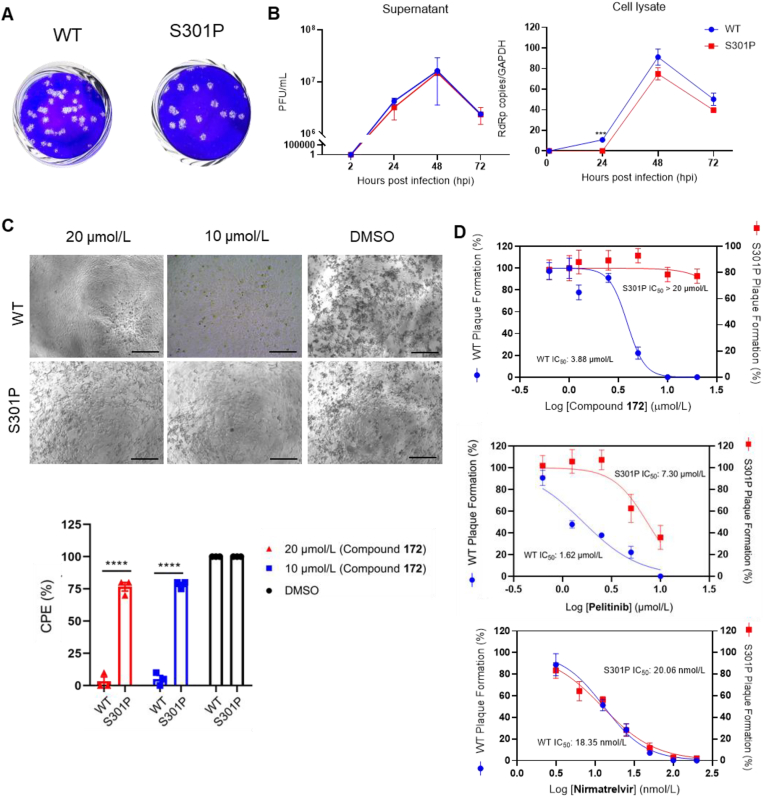
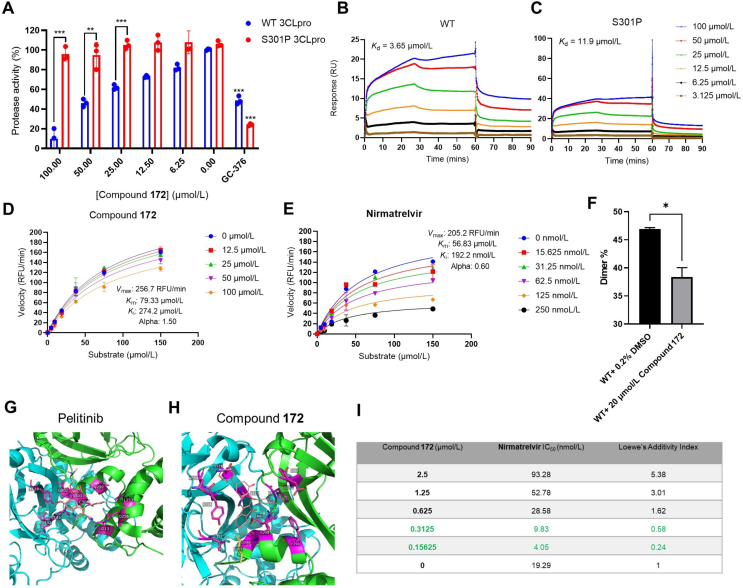
There are only eight approved small molecule antiviral drugs for treating COVID-19. Among them, four are nucleotide analogues (remdesivir, JT001, molnupiravir, and azvudine), while the other four are protease inhibitors (nirmatrelvir, ensitrelvir, leritrelvir, and simnotrelvir-ritonavir). Antiviral resistance, unfavourable drug‒drug interaction, and toxicity have been reported in previous studies. Thus there is a dearth of new treatment options for SARS-CoV-2. In this work, a three-tier cell-based screening was employed to identify novel compounds with anti-SARS-CoV-2 activity. One compound, designated , demonstrated broad-spectrum antiviral activity against multiple human pathogenic coronaviruses and different SARS-CoV-2 variants of concern. Mechanistic studies validated by reverse genetics showed that compound inhibits the 3-chymotrypsin-like protease (3CLpro) by binding to an allosteric site and reduces 3CLpro dimerization. A drug synergistic checkerboard assay demonstrated that compound can achieve drug synergy with nirmatrelvir . studies confirmed the antiviral activity of compound in both Golden Syrian Hamsters and K18 humanized ACE2 mice. Overall, this study identified an alternative druggable site on the SARS-CoV-2 3CLpro, proposed a potential combination therapy with nirmatrelvir to reduce the risk of antiviral resistance and shed light on the development of allosteric protease inhibitors for treating a range of coronavirus diseases.
目前仅有八种获批用于治疗新冠肺炎的小分子抗病毒药物。其中,四种是核苷酸类似物(瑞德西韦、JT001、莫努匹拉韦和阿兹夫定),另外四种是蛋白酶抑制剂(奈玛特韦、恩昔洛韦、来瑞特韦和西莫特韦-利托那韦)。先前的研究已报道了抗病毒耐药性、不良药物相互作用及毒性。因此,针对严重急性呼吸综合征冠状病毒2(SARS-CoV-2)缺乏新的治疗选择。在本研究中,采用了基于细胞的三层筛选来鉴定具有抗SARS-CoV-2活性的新型化合物。一种名为 的化合物对多种人类致病性冠状病毒和不同的SARS-CoV-2变异株具有广谱抗病毒活性。通过反向遗传学验证的机制研究表明,该化合物通过结合变构位点抑制3-糜蛋白酶样蛋白酶(3CLpro)并减少3CLpro二聚化。药物协同棋盘试验表明,该化合物可与奈玛特韦实现药物协同作用。 研究证实了该化合物在金黄叙利亚仓鼠和K18人源化血管紧张素转换酶2(ACE2)小鼠中的抗病毒活性。总体而言,本研究在SARS-CoV-2 3CLpro上确定了一个可成药的替代位点,提出了与奈玛特韦联合治疗以降低抗病毒耐药风险的潜在方案,并为开发用于治疗一系列冠状病毒疾病的变构蛋白酶抑制剂提供了思路。