Yan Mengyi, Chen Xiayun, Li Xiaotong, Liu Qianqian, Yu Baixue, Cen Yi, Zhang Wei, Liu Yibin, Li Xinxuan, Chen Ying, Wang Tao, Li Shiying
The Fifth Affiliated Hospital, Guangdong Provincial Key Laboratory of Molecular Target & Clinical Pharmacology, the NMPA and State Key Laboratory of Respiratory Disease, the School of Pharmaceutical Sciences, Guangzhou Medical University, Guangzhou 511436, China.
Department of Anesthesiology, the Second Clinical School of Guangzhou Medical University, Guangzhou 511436, China.
Acta Pharm Sin B. 2024 Sep;14(9):4118-4133. doi: 10.1016/j.apsb.2024.05.030. Epub 2024 Jun 3.
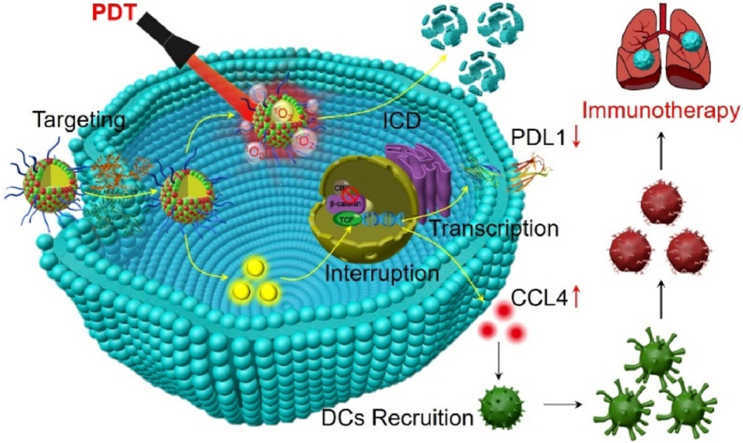
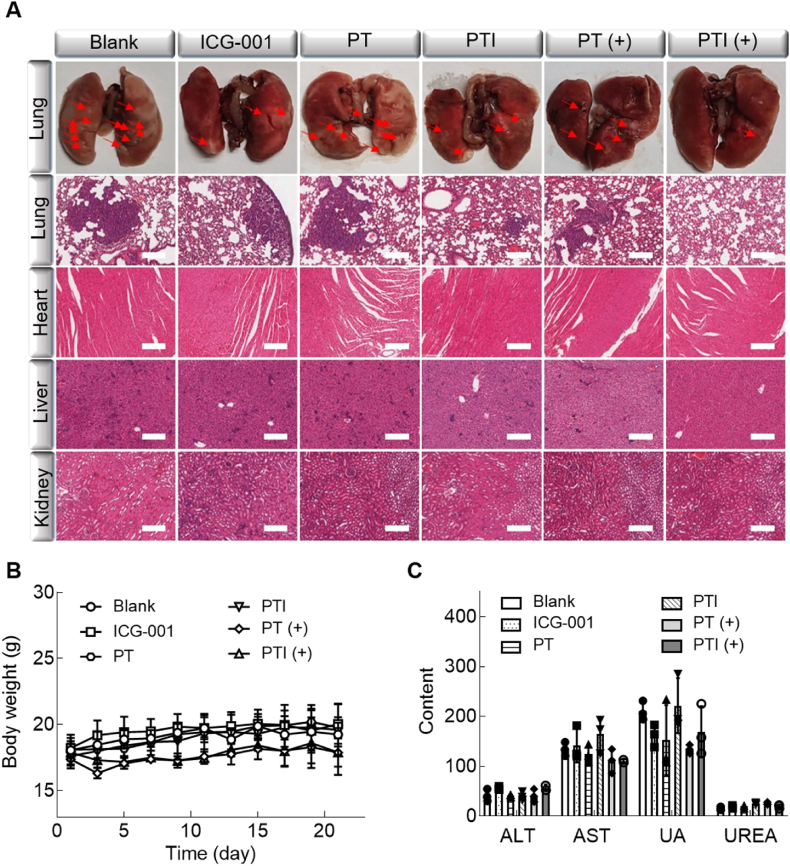
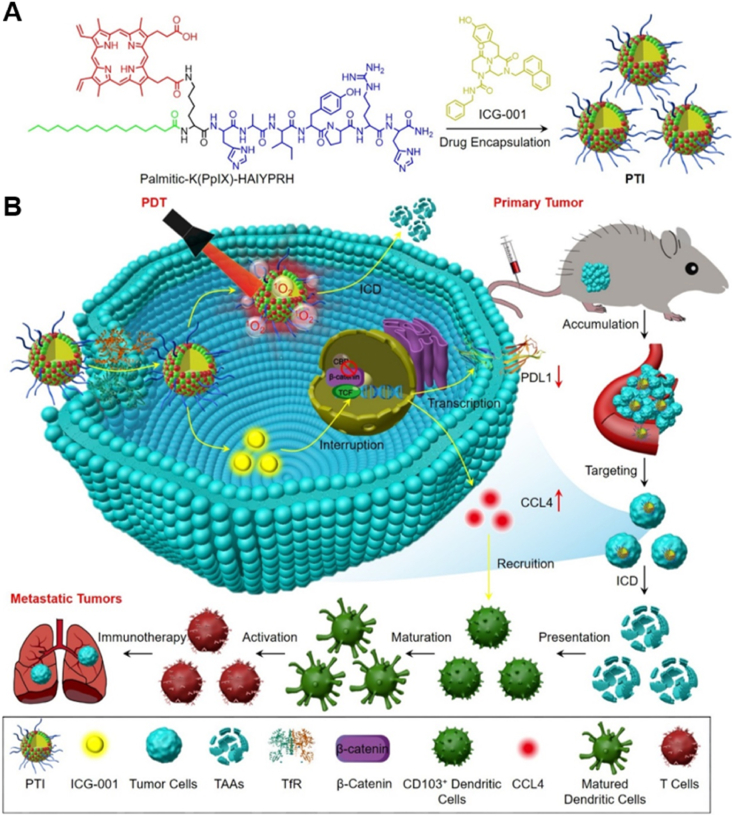
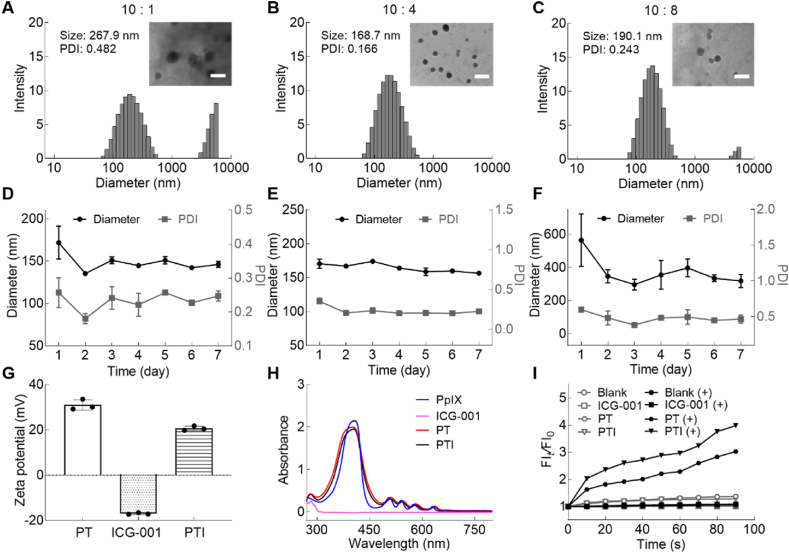
The immunosuppressive phenotype of tumor cells extensively attenuates the immune activation effects of traditional treatments. In this work, a transferrin receptor (TfR) targeted immunostimulant (PTI) is fabricated for photodynamic immunotherapy against metastatic tumors by interrupting -catenin signal pathway. To synthesize PTI, the photosensitizer conjugated TfR targeting peptide moiety (Palmitic-K(PpIX)-HAIYPRH) is unitized to encapsulate the transcription interrupter of ICG-001. On the one hand, the recognition of PTI and TfR can promote drug delivery into tumor cells to destruct primary tumors through photodynamic therapy and initiate an immunogenic cell death with the release of tumor-associated antigens. On the other hand, PTI will interrupt the binding between -catenin and cAMP response element-binding protein (CREB), regulating the gene transcription to downregulate programmed death ligand 1 (PD-L1) while upregulating C-C motif chemokine ligand 4 (CCL4). Furthermore, the elevated CCL4 can recruit the dendritic cells to present tumor-specific antigens and promote T cells activation and infiltration, and the downregulated PD-L1 can avoid the immune evasion of tumor cells and activate systemic anti-tumor immunity to eradicate lung metastasis. This work may inspire the development of antibody antibody-free strategy to activate systemic immune response in consideration of immunosuppressive conditions.
肿瘤细胞的免疫抑制表型极大地削弱了传统治疗的免疫激活效果。在这项工作中,通过中断β-连环蛋白信号通路,制备了一种转铁蛋白受体(TfR)靶向免疫刺激剂(PTI)用于转移性肿瘤的光动力免疫治疗。为了合成PTI,将与光敏剂偶联的TfR靶向肽部分(棕榈酸-K(焦脱镁叶绿酸-a)-HAIYPRH)用于包裹ICG-001转录阻断剂。一方面,PTI与TfR的识别可促进药物递送至肿瘤细胞,通过光动力疗法破坏原发性肿瘤,并随着肿瘤相关抗原的释放引发免疫原性细胞死亡。另一方面,PTI会中断β-连环蛋白与环磷酸腺苷反应元件结合蛋白(CREB)之间的结合,调节基因转录以下调程序性死亡配体1(PD-L1),同时上调C-C基序趋化因子配体4(CCL4)。此外,升高的CCL4可募集树突状细胞呈递肿瘤特异性抗原,促进T细胞活化和浸润,而下调的PD-L1可避免肿瘤细胞的免疫逃逸并激活全身抗肿瘤免疫以根除肺转移。考虑到免疫抑制情况,这项工作可能会激发无抗体策略的发展,以激活全身免疫反应。