Zahan Imroze, Khan Md Momin, Rana Md Suman, Sahabuddin Md, Rasik Md Rezwan, Uddin M Burhan
Department of Food Technology and Rural Industries, Bangladesh Agricultural University, Mymensingh, 2202, Bangladesh.
Department of Food Engineering, Bangabandhu Sheikh Mujibur Rahman Science and Technology, University, Gopalganj, 8100, Bangladesh.
Heliyon. 2024 Sep 13;10(18):e37596. doi: 10.1016/j.heliyon.2024.e37596. eCollection 2024 Sep 30.
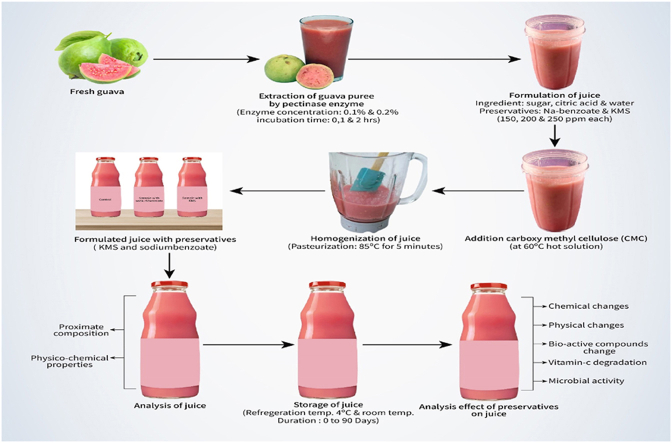
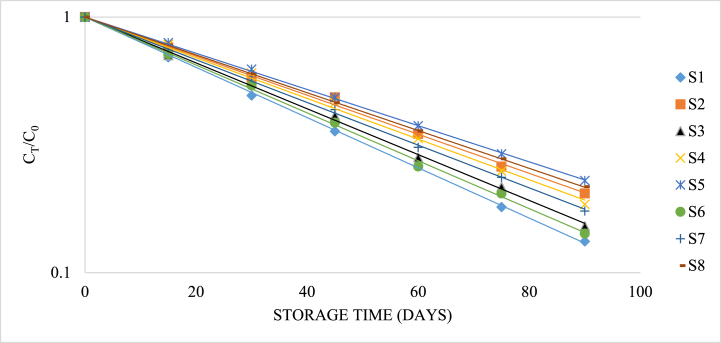
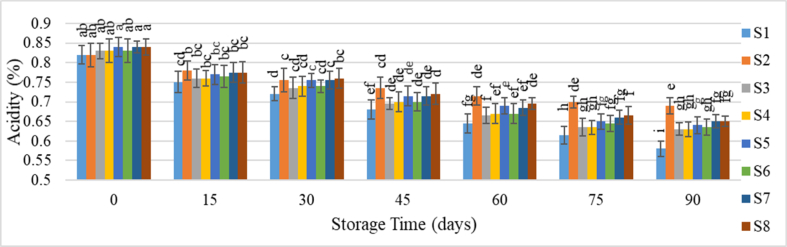
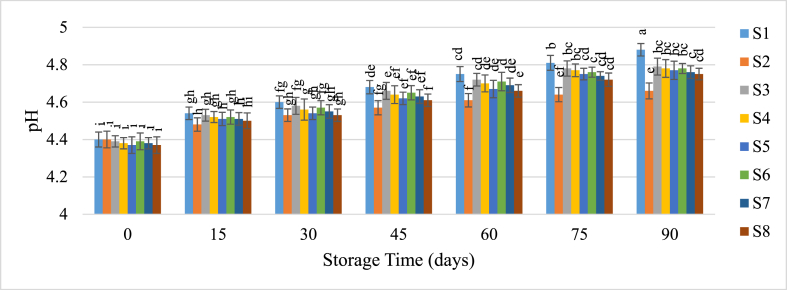
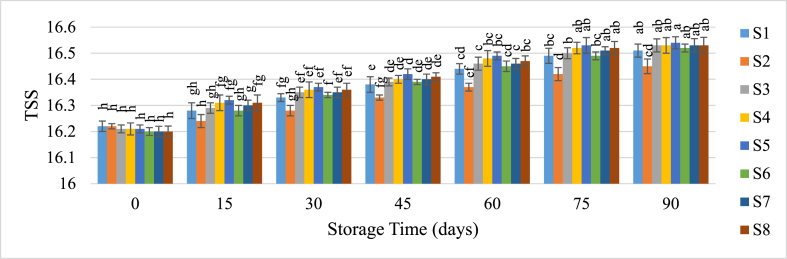
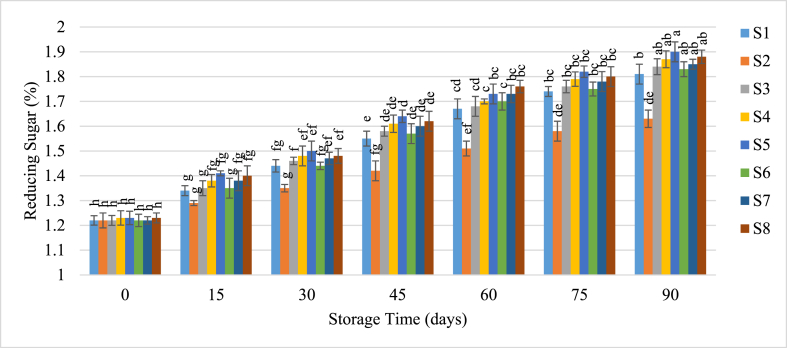
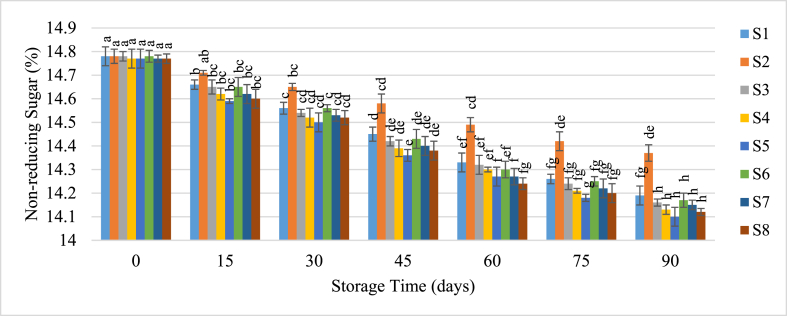
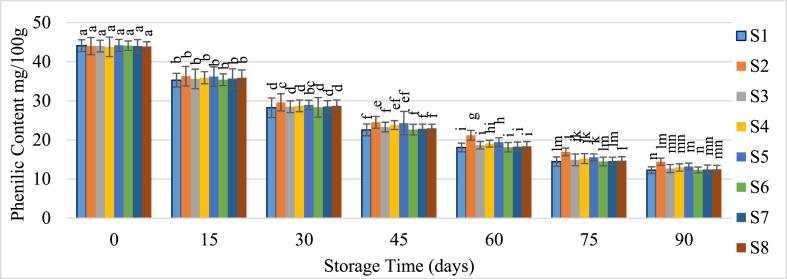
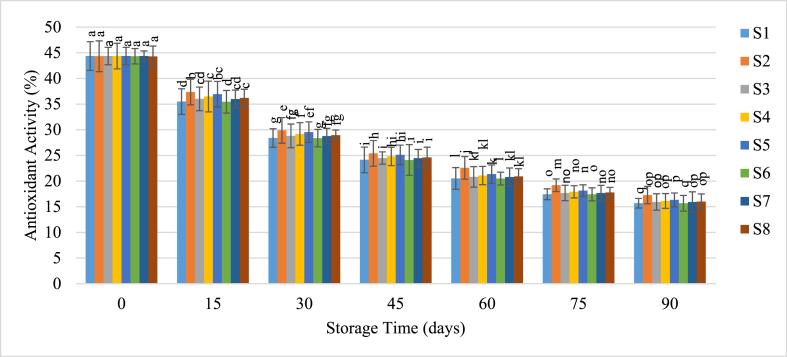
The study investigated the feasibility of enzymatic extraction for guava juice and evaluated the effects of various preservatives on its shelf life. The crushed guava puree was undergone different pectinase enzyme concentrations over three incubation periods. The findings revealed that pectinase concentrations of 0.1 % and 0.2 %, when incubated for 1 and 2 h, were the most effective. Juice yields ranged from 65.24 % to 78.64 %, with Total Soluble Solids (TSS) varying from 9.12°Brix to 11.56°Brix. The physicochemical properties of the guava juice resulted 84.2 % moisture, 2.16 % protein, 0.77 % fat, 3.27 % fiber, 0.65 % acidity, 2.25 % reducing sugars, 8.27 % non-reducing sugars, 79.53 % antioxidant activity, 173.2 mg/100g of ascorbic acid, 10.52 TSS, 109.7 mg/100g of phenolic content, and a pH of 3.2. Eight juice samples were prepared as per formulation with sodium benzoate and potassium metabisulfite (KMS) at concentrations of 150 ppm, 200 ppm, and 250 ppm, in addition to one refrigerated sample and one control. The stability of these guava juice samples was monitored every 15 days over a 90-day period. Results showed that acidity, TSS, pH, reducing sugars, and non-reducing sugars changed over time. Samples with preservatives exhibited slower changes compared to the control. Phenolic compounds diminished more quickly at ambient temperature than in refrigerated or preservative-treated samples. Initially, phenolic content and antioxidant capacity were 44 mg GAE/100g and 44 %, respectively, but declined to 10-15 mg and 15-17 % by the end of the storage period. Color changes were more noticeable in samples stored at room temperature, whereas preservatives effectively reduced color degradation caused by enzymatic browning. Moreover, ascorbic acid retention was better in samples with preservatives and those stored under refrigeration. The ascorbic acid degradation rate was highest at room temperature (0.023 day^-1) and lowest with 250 ppm KMS (0.016 day^-1). Microbiological tests indicated that the juice remained safe for 40 days at room temperature, 90 days under refrigeration, and approximately 85 days with preservatives.
该研究调查了酶法提取番石榴汁的可行性,并评估了各种防腐剂对其保质期的影响。将碾碎的番石榴果泥在三个孵育期内分别用不同浓度的果胶酶处理。结果表明,果胶酶浓度为0.1%和0.2%,孵育1小时和2小时时效果最佳。果汁产量在65.24%至78.64%之间,总可溶性固形物(TSS)在9.12°Brix至11.56°Brix之间。番石榴汁的理化性质为:水分84.2%、蛋白质2.16%、脂肪0.77%、纤维3.27%、酸度0.65%、还原糖2.25%、非还原糖8.27%、抗氧化活性79.53%、抗坏血酸173.2毫克/100克、TSS 10.52、酚类含量109.7毫克/100克、pH值3.2。按照配方制备了八个果汁样品,分别添加浓度为150 ppm、200 ppm和250 ppm的苯甲酸钠和焦亚硫酸钾(KMS),此外还有一个冷藏样品和一个对照样品。在90天的时间里,每隔15天监测一次这些番石榴汁样品的稳定性。结果表明,酸度、TSS、pH值、还原糖和非还原糖随时间变化。与对照相比,添加防腐剂的样品变化较慢。酚类化合物在常温下比在冷藏或添加防腐剂处理的样品中降解得更快。最初,酚类含量和抗氧化能力分别为44毫克没食子酸当量/100克和44%,但在储存期结束时降至10 - 15毫克和15 - 17%。室温下储存的样品颜色变化更明显,而防腐剂有效地减少了酶促褐变引起的颜色降解。此外,添加防腐剂的样品和冷藏样品中抗坏血酸的保留情况更好。抗坏血酸降解率在室温下最高(0.023天^-1),在250 ppm KMS处理下最低(0.016天^-1)。微生物检测表明,果汁在室温下40天、冷藏90天以及添加防腐剂的情况下约85天内保持安全。