Department of Biochemistry and Microbiology, Institute of Biology; Warsaw, University of Life Sciences (SGGW), Warsaw, Poland.
Institute of Biochemistry and Biophysics, Polish Academy of Sciences, Pawińskiego 5a, 02-106, Warsaw, Poland.
Environ Sci Pollut Res Int. 2024 Oct;31(49):58876-58888. doi: 10.1007/s11356-024-35045-4. Epub 2024 Sep 25.
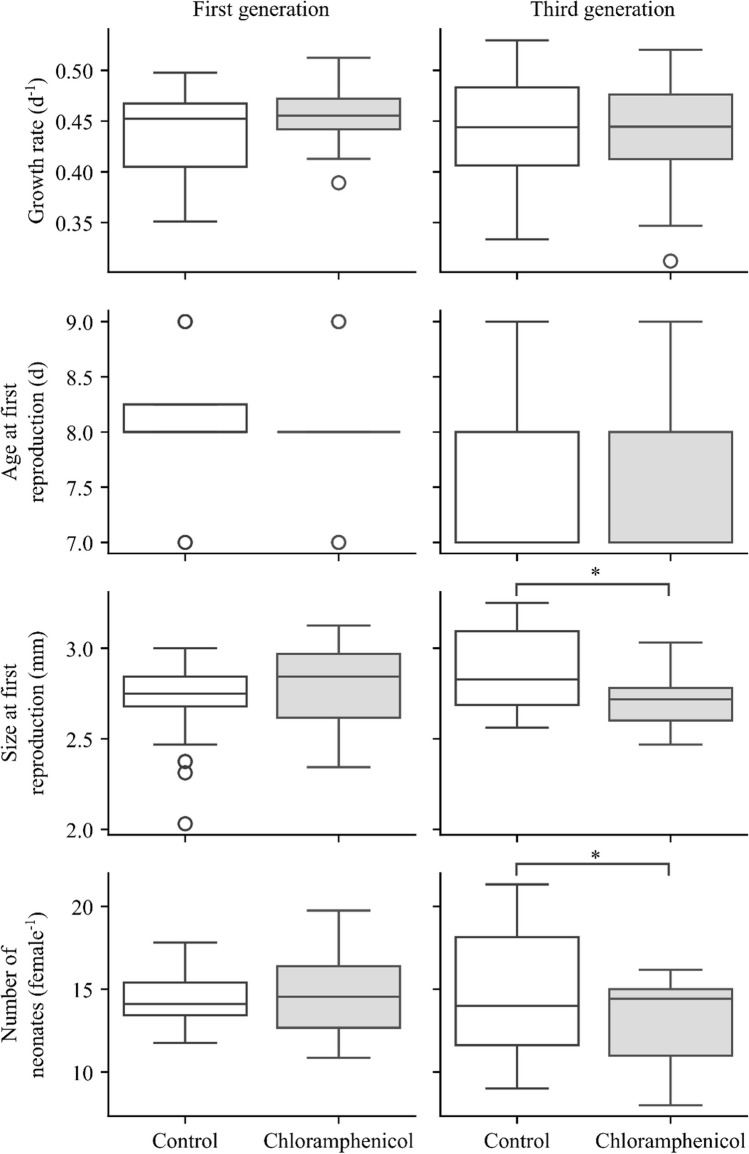
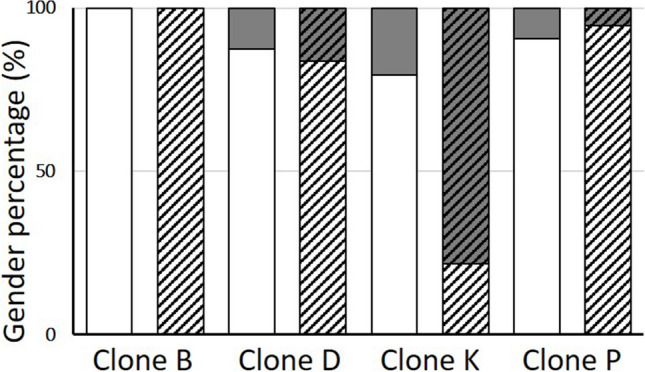
Commonly used medicines, when discarded or improperly disposed of, are known to contaminate freshwater ecosystems. Pharmaceuticals can be toxic and mutagenic, and can modify freshwater organisms, even at environmentally relevant concentrations. Chloramphenicol (CAP) is an antibiotic banned in Europe. However, it is still found in surface waters around the world. The aim of this study was to evaluate the impact of chloramphenicol contamination in freshwater on the model organism Daphnia magna. Specific life history parameters, proteome, and host-associated microbiome of four D. magna clones were analyzed during a three-generation exposure to CAP at environmental concentrations (32 ng L). In the first generation, no statistically significant CAP effect at the individual level was detected. After three generations, exposed animals were smaller at first reproduction and on average produced fewer offspring. The differences in D. magna's life history after CAP treatment were in accordance with proteome changes. D. magna's response to CAP presence indicates the high stress that the tested organisms are under, e.g., male production, upregulation of ubiquitin-conjugating enzyme E2 and calcium-binding protein, and downregulation of glutathione transferase. The CAP-exposed D. magna proteome profile confirms that CAP, being reactive oxygen species (ROS)-inducing compounds, contributes to structural changes in mitochondria. Microbiome analysis showed a significant difference in the Shannon index between control and CAP-exposed animals, the latter having a more diverse microbiome. Multilevel analyses, together with long exposure in the laboratory imitating conditions in a polluted environment, allow us to obtain a more complete picture of the impact of CAP on D. magna.
常用药物废弃或处理不当会污染淡水生态系统。药品具有毒性和致突变性,并能改变淡水生物,即使在环境相关浓度下也是如此。氯霉素(CAP)是一种在欧洲被禁用的抗生素。然而,它仍然在世界各地的地表水被发现。本研究旨在评估淡水环境中氯霉素污染对模式生物大型溞的影响。在 CAP 环境浓度(32ng/L)下进行了三代暴露后,分析了四个大型溞克隆的特定生活史参数、蛋白质组和宿主相关微生物组。在第一代中,个体水平未检测到氯霉素的统计学显著影响。经过三代,暴露动物在第一次繁殖时体型较小,平均繁殖的后代较少。CAP 处理后大型溞生活史的差异与蛋白质组变化一致。大型溞对 CAP 存在的反应表明测试生物承受着高度的压力,例如雄性产生、泛素结合酶 E2 和钙结合蛋白的上调,以及谷胱甘肽转移酶的下调。暴露于 CAP 的大型溞蛋白质组图谱证实,CAP 作为活性氧(ROS)诱导化合物,导致线粒体结构发生变化。微生物组分析显示,对照组和 CAP 暴露组之间的 Shannon 指数存在显著差异,后者的微生物组更为多样化。多层次分析,以及在实验室中进行的长时间暴露,模拟了污染环境中的条件,使我们能够更全面地了解 CAP 对大型溞的影响。