Zhang Ying-Lun, Wu Meng-Jie, Hu Yu, Peng Xiao-Jing, Ma Qian, Mao Cui-Lian, Dong Ye, Wei Zong-Kai, Gao Ying-Qian, Yao Qi-Yu, Yao Jing, Ye Xin-Hua, Li Ju-Ming, Li Ao
Department of Ultrasound, The First Affiliated Hospital of Nanjing Medical University, Nanjing, China.
Department of Ultrasound, The Affiliated Drum Tower Hospital of Nanjing University Medical School, Nanjing, China.
Insights Imaging. 2024 Sep 19;15(1):226. doi: 10.1186/s13244-024-01802-9.
To establish a practical risk stratification system (RSS) based on ultrasonography (US) and clinical characteristics for predicting soft tissue masses (STMs) malignancy.
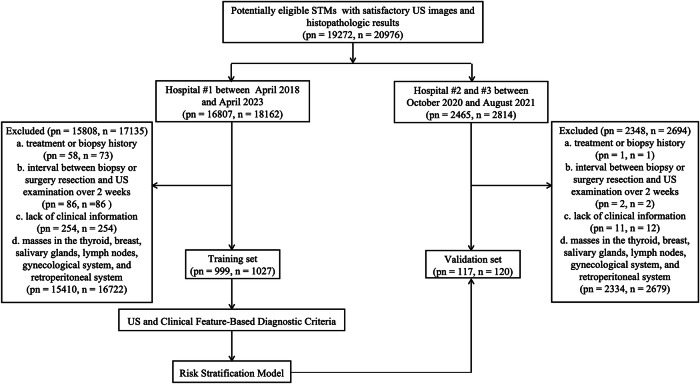
This retrospective multicenter study included patients with STMs who underwent US and pathological examinations between April 2018 and April 2023. Chi-square tests and multivariable logistic regression analyses were performed to assess the association of US and clinical characteristics with the malignancy of STMs in the training set. The RSS was constructed based on the scores of risk factors and validated externally.
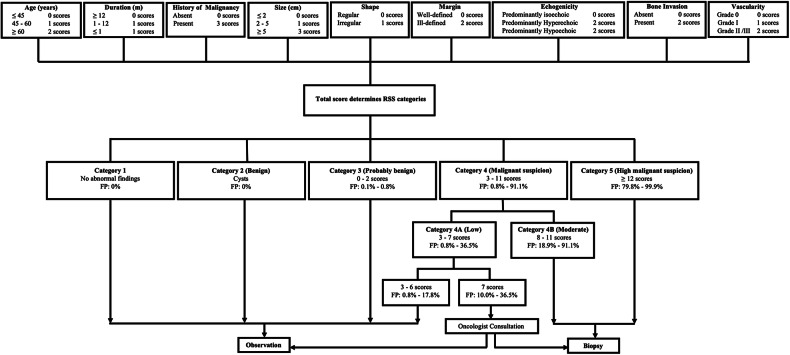
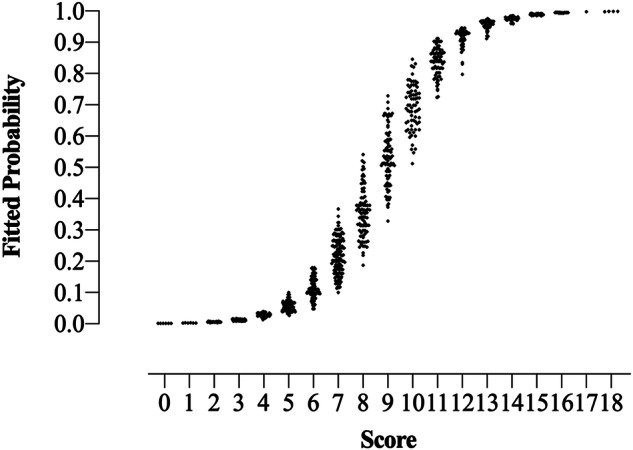
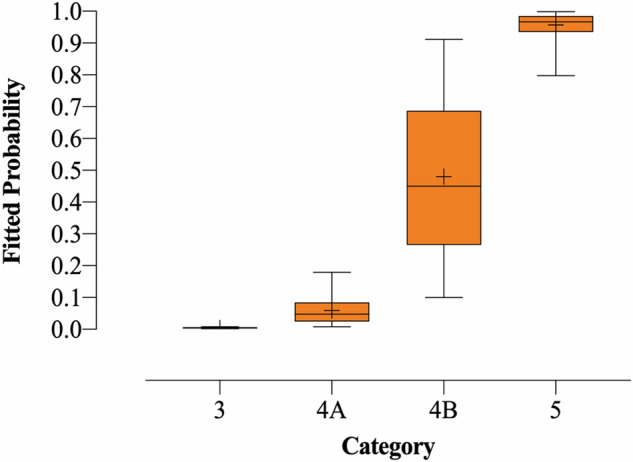
The training and validation sets included 1027 STMs (mean age, 50.90 ± 16.64, 442 benign and 585 malignant) and 120 STMs (mean age, 51.93 ± 17.90, 69 benign and 51 malignant), respectively. The RSS was constructed based on three clinical characteristics (age, duration, and history of malignancy) and six US characteristics (size, shape, margin, echogenicity, bone invasion, and vascularity). STMs were assigned to six categories in the RSS, including no abnormal findings, benign, probably benign (fitted probabilities [FP] for malignancy: 0.001-0.008), low suspicion (FP: 0.008-0.365), moderate suspicion (FP: 0.189-0.911), and high suspicion (FP: 0.798-0.999) for malignancy. The RSS displayed good diagnostic performance in the training and validation sets with area under the receiver operating characteristic curve (AUC) values of 0.883 and 0.849, respectively.
The practical RSS based on US and clinical characteristics could be useful for predicting STM malignancy, thereby providing the benefit of timely treatment strategy management to STM patients.
With the help of the RSS, better communication between radiologists and clinicians can be realized, thus facilitating tumor management.
There is no recognized grading system for STM management. A stratification system based on US and clinical features was built. The system realized great communication between radiologists and clinicians in tumor management.
建立一种基于超声(US)和临床特征的实用风险分层系统(RSS),用于预测软组织肿块(STM)的恶性程度。
这项回顾性多中心研究纳入了2018年4月至2023年4月期间接受US检查和病理检查的STM患者。在训练集中进行卡方检验和多变量逻辑回归分析,以评估US和临床特征与STM恶性程度的关联。基于风险因素得分构建RSS并进行外部验证。
训练集和验证集分别包括1027个STM(平均年龄50.90±16.64岁,442个良性和585个恶性)和120个STM(平均年龄51.93±17.90岁,69个良性和51个恶性)。RSS基于三个临床特征(年龄、病程和恶性肿瘤病史)和六个US特征(大小、形状、边界、回声性、骨侵犯和血管情况)构建。STM在RSS中被分为六类,包括无异常发现、良性、可能良性(恶性的拟合概率[FP]:0.001 - 0.008)、低怀疑(FP:0.008 - 0.365)、中度怀疑(FP:0.189 - 0.911)和高怀疑(FP:0.798 - 0.999)恶性。RSS在训练集和验证集中表现出良好的诊断性能,受试者操作特征曲线(AUC)下面积值分别为0.883和0.849。
基于US和临床特征的实用RSS可用于预测STM恶性程度,从而为STM患者提供及时治疗策略管理的益处。
借助RSS,放射科医生和临床医生之间可以实现更好的沟通,从而促进肿瘤管理。
目前尚无公认的STM管理分级系统。建立了基于US和临床特征的分层系统。该系统在肿瘤管理中实现了放射科医生和临床医生之间的良好沟通。